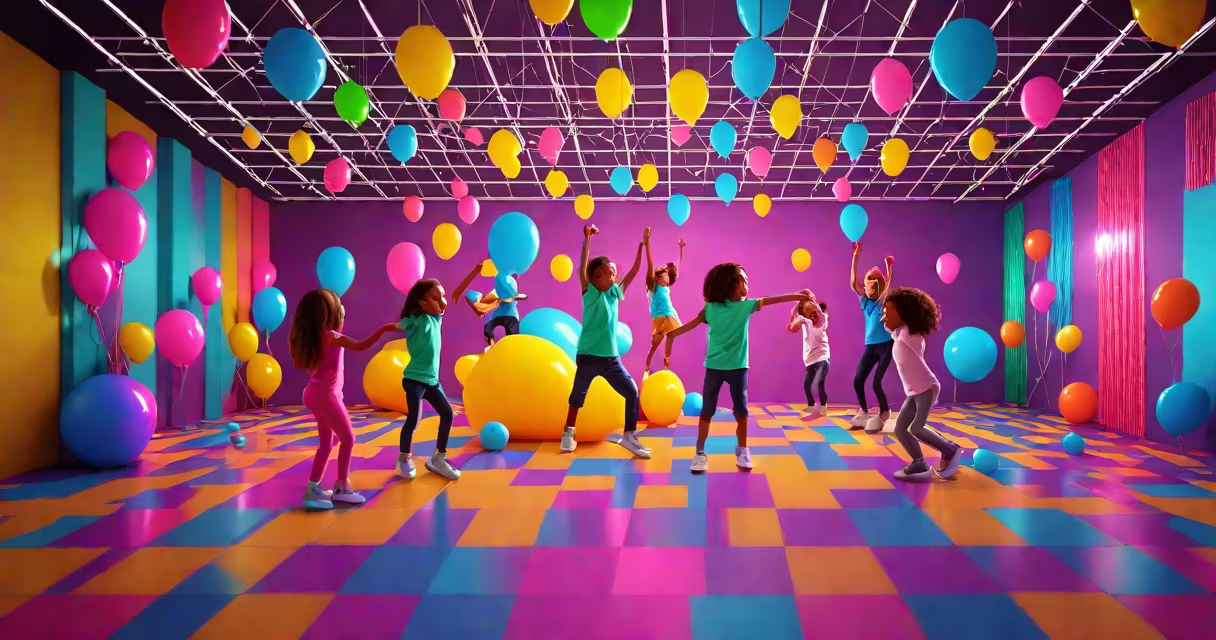
A dance party for kids is a structured, age-appropriate event featuring upbeat music, choreographed movements, themed decorations, and interactive games designed to engage children aged 3 to 10 through physical activity and playful expression.
These events prioritize safety, inclusivity, and developmental appropriateness. Unlike adult dance parties, they avoid complex routines or suggestive content. Instead, they focus on simple, repetitive motions like clapping, jumping, and spinning-movements that build coordination and confidence in young participants.
Organizers often incorporate visual cues such as colored lights, animated backdrops, and inflatable props to maintain attention. Music selection emphasizes familiar songs from children's TV shows, animated films, and popular nursery rhymes. A typical session lasts 60 to 90 minutes, split into segments: warm-up, group dances, free play, and a closing circle.
Dance parties for kids follow a predictable rhythm to reduce anxiety and support social learning. The structure begins with a welcome circle where children meet the host and learn basic rules-"stay near the leader," "use your hands," "take turns." This establishes boundaries and encourages participation.
Next, a 10-minute warm-up uses simple stretches and clapping games. For example, "If You're Happy and You Know It" is adapted with actions: stamp your feet, clap your hands, jump up high. These routines reinforce motor skills and listening comprehension.
Core dance segments feature 3-5 songs with easy-to-follow choreography. Songs like "Baby Shark," "The Wheels on the Bus," and "Let's Go to the Zoo" are staples. Each routine lasts 1-2 minutes and repeats twice to solidify memory. After each song, a brief pause allows kids to catch their breath and reset.
Successful dance parties rely on five core elements: music, space, equipment, personnel, and theme. Music must be high-energy but not overwhelming-volume levels typically stay below 85 decibels to protect hearing. Playlists are curated based on age groups: preschoolers (ages 3-5) favor songs under 120 BPM; older children (6-10) enjoy tracks between 120-140 BPM.
Space matters. Indoor venues like community centers or school gyms provide safe, enclosed areas with non-slip flooring. Outdoor settings require shade and wind protection. Minimum recommended space is 100 square feet per 10 children to prevent collisions.
Equipment includes portable speakers, LED strips, and inflatable obstacles. Inflatable tunnels and foam pits are common in commercial setups. These items increase excitement but must be inspected for wear and tear before use. The American Society for Testing and Materials (ASTM) sets safety standards for children's playground equipment, including bounce houses and tunnels.
| Type | Best For | Duration | Sample Activities |
|---|---|---|---|
| Themed Dance Party | 3-6 years | 60 min | Animal dance (bear walk, frog jumps), superhero cape parade |
| Interactive Music Hour | 2-5 years | 45 min | Sound matching game, instrument drum circle |
| High-Energy Dance Blast | 7-10 years | 90 min | Pop song dance-off, freeze dance with sudden stops |
Dance parties for kids appear in schools, daycare centers, family entertainment centers, and private homes. They serve multiple purposes: promoting physical development, encouraging social interaction, and supporting emotional regulation through rhythm and repetition.
Research from the University of Illinois shows that structured movement activities improve attention span and classroom behavior in preschoolers. Children who participate in regular dance sessions demonstrate better impulse control and peer cooperation compared to those in sedentary programs.
These events are especially effective during holidays and seasonal transitions. Halloween-themed dance parties include pumpkin-shaped beanbags and spooky sound effects. Summer parties often feature water sprinklers and beach ball tosses. Themes help children process abstract concepts-like fear or joy-through embodied experiences.
Many assume dance parties for kids are simply loud music with no planning. That's incorrect. A well-run session requires rehearsal, risk assessment, and adaptive pacing. Hosts must monitor fatigue levels and adjust intensity based on real-time feedback.
Another myth is that all children will naturally join in. In reality, shyness, sensory sensitivity, or developmental differences can inhibit participation. A trained facilitator uses inclusive techniques-like offering seated options or allowing children to observe first-to ensure no one feels pressured.
One non-obvious fact: children under 4 benefit most from low-tempo, high-repetition movement. Fast beats can trigger overstimulation. The National Association for Sport and Physical Education recommends limiting rapid changes in tempo for this age group to prevent disorientation.
In June 2023, a 5-year-old girl hosted her birthday party at the Maplewood Community Center. The event was booked as a "Dance Party Adventure" with a jungle theme. The center provided a 30-foot-by-30-foot gym space with rubber flooring.
The host, a certified early childhood educator, began with a 10-minute warm-up using animal sounds and movements. Kids mimicked lions, monkeys, and kangaroos. Next, five songs were played: "Walking on the Moon" (slowed version), "The Lion Sleeps Tonight," "Knees Up Mother Brown," "I'm a Little Teapot," and "Shake Your Body."
Each song included a variation: for "Teapot," children bent knees and raised arms to form a spout. For "Shake Your Body," they shook limbs in sequence. After the final song, a 10-minute free-play segment allowed kids to explore inflatable jungle vines and a mini trampoline.
Attendance: 14 children. Duration: 75 minutes. Feedback from parents noted improved mood and reduced hyperactivity post-event. One parent reported, "My son didn't want to leave-he kept asking if we could do it again tomorrow."
A dance party for kids is not about perfect choreography-it's about creating joyful, inclusive movement experiences that support growth, connection, and fun.