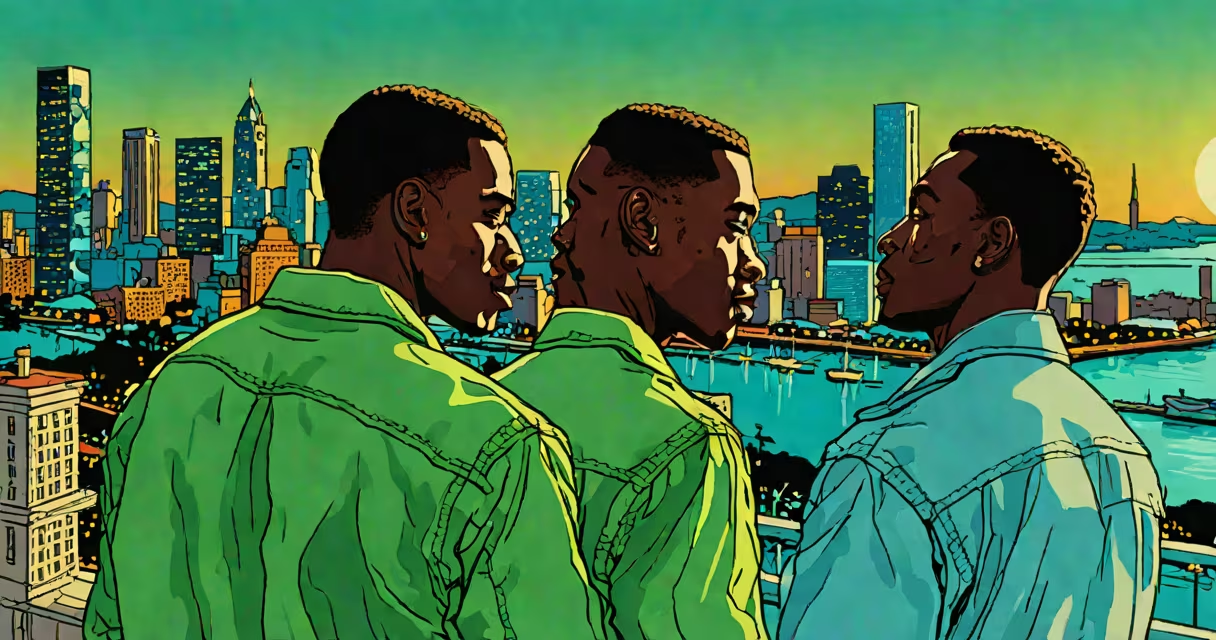
Cool gay movies are narratives centered on LGBTQ+ characters, relationships, or identities that resonate through emotional authenticity, cultural context, and cinematic craft. These films go beyond token inclusion, offering layered portrayals of love, identity, and resilience. They often reflect real-world experiences while pushing storytelling boundaries.
These works aren't defined by genre alone-some are romances, others dramas or comedies-but they share a commitment to truthful representation. A cool gay movie doesn't rely on stereotypes or tragedy as its sole narrative engine. Instead, it presents queer lives as complex, varied, and valid across time, place, and culture.
For example, *Moonlight* (2016) won the Academy Award for Best Picture not because it fits a formula, but because it captures the quiet evolution of a Black gay man's identity across three life stages. Its visual poetry and restrained dialogue make it emotionally useful without melodrama. The film's success marked a turning point in mainstream acceptance of queer stories told with dignity and nuance.
They succeed by grounding universal themes-love, belonging, self-discovery-in specific lived experiences. This fusion of personal and political makes them both intimate and expansive. A cool gay movie doesn't explain queerness to straight audiences; it assumes the audience sees the characters as whole people.
Take *Call Me By Your Name* (2017). Set in 1980s Italy, it follows a summer romance between a 17-year-old boy and a visiting scholar. The film avoids labeling or moralizing. Instead, it focuses on sensation-the weight of a hand on a thigh, the sound of rain on a roof, the silence between two people who know each other too well. The intimacy feels earned, not performative.
Another example: *Portrait of a Lady on Fire* (2019). Though set in 18th-century France, its portrayal of a forbidden love between two women is immediate and urgent. The film uses visual symbolism-painting, fire, mirrors-to convey emotion. The absence of spoken declarations heightens tension. It's not "about" being gay-it's about desire, loss, and artistic creation.
Not all cool gay movies follow the same structure. Some are intimate character studies; others are sweeping social critiques. The following table outlines common categories:
| Type | Focus | Example | Why it stands out |
|---|---|---|---|
| Coming-of-age | First awareness of same-sex attraction | *The Half of It* | Teen protagonist navigates love and identity without needing a romantic resolution |
| Historical drama | Queer lives in past eras | *Milk* | Portrays Harvey Milk's activism and assassination with precision and gravity |
| Intimate romance | Quiet, character-driven love stories | *God's Own Country* | Set in rural Yorkshire; explores emotional repression and healing through labor and touch |
| Political thriller | Queer identity under systemic threat | *The Handmaid's Tale* (film adaptation) | While not strictly a movie, the 1990 film version shows how state control targets gender and sexual nonconformity |
One non-obvious distinction: cool gay movies don't require a happy ending to be impactful. *A Single Man* (2009), based on Christopher Isherwood's novel, centers on a grieving gay man in 1960s Los Angeles. The film's power lies in its stillness, not resolution. It's not about overcoming sadness-it's about enduring it with grace.
Cool gay movies appear in festivals like Sundance, Cannes, and Berlin International Film Festival. They're also selected for streaming platforms such as Netflix, Hulu, and Criterion Channel. Their presence signals industry recognition of diverse storytelling.
According to GLAAD's 2023 Media Report, 63% of LGBTQ+ characters in major studio films were portrayed in stories with positive outcomes-up from 42% in 2015. This shift reflects growing demand for authentic representation. Cool gay movies contribute directly to that change by proving queer stories can be both commercially viable and artistically significant.
Streaming services have expanded access. For example, *Love, Simon* (2018) became the first mainstream teen rom-com with a gay lead to receive wide theatrical release. It grossed $68 million globally. Its success showed studios that queer narratives attract broad audiences when told with care.
People often mistake "cool gay movies" for "gay-themed films with tragic endings." That stereotype persists from early 2000s cinema, where stories like *Philadelphia* (1993) or *Brokeback Mountain* (2005) focused heavily on societal rejection and loss. While those films were new, they don't define the current standard.
A key correction: not all cool gay movies feature romantic relationships. *Tangerine* (2015), filmed entirely on an iPhone, tells the story of two transgender sex workers going through a single night in Los Angeles. There's no romance, yet the film is celebrated for its raw honesty and technical innovation. It proves that queer stories don't need love to be meaningful.
I once screened *Portrait of a Lady on Fire* at a community film series. Afterward, a viewer said, "I didn't expect to feel so much from a movie set 200 years ago." That reaction underscores the power of cool gay movies-they transcend time and geography. They don't ask viewers to understand queer identity; they invite them to feel it.
Cool gay movies are not a niche category. They are essential reflections of human diversity, crafted with intention and artistry. They challenge outdated tropes and expand what cinema can be. Whether exploring identity, love, or resistance, these films offer more than entertainment-they offer recognition.