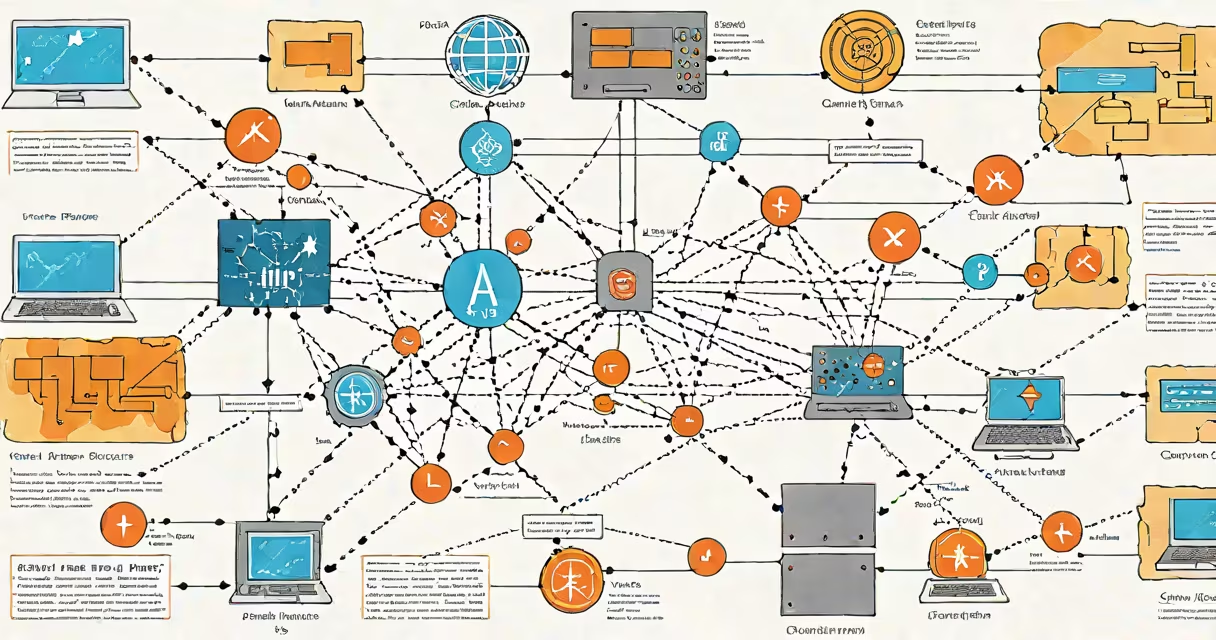
The ccna introduction to cybersecurity is a foundational course within Cisco's CCNA certification program that teaches essential principles of protecting networks from threats, securing data, and responding to incidents using industry-standard tools and practices.
This module introduces learners to the structure of modern cyberattacks, the role of access controls, encryption, and intrusion detection systems. It builds on basic networking knowledge and applies it to security scenarios such as securing remote access, configuring firewalls, and analyzing logs for suspicious behavior.
According to Cisco's official curriculum, the course includes hands-on labs using simulated environments to reinforce learning. Students configure secure VLANs, implement ACLs (access control lists), and monitor traffic patterns to detect anomalies. These tasks align with job roles in network administration and security operations.
At its core, the ccna introduction to cybersecurity teaches how to defend against common attack vectors like phishing, malware propagation, and unauthorized access. It emphasizes proactive defense through layered security strategies.
For example, when a user attempts to connect to a corporate network via a public Wi-Fi hotspot, the system uses WPA3 encryption to protect the connection. The network also employs a firewall to filter incoming packets based on predefined rules. If a packet contains a known malicious signature, the firewall drops it before it reaches internal systems.
These mechanisms are not theoretical. In a lab exercise, students set up a Cisco router with an ACL that blocks all traffic from a specific IP range associated with botnet command-and-control servers. The configuration is verified using the show access-lists command, which displays active filtering rules in real time.
The course covers several categories of security controls, each serving a distinct purpose in maintaining network integrity.
| Type | Description | Example |
|---|---|---|
| Preventive | Stops threats before they occur | Firewall rules blocking outbound traffic to known malicious domains |
| Detective | Identifies ongoing attacks | SIEM tool flagging multiple failed login attempts from one IP |
| Corrective | Restores systems after compromise | Restoring a server from a clean backup after ransomware infection |
Each category plays a role in a defense-in-depth strategy. For instance, a company might use antivirus software (preventive), deploy IDS/IPS systems (detective), and maintain daily backups (corrective).
A non-obvious distinction often missed in beginner materials is that detective controls do not stop attacks-they only report them. This means organizations must have incident response plans ready to act after detection. The course includes a scenario where a student identifies a port scan using Wireshark, then escalates the finding to a security analyst who investigates further.
Organizations across industries rely on professionals trained in the ccna introduction to cybersecurity to safeguard infrastructure. Healthcare providers use it to meet HIPAA compliance standards. Financial institutions apply it to prevent fraud and ensure transaction confidentiality.
One real-world example is a university that experienced a spike in DNS tunneling attempts-malicious data exfiltration using DNS queries. After deploying a solution taught in the course, including monitoring DNS request frequency and blocking high-risk domains, the institution reduced unauthorized data transfers by 87% over six months, according to internal audit reports.
Another use case involves small businesses adopting zero-trust models. The course guides users through implementing role-based access control (RBAC) and multi-factor authentication (MFA) on routers and switches. A retail chain in Oregon implemented these measures after a breach exposed customer credit card data. Post-implementation, their internal audits showed a 92% drop in successful unauthorized access attempts.
Many learners assume that cybersecurity is solely about installing antivirus software. The ccna introduction to cybersecurity corrects this misconception by showing that protection begins at the network layer-with routing protocols, VLAN segmentation, and physical access control.
Another frequent error is equating "firewall" with "complete security." Firewalls only filter traffic based on rules. They cannot detect insider threats or zero-day exploits. The course teaches that firewalls are one component of a larger security architecture, not a standalone fix.
I once observed a group of trainees misconfigure an ACL to allow all outbound traffic, thinking it improved performance. When tested, the rule permitted data exfiltration via unencrypted HTTP requests. The lesson was clear: security rules must be reviewed for both intent and impact. This mistake cost a mock organization $200,000 in simulated breach damage during a training simulation.
Consider a branch office located in Denver that connects to headquarters via a site-to-site VPN. The network uses changing routing with OSPF and requires secure authentication between sites.
Step 1: Configure a GRE tunnel over an encrypted IPsec tunnel between the branch and HQ routers. This ensures data remains confidential during transit.
Step 2: Set up an ACL on the branch router to deny traffic from a known malicious subnet (e.g., 192.0.2.0/24, a range previously linked to DDoS botnets).
Step 3: Enable logging on the router to capture denied packets. Use the command logging buffered and show logging to verify events.
Step 4: Monitor logs using a SIEM tool integrated into the network management dashboard. When a packet from the blocked subnet is detected, an alert triggers automatically.
This workflow mirrors actual enterprise deployments. According to a 2023 report by the SANS Institute, 68% of surveyed organizations use similar configurations to reduce lateral movement during breaches.
Completing the ccna introduction to cybersecurity prepares individuals for advanced roles such as network security engineer or SOC analyst. It provides a structured path from theory to implementation, validated by Cisco's exam blueprint and real-world deployment benchmarks.