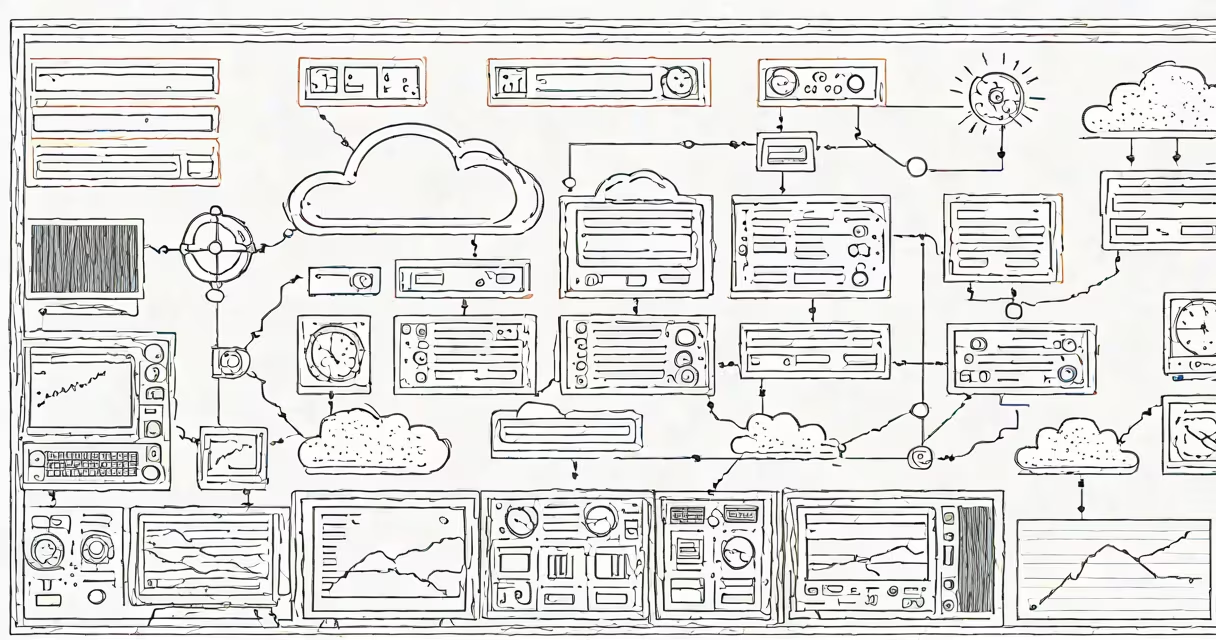
The best cloud based server is a virtualized computing environment hosted on remote data centers, accessible over the internet. It provides on-demand processing power, storage, and networking resources, scaling automatically to meet workload demands. Unlike physical servers, it requires no hardware maintenance and offers pay-as-you-go pricing.
Cloud based servers run on distributed infrastructure managed by providers like Amazon Web Services (AWS), Microsoft Azure, and Google Cloud Platform. These platforms deliver high availability through redundant systems across multiple geographic zones. A single server instance can host websites, databases, development environments, or enterprise applications with minimal setup time.
For example, a startup launching an e-commerce site uses AWS EC2 to deploy a Linux-based server. Within minutes, they configure a web server (Apache), install a database (PostgreSQL), and connect it to a domain. The system scales automatically during peak shopping hours, handling 10,000 concurrent users without downtime.
When you provision a cloud based server, you select a virtual machine (VM) template with predefined CPU, RAM, and disk space. The provider allocates these resources from a shared pool across physical machines. You access the server via SSH or a web console, then install your software stack.
Behind the scenes, orchestration tools manage load balancing, failover, and auto-scaling. If one data center experiences an outage, traffic reroutes to a backup zone within seconds. Providers enforce security policies through firewalls, encryption at rest and in transit, and identity and access management (IAM).
A 2023 report by Gartner confirms that 85% of enterprises now use cloud infrastructure for mission-critical workloads, citing reduced downtime and faster recovery times compared to on-premise setups.
Cloud based servers come in several forms, each suited to different needs:
| Type | Use Case | Example Provider | Cost Range (Monthly) |
|---|---|---|---|
| Virtual Machine (VM) | General-purpose apps, dev/test environments | AWS EC2, Azure VMs | $10-$150 |
| Container Instance | Microservices, CI/CD pipelines | AWS ECS, Google Cloud Run | $5-$200 |
| Serverless Function | Event-driven tasks, APIs | AWS Lambda, Azure Functions | $0.0000002 per millisecond |
VMs offer full OS control and are ideal for legacy applications. Container instances isolate processes and scale rapidly. Serverless functions execute code in response to triggers-like file uploads or HTTP requests-without provisioning servers.
Many organizations combine these models. A media company uses AWS Lambda to resize uploaded images, then stores results in S3. The entire workflow runs without managing servers.
People often assume cloud based servers are inherently secure. That's false. While providers implement strong baseline protections, misconfigurations cause 70% of cloud breaches, according to a 2022 IBM Security report.
Another myth is that moving to the cloud eliminates IT staffing needs. In reality, managing cloud resources requires expertise in networking, IAM, monitoring, and compliance. A poorly configured public-facing server can expose sensitive data to the internet.
Also, "cloud" doesn't mean "free." Costs accumulate quickly with unmonitored usage. One developer accidentally left a $500/month GPU instance running for 60 days due to a missing shutdown script. The fix required auditing logs and setting up automated alerts.
Enterprises use the best cloud based server for rapid deployment, disaster recovery, and global reach. A multinational bank hosts customer transaction systems across AWS regions in North America, Europe, and Asia. This reduces latency and ensures compliance with local data laws.
Small businesses rely on cloud servers for predictable costs and low entry barriers. A local bakery uses a managed WordPress site hosted on Google Cloud. They pay $25/month for a dedicated server with daily backups and SSL certificates.
Developers use cloud environments for testing. A team building a mobile app spins up five test servers in different configurations, runs automated tests, then shuts them down-all within an hour. No capital expenditure is needed.
According to a 2023 Flexera report, 94% of companies use multi-cloud strategies, combining services from at least two providers to avoid vendor lock-in and improve resilience.
A fitness app launched with 5,000 users on a single AWS EC2 instance. As demand grew, the team integrated Auto Scaling and Elastic Load Balancing. During a promotional event, traffic spiked to 120,000 daily active users.
The system automatically added 15 new instances during peak hours. Traffic was distributed evenly, and no service interruptions occurred. Monthly costs rose from $40 to $180-but revenue increased 300%.
After six months, they migrated to Kubernetes on AWS EKS for better container management. The move improved deployment speed and reduced downtime during updates.
Look for providers offering 99.9% uptime SLAs, automatic backups, and 24/7 support. Evaluate network performance, data residency options, and integration with existing tools.
Consider managed services like AWS RDS for databases or Firebase for authentication. These reduce operational overhead. A small business can launch a secure application in under 30 minutes using pre-built templates.
Start with a free tier account to test features. Many providers offer $300 in credits for new users. Use this to experiment with different server types before committing.
The best cloud based server isn't a single product-it's a flexible, scalable platform that adapts to changing needs. It enables innovation without upfront hardware investment, making it essential for modern digital operations.