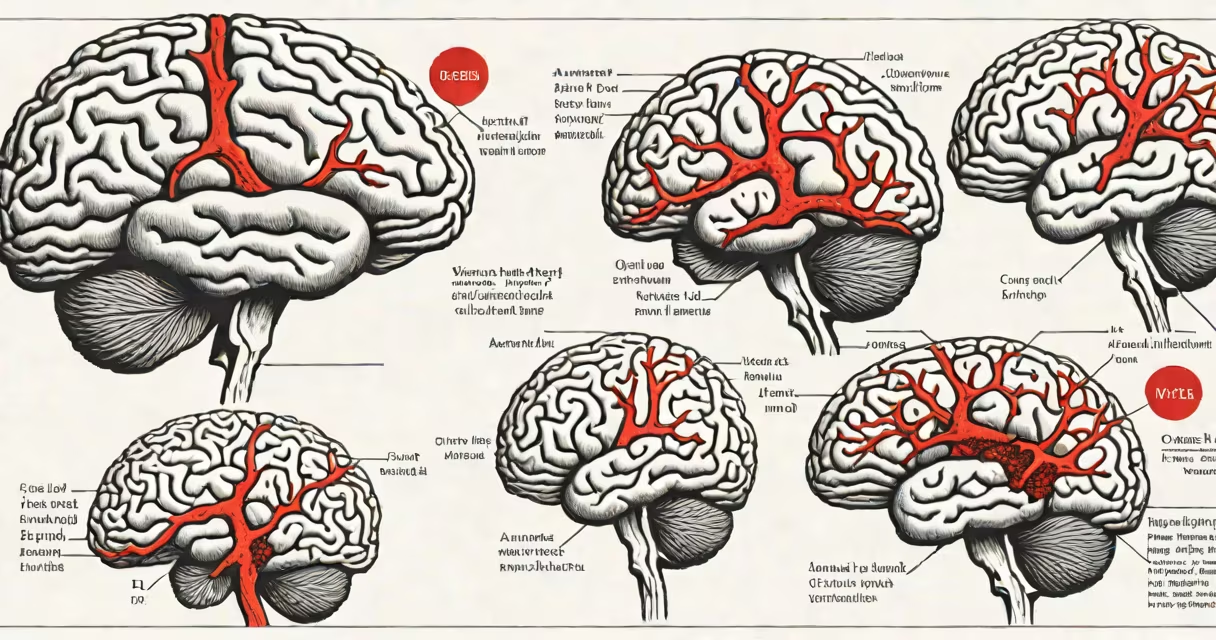
Syncope is a temporary loss of consciousness caused by a sudden drop in blood flow to the brain, typically resolving within seconds to minutes. It results from impaired cerebral perfusion, often triggered by cardiovascular or neurological factors.
Most cases involve brief episodes lasting less than 30 seconds, followed by rapid recovery. Syncope is not a disease but a symptom indicating an underlying issue requiring evaluation. It affects about 3% of adults annually and accounts for 1-3% of emergency department visits.
Brain function depends on continuous oxygenated blood supply. When cerebral blood flow drops below 20 mL/100g/min, consciousness is lost. This threshold is reached during syncope due to systemic hypotension or reduced cardiac output.
The body's autonomic system normally maintains blood pressure through baroreceptor feedback. During syncope, this regulation fails. For example, standing up quickly can cause orthostatic hypotension, reducing venous return and cardiac output. The brain detects low perfusion and triggers unconsciousness to promote recumbency and restore flow.
A 2021 study in the Journal of the American College of Cardiology found that 60% of syncope patients had identifiable triggers within 10 minutes prior to collapse, including emotional stress, prolonged standing, or sudden exertion.
Doctors classify syncope into four main categories based on mechanism. The most common is reflex-mediated syncope, followed by orthostatic, cardiac, and neurogenic types.
| Type | Prevalence | Key Mechanism | Common Triggers |
|---|---|---|---|
| Reflex-mediated (e.g., vasovagal) | ~50% | Excessive parasympathetic activation | Pain, fear, prolonged standing, dehydration |
| Orthostatic | ~15% | Postural hypotension | Medications, autonomic neuropathy, volume depletion |
| Cardiac | ~10% | Arrhythmia or structural heart disease | Bradyarrhythmias, tachyarrhythmias, hypertrophic cardiomyopathy |
| Neurogenic | <5% | Central nervous system dysfunction | Seizures, stroke, brainstem lesions |
Vasovagal syncope is the most frequent form. It occurs when a stimulus-like seeing blood or feeling anxious-activates the vagus nerve, causing bradycardia and vasodilation. A 2019 study in Heart Rhythm reported that 78% of diagnosed vasovagal episodes occurred in individuals under 40 years old.
Cardiac syncope is more dangerous. It may result from arrhythmias such as ventricular tachycardia or atrioventricular block. Structural issues like aortic stenosis or hypertrophic cardiomyopathy can also reduce cardiac output. These forms carry higher mortality risk and require urgent evaluation.
Syncope is often mistaken for seizure, especially when convulsions occur. However, seizures originate in the brain's electrical activity, while syncope stems from insufficient blood flow. The two can coexist, but distinguishing them is critical for treatment.
Another confusion arises between syncope and near-syncope. Near-syncope involves dizziness or lightheadedness without actual loss of consciousness. It signals similar pathophysiology but lacks the full collapse. Patients experiencing near-syncope should still seek evaluation, as it may indicate early-stage cardiovascular instability.
A non-obvious distinction: syncope is not synonymous with fainting in everyday language. Clinically, fainting refers to any episode of transient unconsciousness, but only those due to reduced cerebral perfusion qualify as syncope. Psychogenic pseudosyncope-fainting due to psychological factors without physiological change-is excluded from clinical syncope definitions.
A 32-year-old woman collapsed while waiting in line at a grocery store. She regained consciousness within 15 seconds and reported no memory of the event. Her vitals were stable upon arrival at the clinic. She had no history of heart disease, but her mother had a history of sudden cardiac death.
Initial assessment included an electrocardiogram (ECG), which showed normal sinus rhythm. A tilt-table test was positive-she lost consciousness after 10 minutes of upright positioning. This confirmed vasovagal syncope. She was advised to avoid prolonged standing and increase salt and fluid intake. No medication was needed.
This case illustrates that even in young, healthy individuals, syncope can stem from benign reflex mechanisms. However, family history of sudden death prompted further cardiac screening, including an echocardiogram and Holter monitor, to rule out structural or arrhythmic causes.
When evaluating syncope, clinicians prioritize identifying high-risk features: chest pain, palpitations, known heart disease, abnormal ECG, or family history of sudden death. These raise suspicion for cardiac etiology and warrant advanced testing.
Syncope is a transient loss of consciousness due to reduced cerebral blood flow. It is not a diagnosis but a sign of an underlying condition. The most common causes include reflex-mediated events like vasovagal syncope, orthostatic hypotension, cardiac arrhythmias, and structural heart disease.
Patients with syncope should undergo structured evaluation. Those with red flags-such as chest pain, abnormal ECG, or family history of sudden death-require urgent cardiology referral. Others may benefit from non-invasive testing like tilt-table or Holter monitoring.