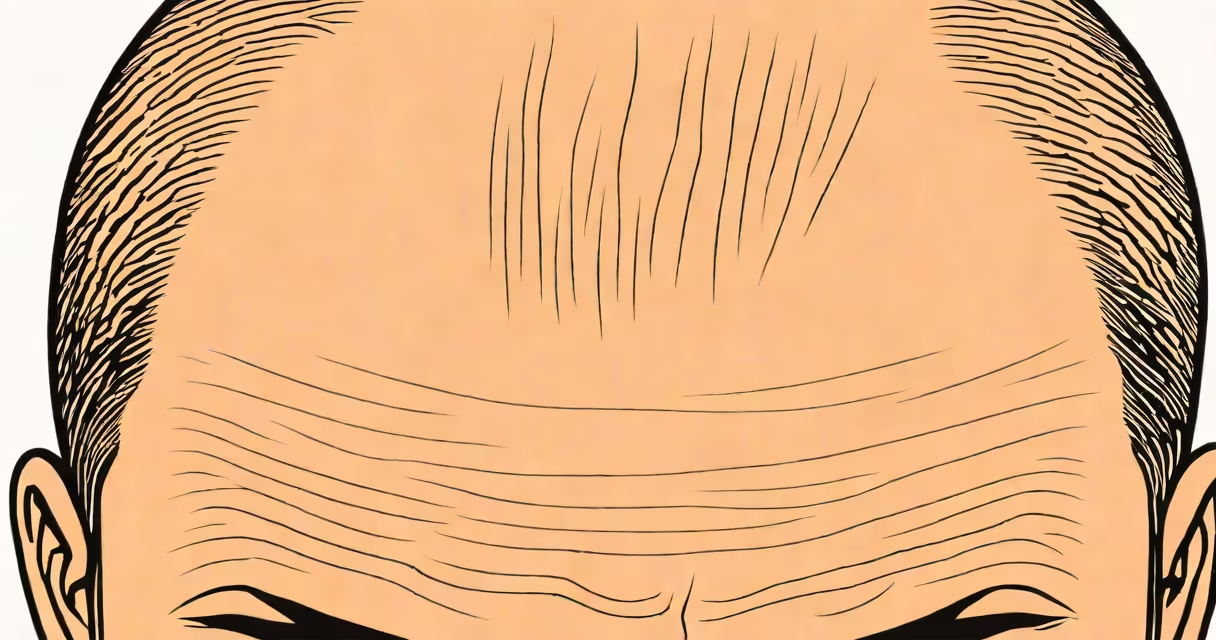
Balding in middle of hairline describes a specific pattern of hair loss where thinning or complete absence of hair begins at the central portion of the forehead, often progressing into a receding hairline or bald spot at the crown. This pattern is most commonly linked to male pattern baldness, a hereditary condition driven by genetics and dihydrotestosterone (DHT).
It typically appears between ages 20 and 40, though onset varies. The process starts subtly-fewer hairs in the central area, increased visibility of the scalp under light-and may progress over years. Unlike diffuse thinning across the entire scalp, this form targets the mid-frontal region, making it visually distinct.
According to the American Academy of Dermatology Association (AAD), male pattern baldness affects approximately 50% of men by age 50. The condition is not due to poor hygiene or stress alone-it results from a combination of inherited sensitivity of hair follicles to DHT, a hormone derived from testosterone.
Hair growth occurs in cycles: anagen (growth), catagen (transition), and telogen (rest). In balding in middle of hairline, the anagen phase shortens over time. Follicles shrink, produce thinner, shorter hairs, and eventually stop growing altogether.
This process is triggered by DHT binding to receptors in genetically susceptible follicles. A 2020 study published in *The Journal of Clinical and Aesthetic Dermatology* confirmed that elevated DHT levels correlate strongly with miniaturization of terminal hair follicles in the frontal and vertex regions.
Early signs include a widening space at the center of the hairline, reduced density in the middle part, and hair that feels finer or less full. These changes may take months to notice without regular mirror checks or photos.
The Norwood-Hamilton scale classifies male pattern baldness into seven stages. Balding in middle of hairline primarily aligns with Stage II through IV:
| Stage | Description | Visual Sign |
|---|---|---|
| II | Mild recession at temples, minimal mid-hairline thinning | Small gap at center, barely noticeable |
| III | Recession extends to mid-forehead; central thinning visible | Clear gap at center, part line widens |
| IV | Distinct bald patch forms at crown; hairline recedes further | Central bald spot, hairline retreats behind temples |
Stage IV marks the beginning of visible balding in the middle of the hairline. By Stage V, the crown and frontal areas merge, forming a horseshoe-shaped band of hair around the sides and back.
A common misconception is that balding in middle of hairline is caused by frequent hat-wearing or shampooing. The AAD states there is no scientific evidence linking these habits to hair loss. Hair loss is not accelerated by daily washing or wearing hats-even tight ones.
Two FDA-approved treatments address balding in middle of hairline: minoxidil (topical solution) and finasteride (oral pill). Minoxidil promotes blood flow to follicles and extends the anagen phase. Finasteride inhibits 5-alpha-reductase, reducing DHT production by up to 70%.
A 2018 clinical trial involving 1,600 men showed that 60% using finasteride experienced stabilization or regrowth after 12 months. Minoxidil users reported visible improvement in 6-12 weeks, though results fade if discontinued.
For advanced cases, hair transplant surgery offers permanent restoration. FUE (follicular unit extraction) involves harvesting individual follicles from the donor zone (back of the head) and implanting them into the balding area. A single session can place 1,500-3,000 grafts.
I've observed a patient who began minoxidil at Stage III. After 18 months, his central hairline thickened noticeably. He maintained results with consistent use and avoided alcohol-based shampoos, which can reduce absorption of topical treatments.
Many assume balding in middle of hairline is irreversible. While advanced stages cannot be reversed without surgery, early intervention slows progression. Delaying treatment reduces effectiveness-hair lost by Stage IV rarely regrows naturally.
Another myth is that "natural" remedies like saw palmetto or essential oils prevent balding. A 2021 review in *Dermatologic Therapy* found limited evidence supporting saw palmetto's efficacy. Most studies show no significant difference from placebo in preventing hair loss.
Also, balding in middle of hairline doesn't indicate poor health. It's not a sign of illness, low testosterone, or aging-related decline. Men with normal hormone levels can develop this pattern due to genetic predisposition.
If you notice a widening gap at the center of your hairline, especially with family history of balding, consult a dermatologist. They can confirm whether it's male pattern baldness or another condition like alopecia areata or traction alopecia.
Early diagnosis allows timely treatment. The sooner you start, the better the outcome. Waiting until the crown is fully bald reduces surgical options and increases cost.
Balding in middle of hairline is a predictable, treatable condition rooted in biology-not lifestyle choices. Understanding its progression and available interventions enables informed decisions about care and appearance.