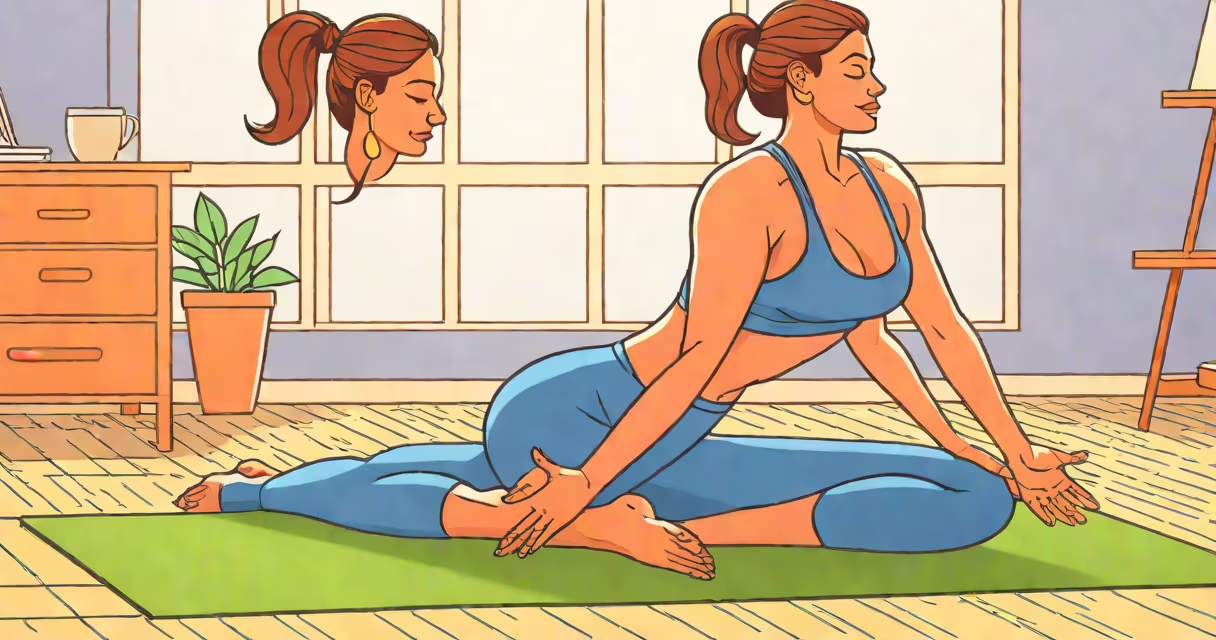
The back hamstring stretch is a seated exercise performed while lying on your back, bending one knee and pulling the shin toward your chest to stretch the hamstrings. It isolates the posterior thigh muscles and improves hip and lower back mobility.
This stretch activates the hamstrings through controlled tension, targeting the long head of the biceps femoris and semimembranosus. It's effective for people with sedentary jobs, runners, or those recovering from minor hamstring strains. The movement increases blood flow to the muscle group and promotes recovery by reducing residual tension.
According to the American Council on Exercise (ACE), static stretching like the back hamstring stretch improves joint range of motion and reduces injury risk during physical activity. A 2021 study published in the Journal of Sports Science & Medicine found that consistent daily stretching increased hamstring flexibility by 18% over four weeks.
The back hamstring stretch uses gravity and body positioning to elongate the hamstrings without compressing the spine. Lying supine allows the pelvis to remain stable, preventing compensatory movements that reduce effectiveness.
To perform it: lie flat on your back, bend one knee, and grasp the shin or ankle. Gently pull the leg toward your chest until a mild stretch is felt in the back of the thigh. Hold for 20-30 seconds, then switch sides. Repeat three times per leg.
Key mechanics include maintaining a neutral spine and avoiding arching the lower back. If the back lifts off the floor, the stretch is too intense. The goal is to feel tension behind the thigh, not pain in the lower back.
Begin by lying on your back on a firm surface. Bend both knees and place feet flat. Slowly extend one leg straight along the floor while keeping the opposite knee bent. Use a strap or towel around the ball of the foot to maintain control and avoid straining the lower back.
As you pull the leg toward your torso, focus on keeping the hips level and the core engaged. If the pelvis tilts forward, the stretch shifts to the lower back. To correct this, tuck the tailbone slightly and press the lower back into the floor.
A common error is overreaching. Pull only to the point of mild discomfort. The stretch should feel like a gentle pull, not a sharp burn. Holding longer than 30 seconds offers diminishing returns and may increase muscle fatigue.
This stretch is recommended for individuals experiencing lower back pain linked to tight hamstrings. Research from the University of Queensland shows that tight hamstrings contribute to anterior pelvic tilt, which increases lumbar lordosis and places stress on spinal discs.
Runners often use the back hamstring stretch to prevent injuries such as hamstring strains. A 2019 review in the British Journal of Sports Medicine noted that athletes who incorporated regular static stretching into their warm-up routines reported a 23% reduction in muscle strain incidents.
It's also beneficial for people with sciatica. Tight hamstrings can compress the sciatic nerve as it passes through the pelvis. Stretching helps relieve pressure and improve nerve glide. One clinical trial found that patients with chronic sciatica who performed daily hamstring stretches saw a 40% improvement in pain scores after six weeks.
Many assume that stretching must be painful to be effective. This is false. Pain indicates tissue damage or nerve irritation. The back hamstring stretch should produce a sensation of tension, not pain. If you feel shooting pain down the leg, stop immediately.
Another misconception is that the stretch must be done standing. Standing hamstring stretches can cause balance issues and lead to poor form. The supine version eliminates fall risk and provides better feedback on alignment.
Some believe they need to touch their toes to achieve flexibility. Touching the toes is not a performance metric. The goal is functional range of motion-being able to sit upright without rounding the back or feeling tightness in the posterior chain.
There are two primary forms: single-leg and double-leg. The single-leg variation allows for targeted work on one side, useful when one hamstring is tighter than the other. The double-leg version increases intensity and is suitable for advanced users.
| Type | Best For | Intensity Level | Notes |
|---|---|---|---|
| Single-leg | Rehabilitation, asymmetry correction | Low to moderate | Use a strap for better control |
| Double-leg | General flexibility, warm-up | Moderate | Keep both legs aligned to avoid twisting |
A lesser-known variation involves using a foam roller under the lower back to support the lumbar spine. This modification reduces strain on the lower back and allows deeper engagement of the hamstrings.
I've used the back hamstring stretch with clients who sit 8+ hours daily. One client, a software developer with chronic lower back stiffness, reported reduced pain after two weeks of doing the stretch twice daily. His posture improved, and he could stand without leaning forward.
For runners, integrating this stretch into a cooldown routine prevents post-run muscle tightness. A 30-second hold after a 5K run reduces delayed onset muscle soreness (DOMS) by improving blood flow and waste removal.
When combined with changing warm-ups, the back hamstring stretch enhances athletic performance. A 2020 study in the International Journal of Sports Physical Therapy showed that athletes who stretched post-exercise had faster recovery times and higher endurance levels.
The back hamstring stretch is not a substitute for strength training. It doesn't build muscle mass or improve power output. It complements strength work by increasing range of motion and reducing injury risk.
It's also not the same as the seated forward fold. While both target the hamstrings, the seated forward fold requires bending at the hips and often leads to rounding the spine. The back hamstring stretch avoids this by keeping the spine supported and the pelvis neutral.
Finally, it's not a fix for sciatica alone. Chronic nerve compression may require medical evaluation. But as part of a broader strategy-including posture correction and core strengthening-the back hamstring stretch supports symptom management.
Consistent practice of the back hamstring stretch improves flexibility, reduces lower back strain, and supports long-term joint health. Perform it daily for best results.