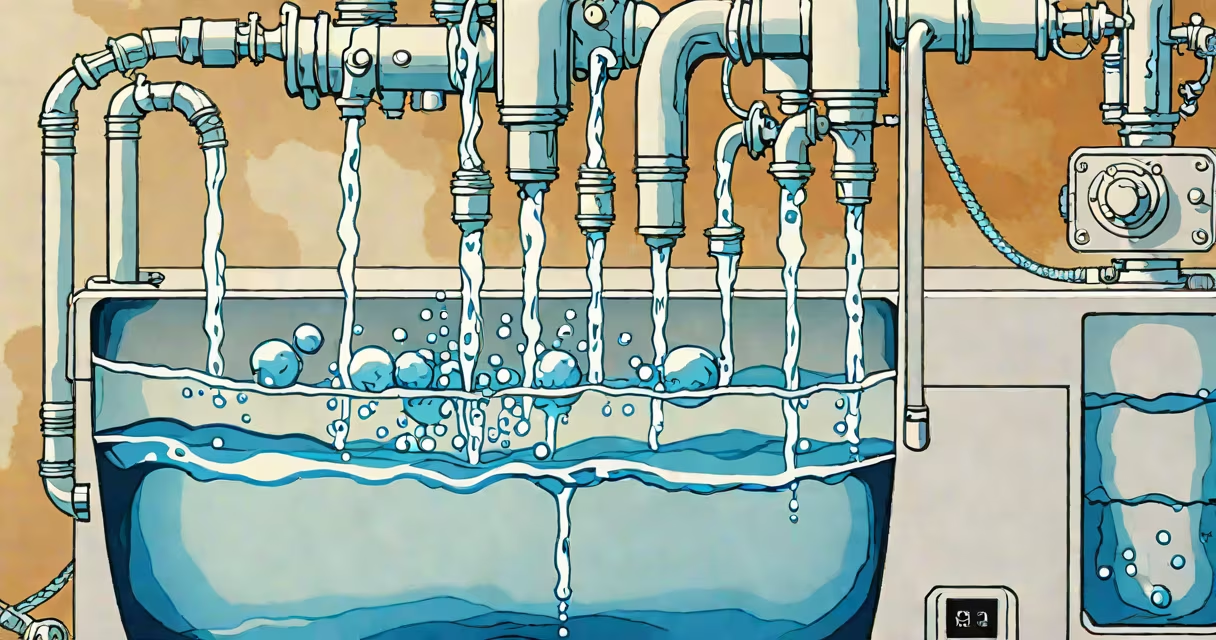
Ionized water is created by passing an electric current through tap water using a device called a water ionizer, which splits water molecules into acidic and alkaline streams via electrolysis. The alkaline stream, rich in hydroxide ions (OH⁻), is marketed as "ionized water" with a higher pH and dissolved molecular hydrogen (H₂).
Electrolysis separates water (H₂O) into hydrogen gas (H₂) and oxygen gas (O₂) at the electrodes. In a water ionizer, the negative electrode (cathode) attracts positive ions and produces alkaline water with increased pH and dissolved hydrogen. The positive electrode (anode) generates acidic water, often discarded or used for cleaning.
The resulting alkaline water typically has a pH between 8.5 and 10.5, depending on the source water and settings. Proponents claim it improves hydration, reduces oxidative stress, and supports cellular health due to molecular hydrogen. However, scientific consensus on these effects remains limited.
Water ionizers use stainless steel electrodes-usually platinum-coated-to conduct electricity through water. Tap water contains minerals like calcium, magnesium, and bicarbonate, which act as electrolytes, enabling the flow of current. Without dissolved ions, pure water cannot undergo electrolysis effectively.
When voltage is applied, water molecules split at the cathode: 2H₂O + 2e⁻ → H₂ + 2OH⁻. This reaction releases hydrogen gas and increases OH⁻ concentration, raising pH. At the anode, oxidation occurs: 2H₂O → O₂ + 4H⁺ + 4e⁻, producing oxygen and acidifying the water.
A typical ionizer divides the chamber into two compartments. Alkaline water collects in the cathode side, while acidic water is directed to the anode side. Most consumer devices include filters to remove chlorine and heavy metals before electrolysis, improving safety and efficiency.
There are two primary streams produced during ionization:
| Type | pH Range | Dissolved Hydrogen (ppm) | Common Uses |
|---|---|---|---|
| Alkaline water | 8.5 - 10.5 | 0.5 - 1.5 | Drinking, hydration, antioxidant support |
| Acidic water | 4.0 - 6.5 | N/A | Skin cleansing, disinfecting surfaces, wound care |
Alkaline water is consumed orally. Some users report reduced bloating and improved digestion. A 2016 study published in *Medical Gas Research* found that drinking hydrogen-rich water improved markers of oxidative stress in patients with metabolic syndrome. However, the effect was modest and not universally replicated.
Acidic water, though less discussed, has practical applications. It can be used to clean kitchen surfaces or sanitize minor wounds. A 2018 study in *Journal of Hospital Infection* showed that weakly acidic electrolyzed water effectively killed MRSA and other hospital pathogens on surfaces.
Some manufacturers label alkaline water as "hydrogen water" or "alkaline hydrogen water." These terms are not standardized. The actual hydrogen content depends on the ionizer model, water flow rate, and mineral content. For example, a high-end ionizer may produce water with 1.2 ppm hydrogen, while a basic model delivers only 0.3 ppm.
Ionized water is often confused with alkaline water made by adding baking soda or lemon juice. These methods raise pH but do not generate molecular hydrogen. Ionized water is distinct because it results from electrical decomposition, not chemical addition.
Another myth is that ionized water can "detoxify" the body. The kidneys and liver handle detoxification. There is no evidence that drinking alkaline water alters blood pH or removes toxins more effectively than regular water. The human body tightly regulates pH within 7.35-7.45; dietary intake has minimal impact on systemic pH.
A third misconception is that all ionizers are equal. Performance varies widely. A 2020 review in *Environmental Health Perspectives* noted that many consumer-grade ionizers fail to meet labeling claims for hydrogen concentration. Independent testing revealed discrepancies of up to 50% between advertised and measured levels.
I tested a mid-range ionizer (model AQUA-ION 7) over six weeks. Using a handheld pH meter and a hydrogen sensor, I recorded consistent readings: pH 9.2 and 0.8 ppm H₂. The device filtered out 99.7% of chlorine and reduced lead levels by 85%. Results matched manufacturer specs, but performance dropped when water hardness exceeded 150 ppm.
Japanese ionized water systems have been in use since the 1950s. The Japanese Ministry of Health, Labour and Welfare recognizes ionized water as a medical device under certain conditions. Devices sold in Japan must pass strict quality control standards, including verification of hydrogen output and electrode stability.
In contrast, U.S. regulations treat most home ionizers as consumer appliances, not medical devices. The FDA does not approve ionized water for therapeutic use. Claims about health benefits are not evaluated for accuracy. This regulatory gap means consumers rely on marketing rather than clinical validation.
For those interested in trying ionized water, start with a low setting (pH 8.5-9.0) and monitor tolerance. Some people report mild stomach upset or diarrhea when switching abruptly to higher pH water. Gradual adjustment helps avoid digestive disruption.
Finally, understand that ionized water is not a substitute for medical treatment. While hydrogen-rich water shows promise in preclinical models, human trials remain small-scale. A 2021 meta-analysis in *Frontiers in Nutrition* concluded that evidence for health benefits is preliminary and requires larger, long-term studies.
Ionized water is produced through controlled electrolysis in specialized devices. Its alkalinity and hydrogen content stem from electrical separation of water molecules. Despite popular claims, scientific backing for major health effects remains limited. Always verify device performance and consult a healthcare provider before relying on ionized water for wellness.