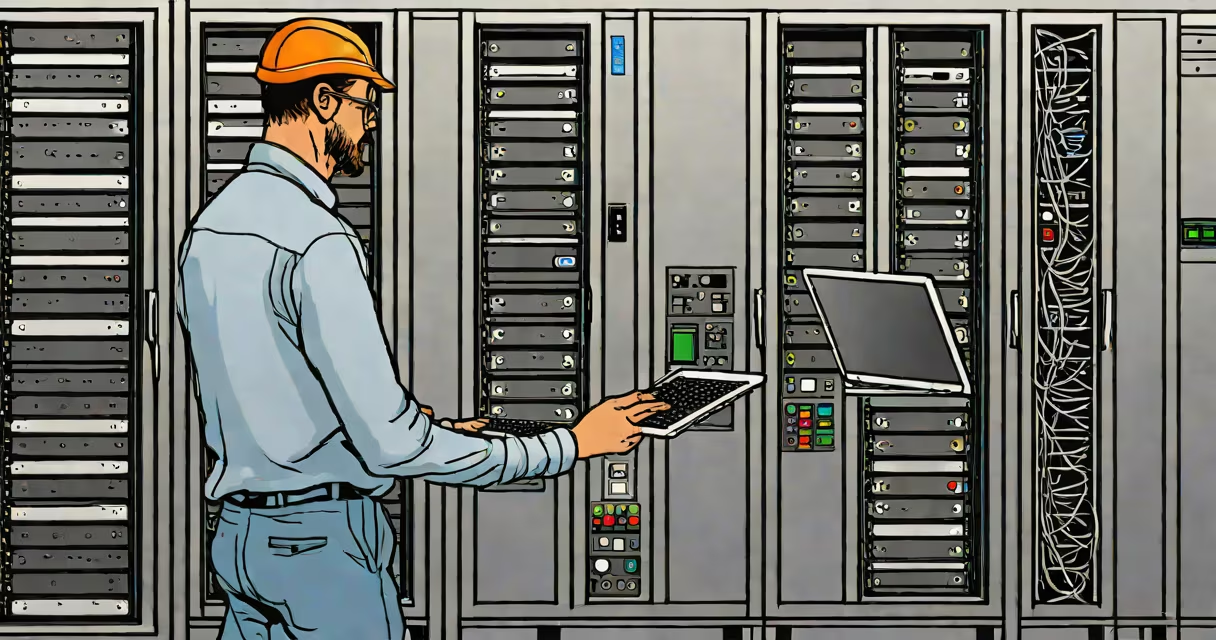
An Apple systems engineer is a specialized IT professional responsible for designing, implementing, and maintaining enterprise-grade computing infrastructure using Apple's hardware, software, and services. This role focuses on integrating macOS, iOS, and Apple's cloud platforms into large-scale business environments while ensuring security, scalability, and reliability.
These engineers work primarily in organizations that rely heavily on Apple devices-such as educational institutions, creative agencies, and Fortune 500 companies with significant Mac and iPad adoption. They manage networked environments, configure centralized device management via Apple Business Manager and Apple School Manager, and ensure compliance with internal policies and external regulations like GDPR or HIPAA.
Unlike general IT support roles, an Apple systems engineer operates at the architectural level. They don't troubleshoot individual user issues-they design systems that prevent those issues from occurring at scale. For example, they may deploy automated enrollment workflows for hundreds of iPads across multiple campuses, enforce secure configuration profiles, and monitor system health through tools like Jamf Pro or Microsoft Intune with Apple integration.
Apple systems engineers function as technical architects within enterprise IT departments. Their core responsibility is to align Apple's system with organizational goals. This includes planning device rollouts, setting up secure authentication methods such as SSO via Azure AD or Google Workspace, and managing software distribution across thousands of endpoints.
They use command-line tools like profiles, mdmctl, and jamf to automate tasks. For instance, when deploying 500 new MacBook Pros to a university's computer science department, the engineer scripts a workflow that automatically installs required development tools, configures firewall settings, enrolls devices into mobile device management (MDM), and applies custom wallpapers-all without manual intervention.
Security is central to their work. They implement endpoint protection using Apple's built-in features like Gatekeeper, System Integrity Protection (SIP), and FileVault encryption. They also audit access logs and respond to anomalies detected by tools like Apple's Device Enrollment Program (DEP) reporting or third-party SIEM integrations.
Apple systems engineers build and maintain systems based on several interdependent layers:
| Layer | Key Technologies | Purpose |
|---|---|---|
| Device Management | Apple Business Manager, DEP, MDM solutions (Jamf, Kandji) | Automated provisioning, remote wipe, app deployment |
| Identity & Access | SSO (SAML/OAuth), Azure AD, Google Workspace | Single sign-on, conditional access, identity federation |
| Software & Patching | Self Service app, Apple Remote Desktop, MDM push updates | Centralized software installation and OS update scheduling |
| Network Integration | LDAP, RADIUS, VLANs, Wi-Fi 6E | Secure network access, device discovery, bandwidth control |
| Monitoring & Reporting | Log aggregation (Syslog, Splunk), dashboards (Grafana) | Real-time visibility into device status and policy violations |
A common misconception is that Apple systems engineers only support Macs. In reality, they manage entire ecosystems including iPhones, iPads, Apple TVs, and Apple Watch-especially in schools and healthcare facilities where wearables track patient vitals or student attendance.
For example, a hospital in Chicago deployed 1,200 iPads to nursing stations using Apple Configurator 2 and Jamf Pro. The systems engineer configured each device to auto-launch a custom clinical app, restrict camera access, require biometric login, and report usage data daily. This reduced setup time from 15 minutes per device to under 90 seconds during bulk enrollment.
Apple systems engineers are often mistaken for general IT support staff or software developers. While both roles interact with Apple products, their functions differ sharply. Support technicians resolve immediate user problems-like "My Mac won't connect to Wi-Fi." Engineers solve systemic failures-like "Why did 30% of our fleet fail to enroll in MDM?"
Another frequent mix-up is equating Apple systems engineers with software systems engineers. The latter focus on building applications and backend services-writing code, managing APIs, scaling databases. A software systems engineer might develop an internal tool to track device inventory. An Apple systems engineer helps tool runs securely on every managed Mac, integrates with SSO, and complies with data retention laws.
Even within Apple-focused IT, confusion arises between systems engineering and AppleCare Enterprise support. AppleCare provides tiered technical assistance for hardware and software issues. Systems engineers don't call AppleCare-they use it as a last resort. They're expected to diagnose and fix problems independently using deep knowledge of Apple's frameworks and networking protocols.
One non-obvious fact: Apple systems engineers frequently work with non-Apple systems. Many enterprises run hybrid environments-Windows servers, Linux-based databases, cloud services on AWS or Azure. The engineer must bridge Apple devices into these systems using standards like LDAP, Kerberos, and OAuth 2.0. Without this interoperability, Apple-only deployments fail at scale.
In 2023, the Los Angeles Unified School District rolled out 25,000 iPads to middle school students. The project was led by a team of five Apple systems engineers. Their task: ensure all devices were enrolled, secured, and ready for classroom use within six weeks.
Step 1: Devices were ordered through Apple's Volume Purchase Program (VPP) and pre-configured using Apple Business Manager. Each iPad received a unique serial number, assigned to a classroom group, and tagged with location metadata.
Step 2: The engineers created a custom configuration profile that disabled screen recording, restricted access to the App Store, enabled Find My, and enforced passcode requirements. Profiles were pushed via MDM during initial setup.
Step 3: A custom app called "Classroom Connect" was distributed through the MDM. It included lesson plans, student rosters, and teacher feedback forms. The app required biometric authentication and encrypted local storage.
Step 4: Monitoring was set up using Jamf Pro's analytics dashboard. Daily reports tracked enrollment completion rates, failed updates, and unauthorized changes. Any device flagged for policy violation triggered an automatic alert to the IT team.
The result: 98.7% of devices were successfully deployed and operational within the deadline. The project was cited by Apple in its 2023 Education Innovation Report as a model for large-scale device rollouts.
Apple systems engineers typically hold certifications such as Apple Certified Professional (ACSP), Apple Certified Associate (ACA), or Apple Pro Certification. Many also earn industry-recognized credentials like CompTIA Security+, CISSP, or AWS Certified Solutions Architect.
One of my own experiences involved configuring a multi-site rollout for a global law firm. We used Apple Business Manager to assign devices to regional offices, then scripted MDM policies that enforced disk encryption, blocked sideloading, and restricted Bluetooth pairing. After testing in a staging environment, we deployed to 1,800 users across 12 countries. The process took 11 days end-to-end, with zero downtime.
For context, the average salary for an Apple systems engineer in the U.S. ranges from $95,000 to $140,000 annually, depending on location and experience. Top-tier roles in Silicon Valley or New York City exceed $160,000.