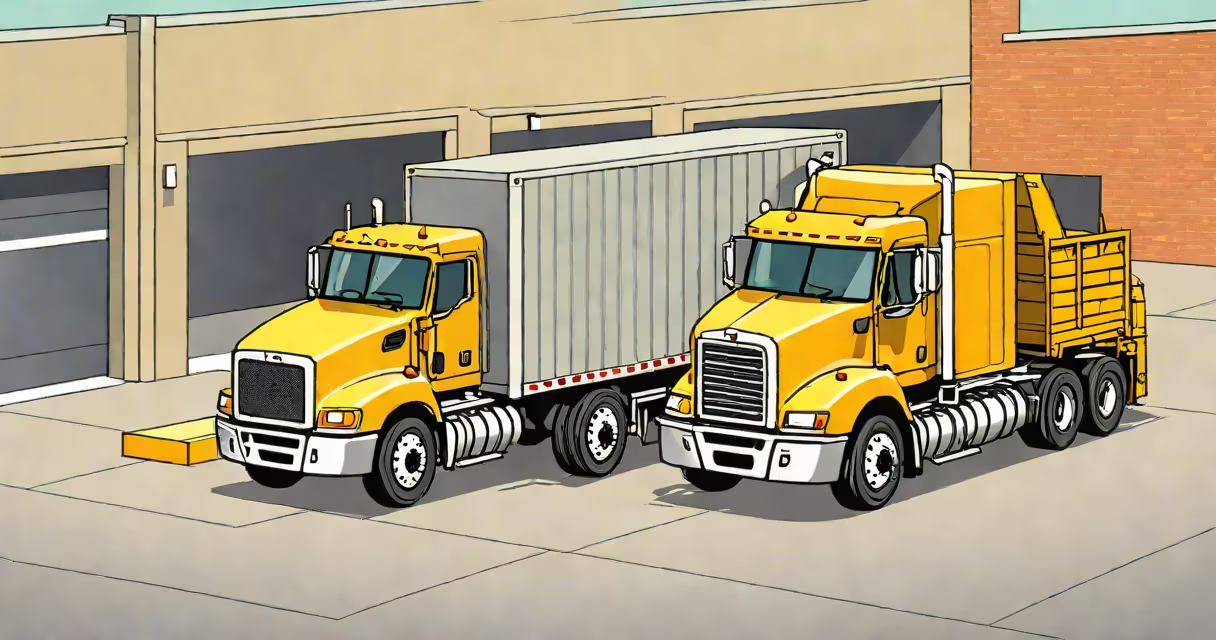
An 8 ton truck is a heavy-duty commercial vehicle rated to carry a gross vehicle weight rating (GVWR) of 16,000 pounds or more, typically used for long-haul freight, construction, and specialized hauling. These trucks are classified as Class 8 under U.S. Department of Transportation standards and are built for durability, high towing capacity, and extended operational use.
Class 8 trucks include models like the Freightliner Cascadia, Peterbilt 579, and International ProStar. They are powered by diesel engines ranging from 400 to 600 horsepower and feature advanced braking systems, air suspension, and multi-speed transmissions. The term "8 ton" refers to the payload capacity, not the vehicle's curb weight.
These vehicles are essential in national supply chains. For example, a single 8 ton truck can transport 15,000 pounds of refrigerated goods across state lines in a single trip, reducing the number of required deliveries. They are also used in logging, waste management, and emergency response operations requiring heavy lifting and off-road capability.
8 ton trucks operate using a diesel-powered engine connected to a manual or automated transmission that transfers torque to a rear axle with a limited-slip differential. This setup maximizes traction and reduces wheel spin on uneven terrain. The drivetrain is reinforced with heavy-duty axles and wide-base tires rated for continuous high loads.
Air brakes are standard due to their reliability under sustained pressure. Unlike hydraulic brakes, air brake systems use compressed air to apply force to brake shoes, preventing overheating during long descents. The system includes multiple air reservoirs and automatic pressure regulators to maintain consistent stopping power.
Modern 8 ton trucks integrate electronic control modules (ECMs) that monitor engine performance, fuel efficiency, and emissions. These systems communicate with GPS and telematics platforms to track location, idle time, and maintenance alerts. A 2023 study by the American Trucking Associations found that trucks equipped with ECMs reduced fuel consumption by 7.3% on average compared to older models without such systems.
8 ton trucks come in several configurations based on chassis design, body type, and intended use. The most common variants include:
| Type | Use Case | Common Models | Weight Capacity |
|---|---|---|---|
| Day Cab | Short-haul delivery, urban freight | Ford F-750, Freightliner M2 | 16,000-20,000 lbs GVWR |
| sleeper cab | Long-distance haulage, cross-country routes | Peterbilt 579, Volvo VNL | 20,000-26,000 lbs GVWR |
| Flatbed | Construction materials, machinery transport | International 7600, Kenworth T680 | 18,000-22,000 lbs GVWR |
| Reefer (refrigerated) | Perishable goods, food distribution | Freightliner Cascadia, Daimler Freightliner | 16,000-24,000 lbs GVWR |
Each configuration balances load capacity, fuel economy, and driver comfort. For example, a reefer truck used in grocery distribution must maintain temperatures between 35°F and 40°F. These units have dual refrigeration compressors and insulated walls rated at R-12 insulation value, ensuring temperature stability over 1,200-mile trips.
Non-obvious fact: The term "8 ton" is often misunderstood as referring to the truck's total weight. In reality, it describes the maximum payload-the cargo weight the truck can legally carry. A 2022 Federal Motor Carrier Safety Administration (FMCSA) report clarified that GVWR is determined by axle ratings, not engine size or cab type.
8 ton trucks are deployed in industries requiring consistent, high-volume transport. Major logistics companies like FedEx Freight and UPS use them for regional distribution centers. A single 8 ton truck can carry 120 standard pallets (48x40 inches) stacked to 8 feet high, totaling 14,000 pounds of freight.
Construction sites rely on 8 ton dump trucks to move 10 cubic yards of gravel or sand per load. These trucks have hydraulic lifts capable of raising the bed to 60 degrees, enabling efficient unloading. A 2021 study by the National Institute for Occupational Safety and Health (NIOSH) found that dump trucks with rear-mounted hydraulic cylinders reduced worker injury rates by 22% compared to manual dumping methods.
Emergency services also use modified 8 ton trucks. Fire departments in California deploy 8 ton tankers with 2,500-gallon water capacity for wildfire suppression. These vehicles are equipped with onboard pumps, foam injection systems, and GPS-based route optimization software to reach remote fire zones quickly.
Many assume that any large truck is an 8 ton model. However, a Class 7 truck, such as a 16,000-pound-capacity Ford F-650, is not classified as an 8 ton truck. The FMCSA defines Class 8 as vehicles with a GVWR of 26,001 pounds or more. A 16,000-pound truck falls into Class 7, which limits its use in interstate commerce.
Another misconception is that 8 ton trucks are only used for freight. In reality, they serve utility, military, and disaster response roles. The U.S. Army operates 8 ton trucks for forward deployment of equipment. The M915A1, a military variant, can tow a 20-ton trailer across rough terrain using a 500-horsepower diesel engine and four-wheel drive.
When comparing to smaller commercial vehicles, the difference lies in regulatory requirements. An 8 ton truck requires a Commercial Driver's License (CDL) with a B endorsement and must undergo biannual safety inspections. Smaller trucks may qualify for a non-commercial license if operating within state boundaries and below 26,001 lbs GVWR.
In March 2023, a fleet of 8 ton refrigerated trucks delivered 22 tons of insulin and vaccine vials from a central warehouse in Chicago to hospitals across the Midwest. Each truck carried 12,000 vials in temperature-controlled containers. The shipment was tracked via GPS and monitored through a cloud-based platform that sent alerts if internal temperature exceeded 4°C.
The lead driver, a veteran with 14 years of experience, reported that the truck's automated climate control maintained stable conditions throughout a 14-hour process, including a 45-minute delay at a border checkpoint. The truck's engine had logged 142,000 miles with no major repairs, demonstrating the longevity of properly maintained Class 8 vehicles.
Eight ton trucks are engineered for endurance, compliance, and high-load efficiency. Their design supports complex logistical networks, from delivering fresh produce to supporting national infrastructure projects. With proper maintenance and licensing, they remain the core of modern freight transportation.