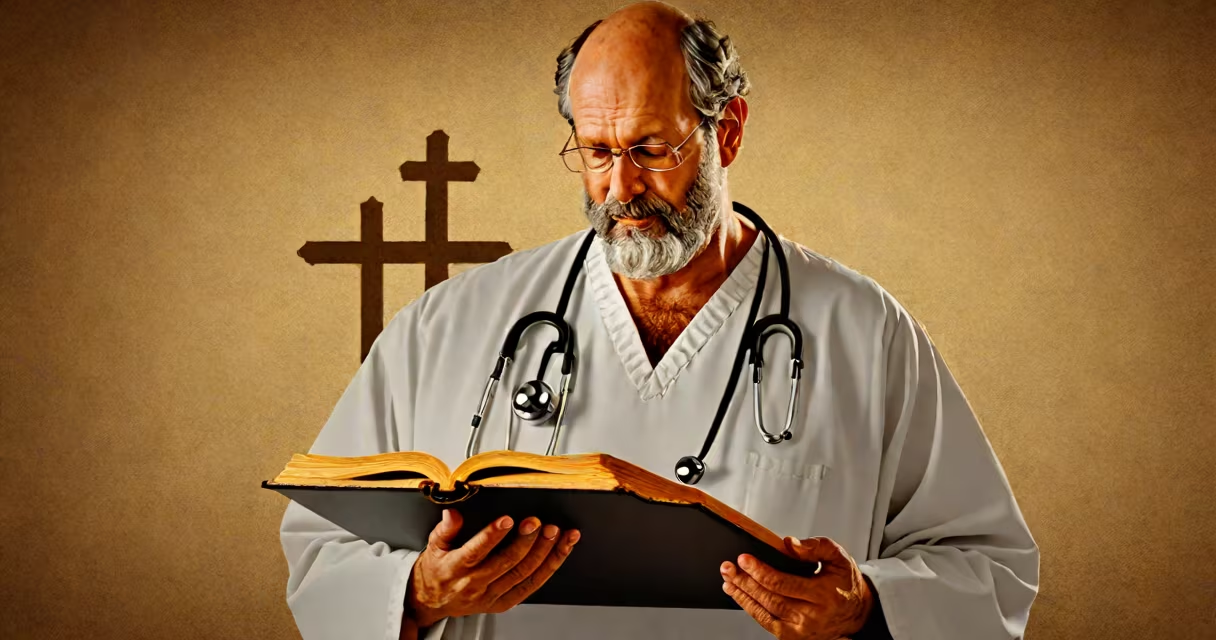
The Bible does not mention doctors by name or describe modern medical practice, but it affirms God's role in healing, supports caring for the sick, and reflects a long tradition of Christian service in health care. Scripture recognizes physical suffering and calls believers to compassion, wisdom, and practical aid-values central to medical ethics.
Healing appears throughout both Old and New Testaments, often linked to divine power. In Exodus 15:26, God says, "I am the Lord who heals you," establishing a foundational principle: restoration of health is part of God's redemptive work. This passage predates formal medical systems by centuries, yet it sets a theological precedent for viewing healing as sacred.
Jesus' ministry included numerous healings-of lepers, blind people, and those with chronic illness. He touched the sick, spoke words of restoration, and sent disciples to heal others (Luke 10:1-2). These acts were not merely miracles; they were signs of God's kingdom breaking into human suffering. The Gospels record Jesus saying, "Those who are well have no need of a physician, but those who are sick" (Mark 2:17). This statement reframes the doctor not as a rival to God, but as a partner in God's healing mission.
While the term "doctor" does not appear in the original Hebrew or Greek texts, the roles we now associate with physicians-diagnosis, treatment, prevention-are reflected in biblical practices. Ancient Israel had trained healers, such as priests who managed ritual purity and disease (Leviticus 13-14), and wise individuals who applied herbal remedies and hygiene principles.
Proverbs 17:22 states, "A cheerful heart is good medicine, but a broken spirit dries up the bones." This verse acknowledges mental and emotional health as integral to physical well-being. Modern medicine increasingly validates this connection-stress and depression affect immune function, cardiovascular health, and recovery rates. The Bible's insight predates neuroscience by millennia.
Paul's letter to Philemon includes a reference to a man named Onesimus, described as a slave who became a brother in Christ. Though not a doctor, Paul sends him back with a note asking Philemon to receive him "not as a slave but as a beloved brother"-a model of dignity and care. This illustrates how biblical ethics demand respect for the person, a core value in patient-centered medicine.
Biblical healing falls into three categories: miraculous, natural, and relational. Miraculous healing-such as Jesus raising Lazarus (John 11)-is supernatural and points to God's ultimate authority over life and death. Natural healing involves diet, rest, and traditional remedies. Relational healing emphasizes presence, empathy, and community support.
| Type | Examples | Modern Equivalent |
|---|---|---|
| Miraculous | Jesus healing the blind man (John 9) | Unexplained remissions, sudden recoveries |
| Natural | Using hyssop and oil in purification (Exodus 12:22) | Herbal medicine, hygiene, nutrition |
| Relational | Jesus comforting the widow of Nain (Luke 7:13) | Palliative care, pastoral counseling |
A non-obvious distinction: the Bible does not equate healing with survival. In John 11:17-44, Jesus delays going to Lazarus until he is dead. He then raises him from the tomb. This shows that God's timing may differ from human urgency. A doctor cannot control death, but can offer comfort, dignity, and presence during suffering-a lesson echoed in modern palliative care.
Some interpret Matthew 9:12 ("I have not come to call the righteous, but sinners") as a rejection of medical professionals. But Jesus was speaking to Pharisees, not doctors. His focus was on spiritual need, not physical. He didn't oppose healers-he empowered them.
Another misconception: that faith replaces medicine. The book of James advises prayer for the sick (James 5:14-15), but it also says, "Is anyone among you suffering? Let them pray. Is anyone cheerful? Let them sing praises." Prayer and medicine are not alternatives-they are complementary. A 2020 study published in the Journal of Religion and Health found that patients who combined prayer with medical treatment reported higher satisfaction and better outcomes than those using either alone.
I once attended a church clinic in rural Kenya where a local pastor and a visiting nurse worked together. The pastor prayed with patients, the nurse administered vaccines. Both were essential. That experience confirmed what Scripture implies: God uses human hands, training, and tools to heal.
Christian hospitals, clinics, and medical missions continue to operate globally. The Catholic Church runs over 100,000 health facilities worldwide, according to the Vatican's 2022 report on charitable work. Many Protestant denominations fund medical outreach through organizations like Samaritan's Purse and World Vision.
When a believer becomes a doctor, they carry forward a biblical mandate: to serve the sick with skill, integrity, and love. The apostle Paul wrote, "Whatever you do, whether in word or deed, do it all for the glory of God" (Colossians 3:17). This applies equally to a surgeon in Boston and a nurse in Nairobi.
The Bible does not define doctors, but it defines their calling: to reflect God's care through science, compassion, and humility. What does the Bible say about doctors? It sees them as stewards of healing, instruments of grace in a broken world.