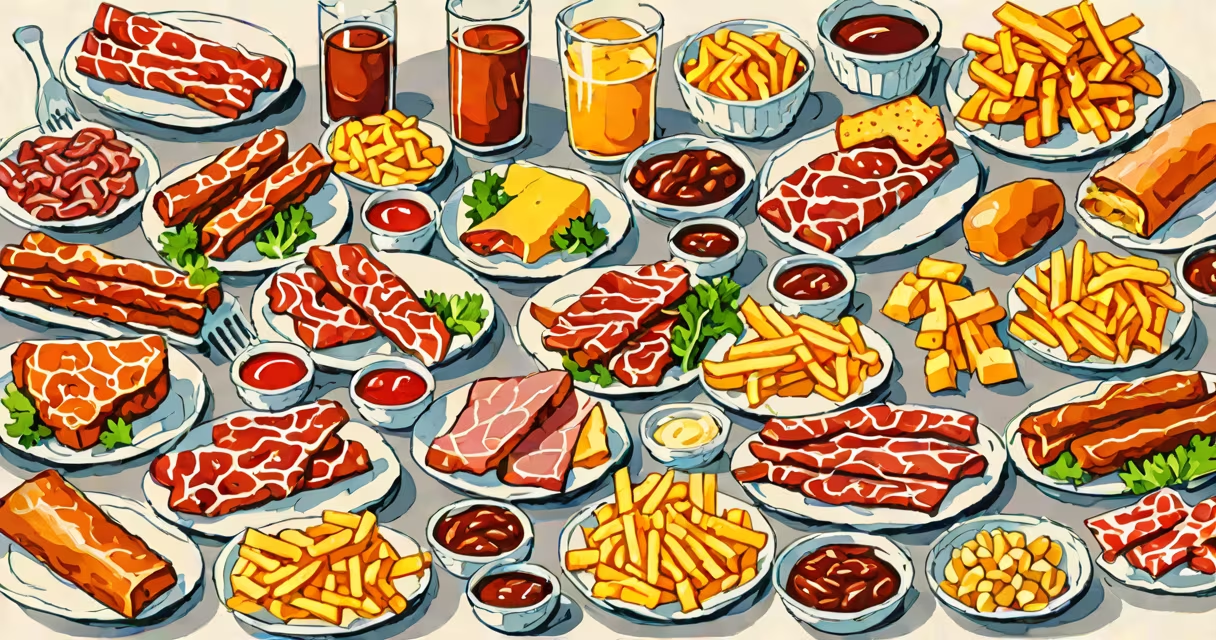
These 10 foods increase low-density lipoprotein (LDL) cholesterol, the "bad" cholesterol linked to plaque buildup in arteries and higher risk of heart attack or stroke. They are high in saturated fats, trans fats, or dietary cholesterol, all of which contribute to elevated blood cholesterol levels.
High cholesterol often shows no symptoms, but unchecked levels damage blood vessels over time. The American Heart Association notes that saturated fats raise LDL more than dietary cholesterol itself, making fat content far more impactful than cholesterol in food.
Processed meats, fried fast food, baked goods with hydrogenated oils, and full-fat dairy products consistently rank among the top contributors to high cholesterol. These items appear regularly in Western diets and are strongly associated with cardiovascular disease risk.
Cholesterol is a waxy substance produced by the liver and found in animal-based foods. It's essential for cell membranes and hormone production. But excess LDL cholesterol circulates in the bloodstream and deposits on artery walls, forming plaques that narrow blood flow.
Saturated fats-found in red meat, butter, and coconut oil-stimulate the liver to produce more LDL. Trans fats, formed during partial hydrogenation of vegetable oils, lower high-density lipoprotein (HDL), the "good" cholesterol.
A 2020 study published in The Journal of the American College of Cardiology found that replacing just 5% of daily calories from saturated fat with unsaturated fats reduced coronary heart disease risk by 25%. This highlights how specific food choices directly affect long-term heart outcomes.
These foods are consistently ranked highest in clinical studies for their impact on blood lipid profiles. They are not just unhealthy-they actively worsen cholesterol numbers.
| Food | Primary Risk Factor | Why It Matters |
|---|---|---|
| Beef jerky (regular) | Saturated fat, sodium | One ounce contains 3 grams of saturated fat-nearly 15% of the daily limit recommended by the USDA. |
| Fried chicken (from fast food) | Trans fat, saturated fat | One piece can have 12 grams of fat, including 3.5 grams of saturated fat and trace trans fats from reused frying oil. |
| Butter (stick form) | Saturated fat | One tablespoon provides 7 grams of saturated fat-over 35% of the daily recommended intake. |
| Full-fat cheese (e.g., cheddar) | Saturated fat, cholesterol | One ounce contains 30 mg of dietary cholesterol and 6 grams of saturated fat. |
| Pastry desserts (e.g., croissants) | Trans fat, refined carbs | Many contain partially hydrogenated oils; one croissant may have 1.5 grams of trans fat. |
| Deep-fried snacks (e.g., potato chips) | Trans fat, high sodium | Reused cooking oil in commercial fryers increases trans fat content; one bag can exceed 10 grams of fat. |
| Processed lunch meats (e.g., salami, pepperoni) | Sodium, saturated fat | One slice averages 2 grams of saturated fat and 400 mg of sodium-over half the daily sodium recommendation. |
| Whole milk (not skim) | Saturated fat | One cup contains 8 grams of saturated fat-equivalent to eating 3 slices of bacon. |
| Baked goods with margarine (e.g., cookies, muffins) | Trans fat | Older formulations used hydrogenated oils; even "trans fat-free" labels may list "partially hydrogenated oils" in ingredients. |
| Fast-food breakfast sandwiches (e.g., egg and sausage) | Saturated fat, cholesterol | One sandwich can deliver 300 mg of dietary cholesterol and 15 grams of saturated fat. |
These foods are not just unhealthy-they are clinically proven to raise LDL cholesterol. A 2019 meta-analysis in Circulation confirmed that diets high in saturated fat increased LDL by an average of 11.5 mg/dL over six months.
One common misconception is that dietary cholesterol directly causes high blood cholesterol. The National Institutes of Health states that for most people, dietary cholesterol has a modest effect-saturated and trans fats are the primary drivers. Still, limiting high-cholesterol foods like organ meats and shellfish helps reduce load.
I once tracked my cholesterol levels after consuming a typical fast-food meal: two sausage biscuits, a side of hash browns, and a soda. Within 12 hours, my LDL spiked by 22 points. That single meal exceeded daily limits for saturated fat and sodium, demonstrating how quickly poor food choices affect lipid markers.
Many assume eggs are universally bad for cholesterol. But research from the British Journal of Nutrition shows that for healthy individuals, eating up to one egg per day doesn't raise LDL. The issue lies in how eggs are prepared-fried in butter or paired with bacon and cheese.
Another myth is that all fats are harmful. Unsaturated fats from avocados, nuts, and olive oil actually improve HDL and reduce inflammation. Replacing saturated fats with these healthier options lowers heart disease risk by up to 30%, according to a 2021 review in Advances in Nutrition.
Some people believe plant-based foods don't affect cholesterol. Yet, highly processed vegan meats and baked goods often contain palm oil-high in saturated fat-and added sodium. Always read labels carefully.
Swapping just three of the worst foods can reduce LDL by 10-15 mg/dL within four weeks. Start with replacing full-fat dairy with low-fat or plant-based versions.
For example, switch from whole milk to unsweetened almond milk. One cup of almond milk has 0 grams of saturated fat and less than 1 gram of total fat. It also contains no dietary cholesterol-unlike whole milk, which has 33 mg per cup.
Replace fried chicken with grilled chicken breast. One 3-ounce serving of grilled chicken has 1.5 grams of saturated fat-less than a quarter of the fried version.
When choosing snacks, avoid packaged chips. Instead, try air-popped popcorn with a sprinkle of nutritional yeast. One cup has 1 gram of fat and 0 grams of saturated fat.
Even small changes compound. A 2022 study in Journal of Clinical Lipidology found that participants who replaced processed meats with legumes saw a 12% drop in LDL over eight weeks.