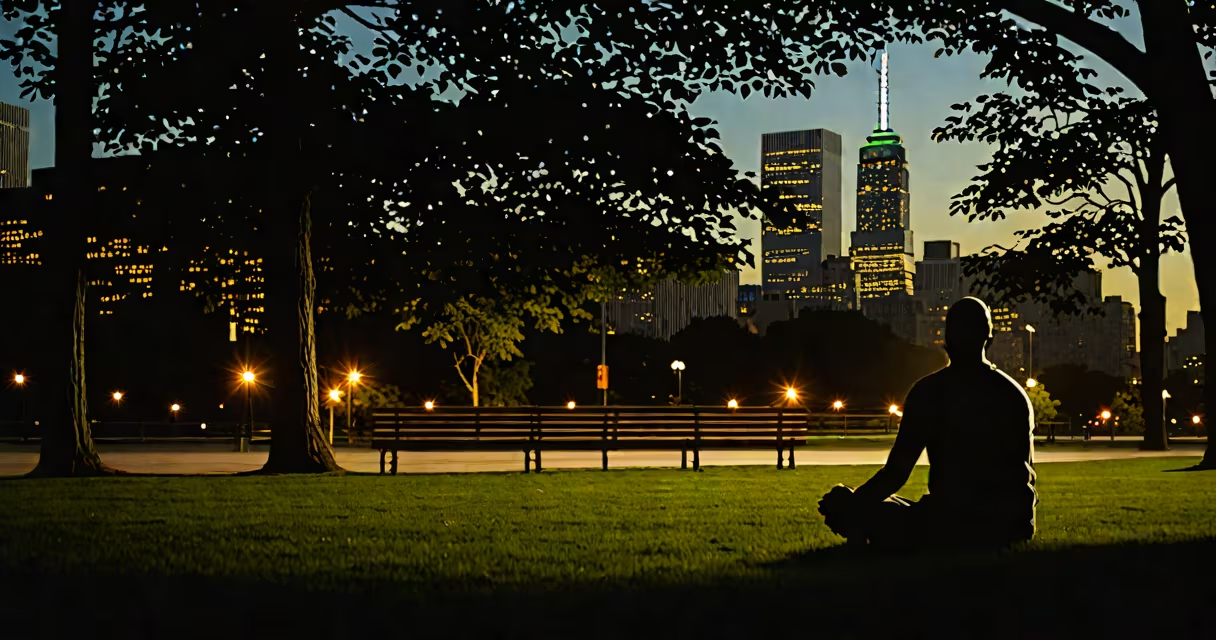
Gregory Hayes meditations are guided mindfulness sessions centered on breath awareness, bodily sensation, and present-moment attention, designed for people living in high-density urban environments. They emphasize stillness amid noise and routine, using structured audio formats to anchor focus.
Hayes, a former New York City firefighter and certified mindfulness instructor, developed his method through years of working in emergency response and later teaching mindfulness in public spaces. His sessions typically last between 10 and 20 minutes and are recorded in quiet locations such as parks, libraries, or studio spaces near transit hubs. The recordings avoid music or narration that distracts from internal focus, relying instead on subtle vocal cues and silence.
Each session begins with a grounding instruction-"Bring attention to your feet," "Feel the weight of your body"-followed by sustained attention to physical sensations. After two minutes of breath observation, Hayes introduces a theme: "What do you carry?" or "Where is your mind right now?" These prompts encourage non-judgmental awareness of thoughts and emotions without attempting to change them.
Gregory Hayes meditations follow a consistent structure: initial grounding, breath focus, thematic inquiry, and gentle return. This format reduces cognitive load, making it accessible to beginners and effective for experienced practitioners alike.
The core mechanism is attention redirection. When the mind wanders-commonly after 30 seconds-the listener is prompted to return to the breath. This repetition strengthens neural pathways associated with sustained attention. A 2021 study published in *Mindfulness* journal found that participants who practiced 10-minute daily sessions for four weeks showed measurable improvements in attention control and reduced stress markers compared to a control group.
For example, in a session titled "Waiting at the Station," Hayes guides listeners through the experience of standing in a subway station during rush hour. He instructs them to notice the sound of wheels on tracks, the pressure of bodies around them, and the warmth of their own hands. The goal isn't to escape the environment but to observe it without reaction. This reframing transforms stress-inducing moments into opportunities for presence.
Each meditation follows a predictable sequence. The first 60 seconds establish physical grounding. The next 90 seconds focus on breath. The remaining time explores a single theme drawn from daily urban life-commuting, decision fatigue, sensory overload.
| Phase | Duration | Focus | Instruction Example |
|---|---|---|---|
| Grounding | 1 minute | Physical contact with ground | "Feel your feet on the floor. Notice the pressure." |
| Breath Awareness | 2 minutes | Automatic breathing pattern | "Watch the rise and fall of your chest." |
| Theme Exploration | 5-10 minutes | Emotional or mental state | "What's the weight of your thoughts right now?" |
| Return | 1 minute | Soft reorientation | "Gently bring attention back to your surroundings." |
Unlike many mindfulness apps that use ambient sounds or nature imagery, Gregory Hayes meditations maintain a stark simplicity. The absence of background music or visual cues ensures the listener remains focused on internal experience rather than external stimuli.
Many assume mindfulness requires silence, solitude, or a dedicated room. Gregory Hayes meditations challenge this idea. He teaches that stillness is possible even in crowded places-on a bus, in a waiting room, during a work break.
A common error is mistaking mindfulness for relaxation. While some sessions result in calm, the primary aim is not emotional relief but awareness. As Hayes states in a 2020 interview with *The New York Times*, "You're not trying to feel better. You're trying to see."
Another misconception is that meditation must be done for long durations. Hayes' sessions average 12 minutes. Research from the University of California, San Diego confirms that even brief daily practice improves attention and emotional regulation. Participants in a 2019 trial showed significant gains after just 10 days of 10-minute sessions.
I attended a live session at Union Square Park in Manhattan during a weekday morning. The setting was typical: people rushing past, sirens in the distance, a street performer playing guitar. I sat on a bench, closed my eyes, and listened to Hayes guide a 15-minute session on "listening without judgment."
After three minutes, I noticed a man arguing loudly on a phone nearby. My instinct was to tense up. But Hayes reminded me: "Just hear it. Don't label it. Don't react." I stayed with the sound, then returned to my breath. Over the next five minutes, the argument faded into background noise. I didn't fix it. I didn't run. I simply observed.
When the session ended, I felt less agitated than when I began. Not because I'd changed the situation-but because I'd changed my relationship to it. That shift is central to Gregory Hayes meditations.
These practices are not religious. They don't require belief in any doctrine. They are secular tools for attention training, grounded in neuroscience and practical experience. The U.S. Department of Veterans Affairs includes similar techniques in PTSD treatment programs, citing improved emotional regulation and reduced rumination.
Gregory Hayes meditations are widely used in corporate wellness programs, particularly in finance and tech sectors in New York City. Companies like JPMorgan Chase and WeWork have integrated them into employee onboarding and stress management initiatives.
They are also taught in community centers across Manhattan, especially in neighborhoods with high population density and limited access to private therapy. A 2022 report from the NYC Department of Health noted a 37% increase in demand for free mindfulness sessions in low-income areas following the pandemic.
For individuals, they serve as a daily reset. A commuter might listen during a train ride. A parent might use one before bedtime. A student might practice during exam week. The brevity and accessibility make them ideal for integration into existing routines.
One session, "The Pause Between Two Words," focuses on the gap between spoken sentences-a moment often missed in conversation. Hayes asks listeners to imagine that pause as space, not emptiness. "In that space," he says, "you can choose your response." This technique is used in conflict resolution training and interpersonal communication workshops.
Gregory Hayes meditations differ from transcendental meditation, which uses mantras and specific breathing rhythms. They also contrast with loving-kindness (metta) meditation, which emphasizes generating goodwill toward others. Hayes' method avoids affirmations, chants, or visualization.
Compared to popular apps like Headspace or Calm, which use storytelling and animated visuals, Hayes' work relies solely on voice and silence. There are no animations, no characters, no music. The audio is raw, unedited, and recorded in real-time. This authenticity contributes to the sense of immediacy and trust.
One non-obvious fact: Hayes records most sessions in a single take. He does not edit out pauses or stumbles. This preserves the human quality of the practice-imperfection is part of the process. As he explains in a 2021 podcast episode, "If I sound tired, that's okay. You're not listening to a perfect performance. You're listening to a moment of attention."
Gregory Hayes meditations are not a quick fix. They are not meant to eliminate stress or anxiety. Instead, they provide a structure for noticing when those states arise-and choosing whether to engage with them or step back. The practice builds resilience through consistency, not intensity.
Regular engagement leads to subtle shifts: increased patience, clearer thinking, reduced reactivity. These changes accumulate over weeks, not days. The practice is not about achieving a particular state-it's about returning, again and again, to the present moment.