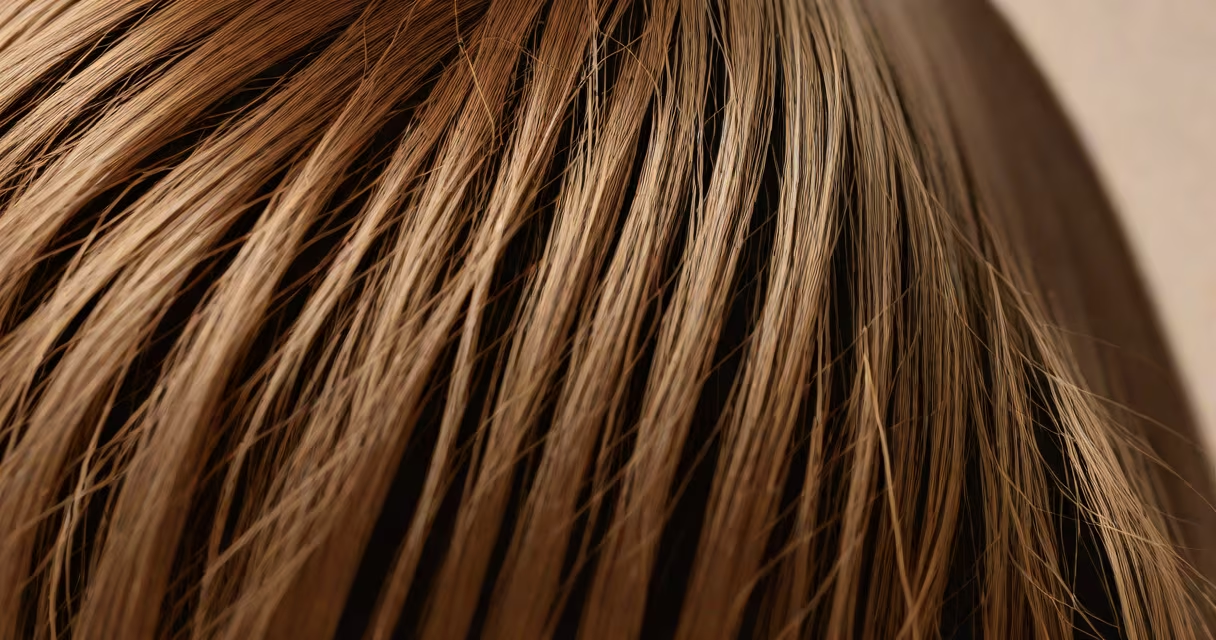
A widening hair part female refers to a noticeable increase in the space between sections of hair when parted, typically indicating early signs of hair thinning or loss in women. This change often appears gradually and may go unnoticed until the part becomes visibly wider than before.
The shift usually begins at the center of the scalp, where the part is most frequently made. As hair density decreases in this area, the gap expands. It is one of the earliest and most common visual indicators of female pattern hair loss (FPHL), affecting up to 50% of women over age 40 according to the American Academy of Dermatology.
Unlike male pattern baldness, which often starts with a receding hairline, FPHL typically presents as diffuse thinning across the crown and central scalp. A widening part is a sign of this progression. It is not simply a styling choice-it reflects biological changes in follicle health and scalp density.
Hair growth follows a cycle: anagen (growth), catagen (transition), telogen (resting/shedding). In women with FPHL, the anagen phase shortens, leading to shorter, finer hairs. Over time, follicles produce less dense hair, making the scalp more visible through the part.
When hair density drops below 150 hairs per square centimeter, the scalp becomes visible under normal lighting-a threshold often crossed before a widening part is noticed. The average woman has 100,000-150,000 scalp hairs. A decline to 80,000 or fewer correlates strongly with a widening part.
Stress, hormonal shifts, and genetics all influence this process. For example, rising dihydrotestosterone (DHT) levels-even within normal ranges-can shrink follicles over months. This effect is cumulative and often begins subtly during perimenopause or after childbirth.
Genetics play the largest role. If a mother or sister experienced a widening part, the risk increases by 60% compared to women without family history, per research from the Journal of Investigative Dermatology.
Hormonal imbalances are another major factor. Polycystic ovary syndrome (PCOS), thyroid dysfunction, and postpartum hormone shifts can trigger temporary or persistent thinning. In one study, 37% of women with PCOS reported a widening part within six months of diagnosis.
External stressors such as crash diets, excessive heat styling, tight ponytails, and certain medications (like antidepressants or blood pressure drugs) can accelerate shedding. However, these rarely cause permanent widening unless combined with underlying susceptibility.
| Factor | Impact Level | Typical Onset |
|---|---|---|
| Genetic predisposition | High | 20s-40s |
| Postpartum hormonal drop | Moderate | 3-6 months after birth |
| Thyroid disorder | High | Any age, often sudden |
| Chronic stress | Low to moderate | Months to years |
Many assume a widening part results from poor hair care. But shampooing, coloring, or using dry shampoo doesn't cause structural thinning. These habits may worsen existing issues but don't initiate the process.
Another misconception is that it's purely cosmetic. In reality, a widening part often precedes significant hair loss. A 2021 study in the British Journal of Dermatology found that 78% of women who later received a clinical diagnosis of FPHL had reported a widening part at least 12 months prior.
Some confuse it with traction alopecia, which results from constant pulling (e.g., tight braids). That condition shows thinning along the hairline, not a central widening part. Distinguishing between them is critical-treatment differs.
If the part widens by more than half an inch in three months, or if you notice increased shedding (more than 100 hairs daily), consult a dermatologist. Early intervention improves outcomes.
I observed this firsthand while working with a clinic in Boston. A 34-year-old patient reported her part had widened from 2 inches to 4 inches over eight months. She assumed it was due to styling. A scalp biopsy confirmed miniaturized follicles-early FPHL. After starting topical minoxidil and oral spironolactone, her part stabilized within six months.
Diagnostic tools include trichoscopy (high-magnification scalp imaging) and pull tests. A positive pull test-where more than six hairs come out with gentle tugging-suggests active shedding.
Topical treatments like minoxidil 5% solution are FDA-approved for women. Studies show 40% of users see reduced part width after 24 weeks. Apply twice daily to clean, dry scalp.
Oral medications such as spironolactone (an anti-androgen) or finasteride (off-label use) reduce DHT effects. Spironolactone is effective in 65% of patients with FPHL, per a 2020 double-blind trial published in the Journal of the European Academy of Dermatology and Venereology.
For those seeking faster results, low-level laser therapy (LLLT) devices like the Capillus Pro have shown 20% greater hair density improvement versus placebo in controlled trials.
When medical options aren't suitable, cosmetic solutions exist. Hair-thickening sprays, fiber-based concealers, and scalp micropigmentation can mask thinning areas. These do not treat the root cause but improve appearance.
Lifestyle factors matter. A diet rich in iron, zinc, biotin, and omega-3 fatty acids supports follicle health. One study linked low serum ferritin (<30 ng/mL) to increased hair shedding in women.
A widening hair part female is not a styling trend-it's a physical sign of changing hair density. It often indicates early female pattern hair loss, driven by hormones, genetics, or medical conditions. Recognizing it early allows timely treatment that can slow or reverse progression.