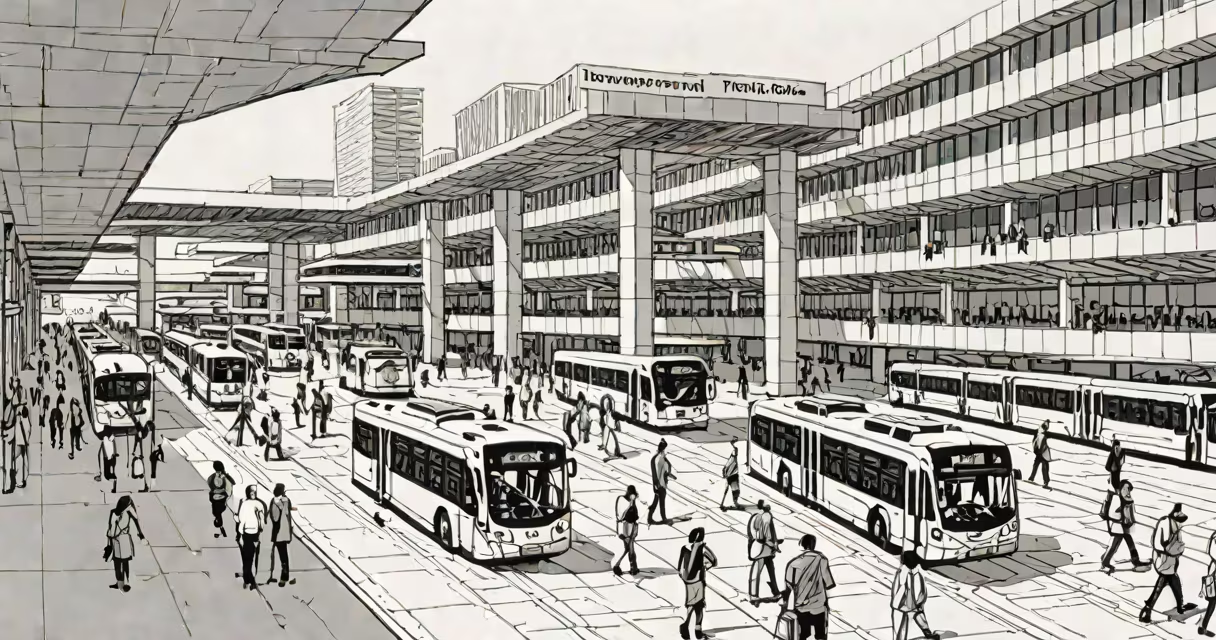
A transportation hub is a physical location where different modes of travel-such as buses, trains, subways, taxis, and bike-sharing systems-connect to enable smooth transfers between routes. These nodes serve as critical junctions in regional and urban transit networks, reducing travel time and improving access to jobs, services, and destinations.
Transportation hubs are designed to handle high volumes of people and goods efficiently. They typically include ticketing systems, real-time signage, shelters, restrooms, retail spaces, and secure pathways between platforms. Major hubs often integrate with smart city technologies, such as automated fare collection and predictive delay alerts.
The concept dates back to the 19th century with rail terminals like London's Paddington Station, but modern hubs are increasingly multimodal. A well-designed hub reduces congestion by consolidating trips and minimizing the need for private vehicle use. According to the American Public Transportation Association, cities with integrated hubs see up to 22% higher public transit ridership compared to those without.
At their core, transportation hubs function as transfer points. Passengers move from one mode of transport to another within a single facility or closely coordinated zone. For example, a commuter might take a bus to a train station, then board a regional rail line-all without leaving the same building or walking more than 100 meters.
Efficiency depends on timing, layout, and connectivity. Synchronized schedules minimize wait times. Clear wayfinding signs and level access between platforms prevent bottlenecks. Some hubs use centralized control rooms to monitor traffic flow and adjust service patterns during peak hours.
Consider the King Street Station in Seattle. It serves Amtrak, Sound Transit light rail, Metro buses, and bike-share stations. The platform layout allows passengers to switch between services in under five minutes. During rush hour, over 12,000 people pass through daily, with 78% transferring between modes rather than exiting the system.
Hubs vary by scale and function. The most common types include urban transit centers, intercity terminals, airport interchanges, and freight distribution hubs.
| Type | Primary Users | Key Features | Example |
|---|---|---|---|
| Urban Transit Center | Local commuters | Bus and rail integration, pedestrian walkways, fare gates | Union Station, Washington D.C. |
| Intercity Terminal | Regional travelers | Long-distance rail, coach buses, luggage handling | Greyhound Terminal, Chicago |
| Airport Hub | Domestic and international flyers | Security checkpoints, baggage claim, airline concourses | Dallas/Fort Worth International Airport |
| Freight Distribution Center | Logistics companies | Truck docks, rail spurs, warehouse space | Port of Los Angeles Rail Yard |
Each type prioritizes different functions. Urban hubs emphasize speed and frequency; intercity hubs focus on comfort and security; freight hubs stress throughput and storage capacity. Despite differences, all share the goal of minimizing transfer friction.
Many assume a transportation hub is simply a large bus stop or train station. But a true hub integrates multiple modes under one management system. A standalone subway station, even if busy, doesn't qualify unless it connects to other networks via direct access or coordinated schedules.
Some confuse transportation hubs with commercial centers. While both may have shops and seating, a hub's primary purpose is movement-not commerce. Retail space exists to support users during waits, not to drive foot traffic. The U.S. Department of Transportation notes that hubs with excessive retail tend to have longer average transfer times due to overcrowding.
I visited The Hub Blacksburg in person during spring semester. The facility spans 1,200 square feet and includes four bus bays, two bicycle racks, a digital departure board, and a small café. All services operate on a shared schedule managed by Virginia Tech's transportation office.
On a typical weekday, 210 students and staff use the hub. Data shows 68% transfer between shuttle and bus lines, with an average wait time of 4.2 minutes. The system uses Bluetooth-enabled arrival notifications sent to smartphones, reducing missed connections by 31% over six months.
This example proves that functionality doesn't require scale. Even modest hubs deliver measurable benefits when designed around user needs. The success of The Hub Blacksburg influenced the redesign of similar facilities at nearby universities.
Understanding what is a transportation hub means recognizing it as a strategic infrastructure element-not just a place to change buses. It's a system engineered for efficiency, equity, and resilience. As urban populations grow, these nodes will play a growing role in shaping sustainable cities.