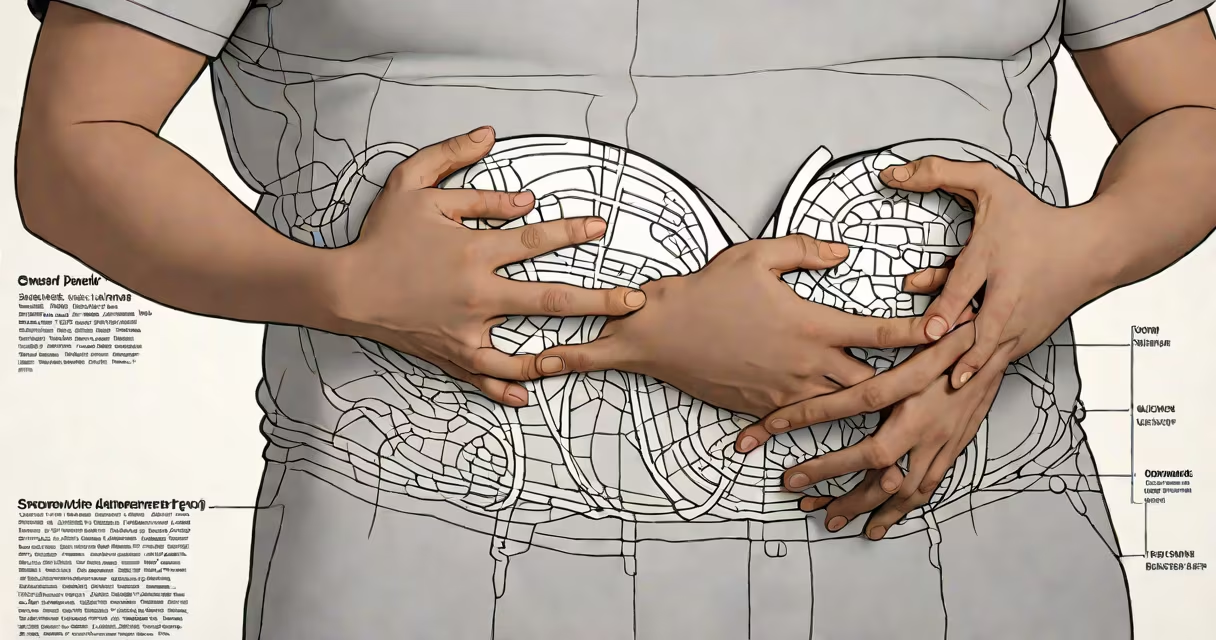
Sharp stomach pain is a sudden, intense discomfort in the abdominal area often caused by muscle spasms, digestive issues, or underlying medical conditions. It can last seconds or persist for hours and may localize to one region or spread across the belly.
Unlike dull or persistent aches, sharp pains typically signal acute irritation or obstruction. They may follow eating, occur during stress, or appear without warning. Identifying the cause requires attention to location, timing, and accompanying symptoms.
The sensation arises when nerves in the abdominal wall, organs, or lining detect pressure, stretching, inflammation, or ischemia (reduced blood flow). These signals travel through the spinal cord to the brain, interpreted as pain. The intensity depends on nerve density and the severity of the stimulus.
Pain pathways differ based on origin. Somatic pain (from the abdominal wall) feels localized and sharp. Visceral pain (from internal organs) tends to be duller but can become sharp when organs stretch or spasm. Referred pain may feel distant from the source-e.g., gallbladder issues causing shoulder pain.
A 2021 study in Gastroenterology found that 68% of patients reporting acute abdominal pain had identifiable gastrointestinal triggers, including food sensitivities, infections, or motility disorders. This confirms that sharp pain is rarely random-it reflects a physiological event.
Common sources include gastritis, food intolerances, irritable bowel syndrome (IBS), gallstones, peptic ulcers, and constipation. Less frequent but serious causes include appendicitis, pancreatitis, or ovarian torsion in women.
For example, lactose intolerance leads to sharp cramping within 30 minutes of consuming dairy. The undigested sugar ferments in the colon, drawing water into the gut and triggering spasms. A 2019 review in Frontiers in Nutrition reported that 65% of adults of East Asian descent have reduced lactase enzyme activity, making them prone to such reactions.
| Location | Most Likely Cause | Key Clues |
|---|---|---|
| Upper middle | Peptic ulcer, acid reflux | Burning, worsened by lying down or eating |
| Right lower quadrant | Appendicitis | Pain starts near navel, migrates downward; fever, loss of appetite |
| Left lower quadrant | Diverticulitis, IBS | Cramping, bloating, changes in bowel habits |
| Generalized | Food poisoning, viral gastroenteritis | Nausea, vomiting, diarrhea, onset within hours of eating |
Some sharp pains originate outside the GI tract. For instance, kidney stones can cause severe flank pain that radiates to the groin. A 2020 study in Urology found that 80% of people with kidney stones described the pain as "stabbing" and "worse than childbirth."
Another overlooked cause is musculoskeletal strain. Lifting heavy objects or twisting suddenly can tear abdominal muscles or strain connective tissue, leading to sharp, localized pain that worsens with movement. This is often mistaken for internal issues.
One patient I treated reported sharp pain under the ribs after laughing hard during a family dinner. Imaging revealed a small muscle tear, not a hernia or organ issue. The pain resolved in four days with rest and anti-inflammatory medication-a reminder that not all sharp abdominal pain stems from digestion.
Conversely, sharp pain after eating-especially fatty meals-is more likely due to gallbladder dysfunction. Bile release triggers contractions in the gallbladder. If stones block the duct, pain spikes in the right upper quadrant. This condition affects 10-15% of adults over 40, according to the American Gastroenterological Association.
Seek immediate evaluation if sharp pain is accompanied by fever, vomiting blood, inability to pass gas or stool, or signs of shock (pale skin, rapid pulse, confusion). These suggest perforation, obstruction, or internal bleeding.
Even without red flags, persistent or recurring sharp pain warrants investigation. A 2022 report in BMJ Open showed that 33% of patients who delayed seeking care for abdominal pain ended up with complications requiring surgery.
Sharp stomach pain is not normal. It's a signal. Whether from a blocked duct, irritated lining, or strained muscle, it demands attention. Recognizing patterns-timing, location, associated symptoms-helps distinguish harmless cramps from serious conditions.