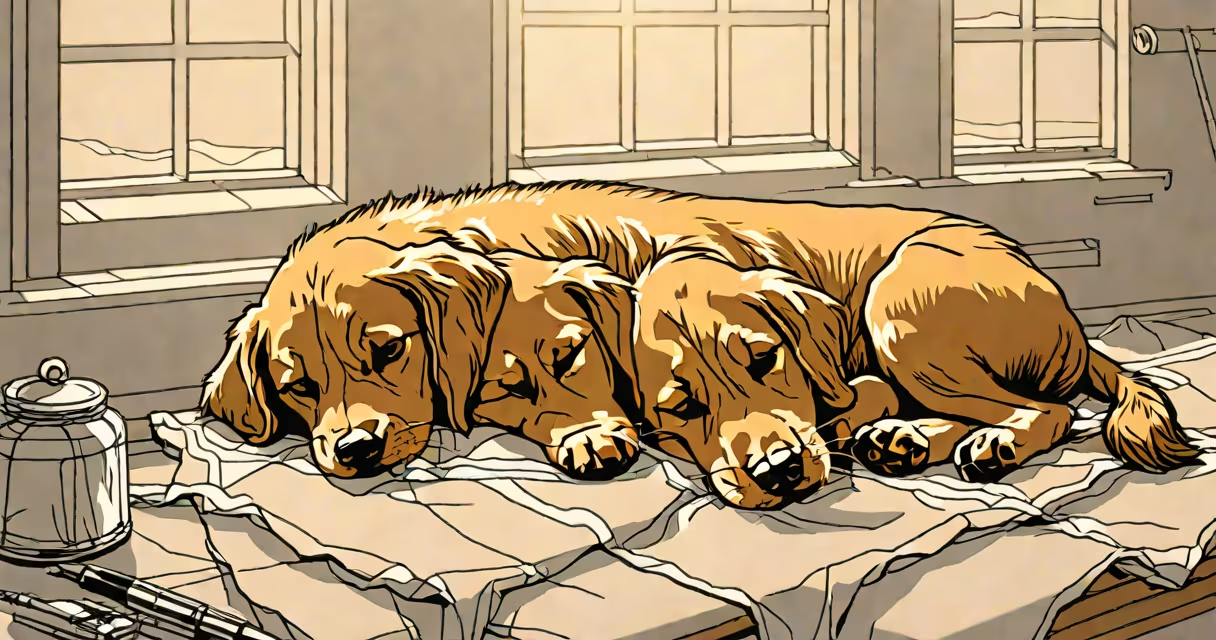
Puppies sleep 18 to 20 hours a day because their bodies and brains are developing rapidly during early life. This extended rest supports neural wiring, muscle growth, and immune system maturation. Sleep is not laziness-it's essential for physical and cognitive development.
Dogs spend more time sleeping than adult humans, and puppies are at the extreme end of this spectrum. A newborn pup may sleep nearly 22 hours a day, dropping to 16-18 hours by 12 weeks. This pattern reflects biological demands, not behavior choices. During sleep, especially REM cycles, puppies consolidate learning, process sensory input, and build motor skills.
The American Kennel Club notes that sleep duration decreases gradually as a puppy matures. By six months, most breeds stabilize around 12-14 hours daily. However, individual variation exists based on breed, size, and activity level. Small breeds like Chihuahuas often nap more frequently than larger breeds such as Great Danes, which tend to have longer, deeper sleep periods.
During sleep, a puppy's brain undergoes intense synaptic pruning and memory formation. Research from the University of California, Davis, shows that young mammals spend significant time in REM sleep, which correlates with neural plasticity-the brain's ability to adapt and learn. Puppies who sleep less than 16 hours per day show delayed response times in training tasks compared to those meeting recommended durations.
Muscle repair and hormone regulation also occur during deep sleep stages. Growth hormone release peaks during slow-wave sleep, particularly between 10 PM and 2 AM in household pets. This timing aligns with human circadian rhythms, suggesting shared physiological mechanisms across species. A lack of consistent sleep disrupts metabolic balance and weakens immune responses.
For example, a 10-week-old Border Collie named Luna slept 19 hours daily. Her owner noticed improved focus during training sessions after ensuring she had uninterrupted nighttime sleep. When Luna was woken twice nightly for bathroom breaks, her attention span dropped, and she became more reactive to stimuli. After adjusting the schedule to allow longer stretches of rest, her learning curve improved.
Puppies cycle through four stages: wakefulness, light sleep, deep sleep, and REM sleep. Light sleep accounts for about 60% of total sleep time. Deep sleep, marked by slow breathing and minimal movement, makes up 20-25%. REM sleep, where dreaming occurs, lasts 5-10 minutes per cycle and happens every 30-45 minutes.
| Sleep Stage | Duration in Puppies | Function |
|---|---|---|
| Light Sleep | ~11 hours/day | Body relaxation, temperature regulation |
| Deep Sleep | ~3-4 hours/day | Tissue repair, hormone release |
| REM Sleep | ~1-2 hours/day | Memory consolidation, emotional processing |
Non-REM sleep dominates early sleep cycles. As the night progresses, REM duration increases. This pattern mirrors human infants and underscores the developmental role of sleep. A puppy waking frequently during the night may not be getting enough deep or REM sleep, leading to behavioral issues like increased anxiety or reduced trainability.
Many owners assume excessive sleep means illness. But lethargy-defined as unresponsiveness, inability to stand, or lack of interest in food-is different from normal sleep. A healthy puppy wakes easily, responds to voice cues, and eats normally after resting. If your puppy sleeps through meals or fails to react to loud noises, consult a veterinarian.
Another misunderstanding is equating sleep with fatigue. A puppy that naps after play is not tired-it's processing activity. Overstimulation without recovery time leads to hyperactivity later. For example, a 12-week-old Beagle named Max played fetch for 45 minutes then slept for 3 hours. His owner mistook this for exhaustion. After tracking his routine, they realized he needed 20-minute play bursts followed by 30-minute rest periods to maintain balance.
Some confuse sleep with boredom. Puppies don't "choose" to sleep out of disinterest. Their brains require downtime to integrate experiences. Without sufficient rest, they struggle to learn commands, develop social skills, and regulate emotions. Studies published in Applied Animal Behaviour Science show that puppies with consistent sleep schedules learned basic obedience commands 30% faster than those with irregular rest patterns.
If your puppy sleeps more than 20 hours daily, appears stiff upon waking, or shows signs of pain during movement, contact a vet. Excessive sleep can indicate hypoglycemia, especially in toy breeds. Low blood sugar causes weakness, tremors, and seizures. Immediate veterinary care is required if your puppy collapses or has trouble standing.
Also watch for changes in sleep habits. A sudden increase in sleep duration over 48 hours, especially with loss of appetite or vomiting, may signal infection or organ dysfunction. The Cornell Feline and Canine Health Center reports that dogs with systemic illness often exhibit altered sleep-wake cycles as early indicators.
Understanding why your puppy sleeps so much begins with recognizing sleep as a foundation of health-not a sign of failure. Monitoring patterns, ensuring safe environments, and maintaining regular feeding and exercise routines support optimal development. If concerns arise, seek professional guidance promptly.
Knowing that your puppy sleeps so much is not a problem-it's a sign of proper growth. Focus on consistency, safety, and responsiveness. Your puppy's rest is not idle time; it's active construction of a healthy, responsive mind and body.