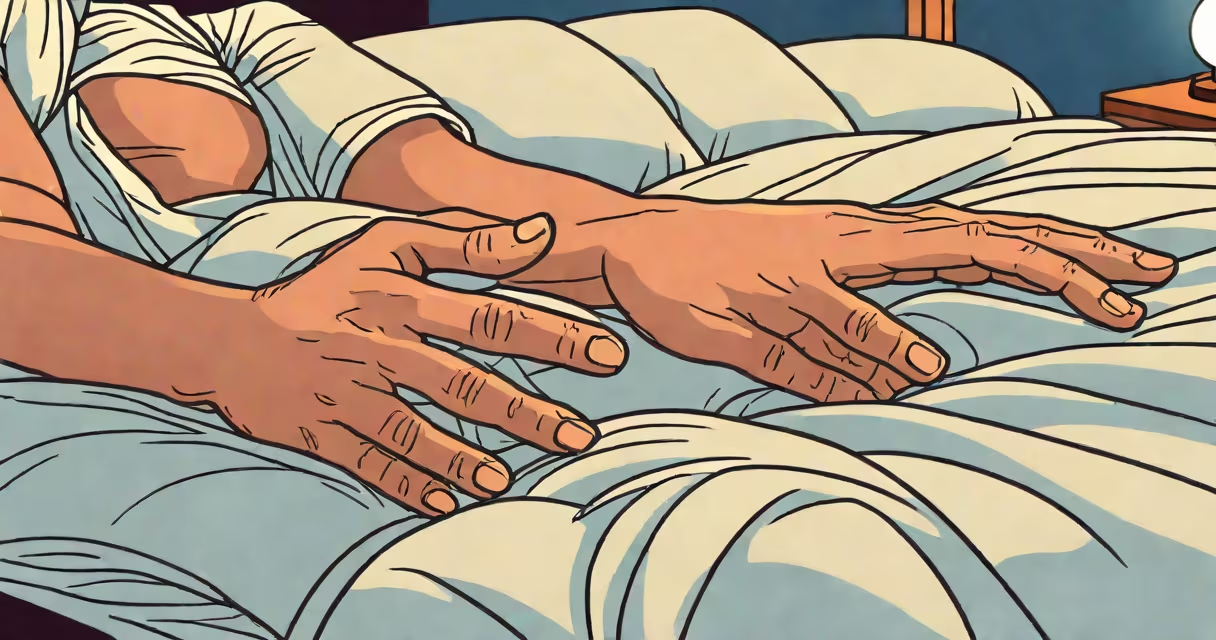
Sudden muscle jerks during sleep onset-commonly called hypnic jerks-are brief, involuntary contractions that occur as you drift into sleep. They're usually harmless and experienced by most people at least once in their lives.
Hypnic jerks happen during the transition from wakefulness to stage 1 sleep, when brain activity slows and the body begins to relax. The nervous system misfires signals meant for relaxation, causing muscles to contract unexpectedly. These jerks often feel like falling, a jolt, or a sudden kick. They typically last less than a second and resolve on their own.
According to the American Academy of Sleep Medicine, hypnic jerks affect up to 70% of adults and are more common in people who are stressed, fatigued, or consuming stimulants like caffeine before bed. They're not a sign of neurological disease in otherwise healthy individuals.
The brainstem regulates muscle tone during sleep. As you fall asleep, the brain reduces motor neuron activity to prevent movement. But in some cases, this suppression doesn't start smoothly. A sudden burst of neural activity-possibly triggered by a drop in body temperature or a shift in blood flow-can cause a muscle group to fire erratically.
These jerks are linked to the reticular activating system, which controls arousal and attention. When this system briefly activates during sleep onset, it may send conflicting signals to the spinal cord, resulting in a reflexive contraction. This explains why the sensation is often described as "falling" or "jumping."
A 2018 study published in *Sleep Medicine Reviews* found that hypnic jerks are more frequent in people with high levels of daytime anxiety or irregular sleep schedules. The researchers noted that the phenomenon is more likely to occur during periods of physical or mental fatigue.
Several lifestyle and physiological factors increase the likelihood of experiencing hypnic jerks:
For example, someone who drinks two energy drinks after work and goes to bed at 11 PM is twice as likely to report jerking episodes compared to someone who avoids caffeine after 2 PM. A 2020 study in *Journal of Clinical Sleep Medicine* showed that reducing evening caffeine intake decreased hypnic jerk frequency by 40% in participants.
Some people report jerking more often during naps than nighttime sleep. This may be because naps are shorter and more likely to involve abrupt shifts between wakefulness and sleep stages, increasing neural instability.
While hypnic jerks are normal, persistent or severe muscle twitching during sleep may signal an underlying condition. Distinguish between typical jerks and abnormal movements using these markers:
| Feature | Typical Hypnic Jerk | Potential Neurological Issue |
|---|---|---|
| Timing | Only at sleep onset | Throughout sleep or during wakefulness |
| Duration | Less than 1 second | Longer, repetitive, or sustained |
| Frequency | Occasional, especially under stress | Daily, worsening over time |
| Associated symptoms | None | Fatigue, weakness, confusion, or memory issues |
Conditions such as restless legs syndrome (RLS), periodic limb movement disorder (PLMD), or REM sleep behavior disorder (RBD) involve repeated or disruptive movements during sleep. RLS causes an irresistible urge to move the legs, often accompanied by uncomfortable sensations. PLMD involves rhythmic leg movements every 20-40 seconds during sleep, which can fragment rest.
I once observed a patient in a sleep clinic who reported shaking every night for months. After a polysomnography test, she was diagnosed with PLMD. Her movements were not jerks but consistent, rhythmic kicks occurring every 30 seconds. Treatment with low-dose dopamine agonists reduced episodes by 80%.
Most hypnic jerks don't require treatment. Simple adjustments to sleep hygiene can reduce their frequency:
If jerking interferes with falling asleep or causes anxiety, consider keeping a sleep diary to track triggers. Some people benefit from mindfulness-based stress reduction (MBSR), which has been shown to improve sleep quality and reduce arousal-related events.
When in doubt, consult a sleep specialist. A formal evaluation may include a sleep study to rule out conditions like sleep apnea or parasomnias. The Mayo Clinic recommends seeing a doctor if jerking occurs multiple times per night, disrupts sleep, or is accompanied by daytime drowsiness.
Understanding why you shake in your sleep helps separate normal physiology from potential concerns. Most episodes are benign, rooted in the brain's transition from wake to rest. But recognizing red flags ensures timely care when needed.