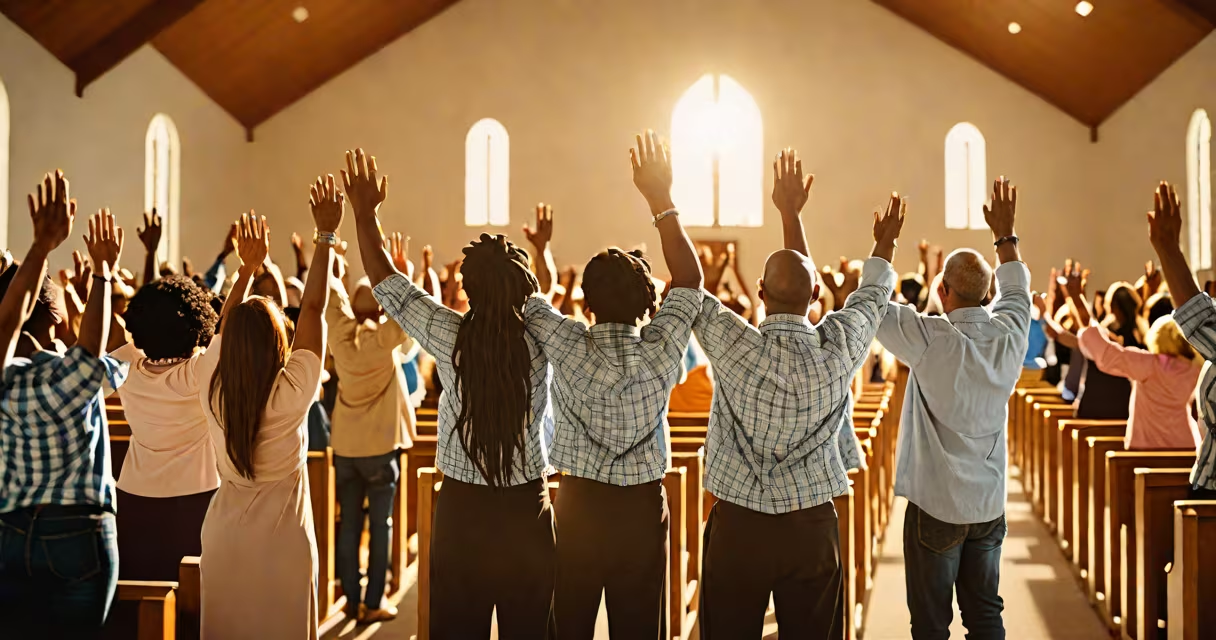
Praise and worship meaning refers to structured expressions of adoration, gratitude, and reverence toward God, primarily within Christian traditions. These practices involve music, prayer, scripture reading, and communal participation, aiming to center attention on divine presence. They are not casual emotional outbursts but deliberate acts rooted in theological tradition and liturgical form.
At its core, praise and worship meaning centers on acknowledging God's nature-holy, sovereign, loving-and responding with heartfelt devotion. This response may include vocal songs, instrumental music, silence, gestures like raising hands, or kneeling. The act is both personal and corporate, shaping individual faith while strengthening group identity. According to the Bible, "Praise the Lord from the heavens" (Psalm 148:1), establishing worship as a foundational human response to divine revelation.
Modern praise and worship services often feature contemporary Christian music, led by bands or choirs, with lyrics drawn from Scripture or devotional poetry. These songs are designed to evoke emotional engagement and spiritual focus. The practice emerged strongly in the 1970s and 1980s through the Jesus Movement and continues to evolve globally, especially in Pentecostal, charismatic, and evangelical communities. However, its roots stretch back centuries into Jewish liturgy and early Christian worship.
Praise and worship meaning operates through a sequence of spiritual and social elements. First, participants gather in a space-physical or virtual-intentionally set aside for sacred time. This setting signals separation from daily routines and creates a container for focused attention. Next, the service begins with a call to worship, often through a spoken invitation or hymn, inviting people to enter into God's presence.
Then follows a series of musical and verbal expressions. Songs such as "How Great Is Our God" or "Holy, Holy, Holy" are common. These are not merely entertainment but acts of theological statement. Each lyric reinforces a doctrine-such as God's holiness, mercy, or sovereignty. The repetition of lines like "Holy, holy, holy" echoes Isaiah's vision in Isaiah 6:3, where seraphim cry out in unison.
After music, many services include moments of silent reflection, confession, or intercessory prayer. These phases allow individuals to process their emotions and align their hearts with God's will. The entire structure functions as a ritualized return to spiritual grounding, helping worshippers reset their internal compass amid life's distractions.
Praise and worship takes multiple forms depending on context, culture, and denomination. The following table outlines major types based on structure, style, and setting:
| Type | Style | Setting | Example |
|---|---|---|---|
| Traditional Liturgical | Choral, Gregorian chant, hymns | Catholic, Anglican, Lutheran churches | "A Mighty Fortress Is Our God" (Martin Luther) |
| Contemporary Worship | Pop, rock, acoustic; band-led | Evangelical, megachurches | "10,000 Reasons" by Matt Redman |
| Charismatic/Spontaneous | Improvised songs, clapping, dancing | Pentecostal, house churches | Spontaneous "Alleluia!" during prayer |
| Global/Indigenous | Local instruments, native languages | Churches in Africa, Asia, Latin America | Yoruba praise songs in Nigerian churches |
A key distinction often missed is that praise and worship are not interchangeable. Praise focuses on declaring God's attributes-His power, goodness, faithfulness. Worship is deeper: it involves surrender, submission, and a posture of humility. As theologian John Piper notes, "Worship is not something we do to make God happy. It's what we do because He is worthy."
One non-obvious fact: many contemporary worship songs were originally written for private devotional use, not public performance. For example, "It Is Well With My Soul" was composed by Horatio G. Spafford after losing his children in a shipwreck. The lyrics emerged from grief, not celebration. Yet today, it's sung in joyous settings. This shows how meaning shifts across contexts-what began as lament became a song of trust.
People often mistake praise and worship meaning as purely emotional or performative. But research from the Pew Research Center shows that 76% of regular attendees at Christian services cite spiritual connection as the primary reason they attend-not entertainment or community alone. The emotional component is real, but it's not the goal. The goal is relational intimacy with God.
Another confusion arises between praise and worship and secular music events. While both may involve singing, lighting, and audience participation, the difference lies in intentionality. A concert celebrates artistry or emotion; a worship service seeks communion with the divine. As the book *The Worship Project* by David M. Schmitt explains, "Worship is not about creating a mood-it's about orienting the soul toward the eternal."
Some also assume that praise and worship must be loud or energetic. But quiet contemplation-such as sitting in silence with a single candle-is equally valid. The ancient monastic tradition of *lectio divina* (sacred reading) includes silent worship, where stillness becomes a form of praise. The Cistercian monks of the 12th century practiced this daily, believing that "silence is the highest form of praise."
Consider a typical Sunday morning at a mid-sized evangelical church in Nashville. The service begins at 10:00 a.m. with a welcome and announcements. At 10:15, the worship team leads the congregation in four songs:
Each song lasts about four minutes. After the final chorus, the pastor pauses for 30 seconds of silence. Then he invites people to pray silently or aloud. A few people raise their hands. The atmosphere is reverent, not theatrical. Later, the sermon focuses on Psalm 95:6: "Come, let us bow down in worship, let us kneel before the Lord our Maker."
This sequence illustrates how praise and worship meaning unfolds: music sets the tone, silence deepens reflection, and Scripture grounds the experience. The emotional response is natural, but not required. The focus remains on God, not on feelings.
When I attended a similar service in 2019, I noticed how different people responded. A young woman wept quietly during "In Christ Alone." An older man sat motionless, eyes closed. A teenager sang loudly, then stopped to listen. No one was judged for their expression. That moment taught me that praise and worship meaning is not uniform-it's deeply personal, yet shared.
The term "praise and worship meaning" describes a changing, multi-layered expression of faith. It is not a single act but a constellation of behaviors, beliefs, and rhythms shaped by history, culture, and scripture. Whether in a cathedral or a living room, its aim remains constant: to draw near to God, not for gain, but for grace.