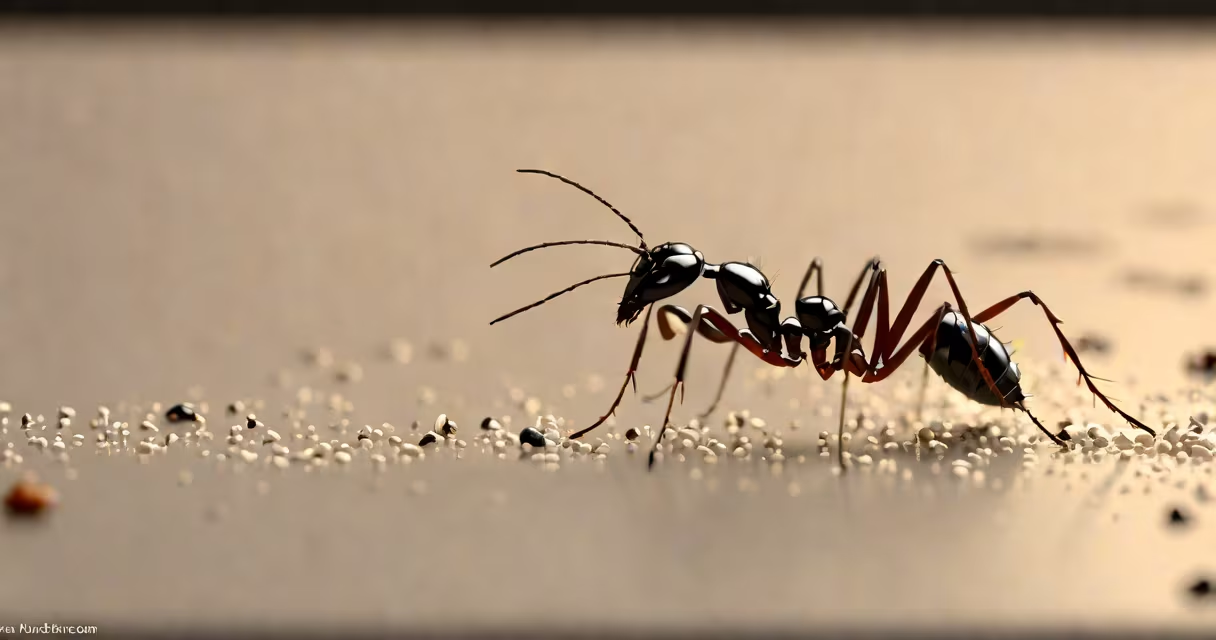
Black ants enter homes primarily to find food, water, and shelter, especially during seasonal changes or dry weather. They are drawn to sugary, greasy, or protein-rich substances left out in kitchens, bathrooms, or near pet food. Their small size allows them to exploit cracks, gaps, and openings as narrow as 1/16 inch.
These insects belong to several genera, including *Lasius*, *Polyergus*, and *Camponotus*. While most are harmless, their presence signals potential entry points and hygiene issues. A single scout ant can lead a colony through hidden pathways into living spaces, often unnoticed until trails form along baseboards or near sinks.
According to the University of California Agriculture and Natural Resources, black ants are among the most frequently reported indoor pests in residential areas. They do not damage property like termites, but their persistence and ability to contaminate food make them a nuisance. Understanding their behavior is key to stopping infestations before they grow.
Ants locate homes using scent trails laid by scout workers. These pheromone paths can extend up to 100 feet from the nest. Once a trail connects to a food source indoors, worker ants follow it repeatedly, reinforcing the route with more chemical signals.
Entry points include gaps around doors and windows, foundation cracks, utility lines (plumbing, electrical), and vents. Even sealed entryways may allow access if the seal is compromised. For example, a 1/8-inch gap under a sliding door can admit large numbers of ants during warm months.
A 2021 study by the National Pest Management Association found that 68% of homeowners reported seeing ants in kitchens within the past year. Most cases involved ants entering through outdoor-to-indoor transitions such as garage doors or basement windows left unsealed.
Food is the primary driver. Black ants are omnivorous but prefer carbohydrates and proteins. A dropped crumb, spilled soda, or unwashed dish can attract dozens of ants within hours. They don't eat the food immediately-they carry it back to the nest to feed larvae.
Moisture is another factor. Ants seek damp environments, especially during dry seasons. Leaky faucets, condensation on pipes, or wet floor mats provide ideal conditions. In one documented case, a family noticed a sudden increase in black ants after a minor pipe leak went undetected behind a bathroom wall for three weeks.
Seasonal shifts also trigger movement. As temperatures drop in fall, ants move indoors to escape cold. In spring, colonies expand and scouts search for new resources. This pattern aligns with pest control reports showing peak ant activity between September and April in temperate climates.
Not all black ants are the same. Misidentification leads to ineffective treatment. The most common indoor species include:
| Species | Size | Behavior | Typical Location |
|---|---|---|---|
| Camponotus pennsylvanicus | 6-13 mm | Forages at night, nests in wood | Basement walls, window sills |
| Lasius niger | 3-4 mm | Creates trails, feeds on honeydew | Kitchen counters, sink drains |
| Formica fusca | 4-6 mm | Builds mounds outdoors, enters via soil | Garage floors, garden beds adjacent to house |
Identifying the species matters because treatment varies. *Camponotus* ants, for instance, often nest in structural wood and require bait stations placed near entry points. *Lasius niger* prefers sweet foods and responds well to sugar-based baits.
I once observed a homeowner mistaking *Lasius* ants for carpenter ants due to similar coloration. After applying borax-based bait meant for wood-dwelling species, the infestation persisted. Switching to a sucrose-based bait resolved the issue within five days.
Black ants are not attracted to clean homes. They enter regardless of cleanliness if food sources are accessible. A 2019 study published in Environmental Entomology showed that ants were equally likely to invade homes with high versus low sanitation levels-what mattered was the availability of food residues.
They do not "invade" homes suddenly. Colonies exist nearby-often in mulch, potted plants, or under decks-and scouts explore continuously. The appearance of ants is a sign of ongoing access, not a new threat.
Another myth: ants don't "clean" houses. While they remove debris, they also contaminate surfaces with feces and shed exoskeletons. Their presence increases allergen exposure and risks spreading microbes.
Sealing entry points is the most effective long-term strategy. Use silicone caulk to close gaps around pipes, windows, and doors. Install door sweeps and repair damaged screens. Keep vegetation trimmed at least 12 inches from the foundation.
Remove attractants. Store food in airtight containers. Wipe countertops after meals. Empty trash daily. Clean spills immediately-ants detect sugar at concentrations as low as 0.001%. A single drop of maple syrup can draw a colony.
If ants persist, use bait stations containing slow-acting toxins like hydramethylnon or fipronil. Place them along trails, not near food. Worker ants carry the poison back to the nest, killing the queen and brood over time. Avoid sprays-they disrupt trails but don't eliminate colonies.
For recurring issues, consult a licensed pest professional. Some species, like *Camponotus*, build nests inside walls and require thermal imaging or invasive inspection.
If you notice signs of a larger problem, such as multiple trails converging or visible nesting material, consider a partial inspection for related pests. Black flies and black ants share habitat preferences but differ in biology and control methods.
Understanding why black ants come in the house reveals that prevention is simpler than eradication. Addressing food access, sealing entry points, and identifying species reduce reliance on chemicals. The goal is not to eliminate all ants-ecologically, they play roles in decomposition-but to stop them from becoming indoor intruders.