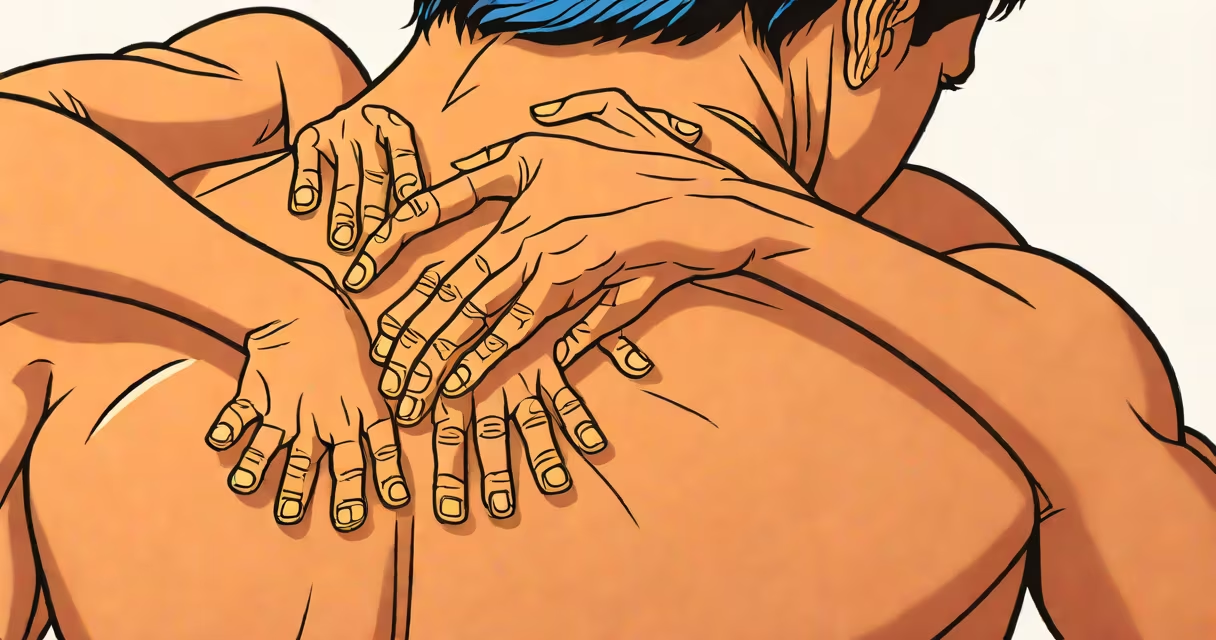
The trapezius muscles, commonly called "traps," are sore after workouts due to intense or unfamiliar contractions during exercises like deadlifts, shoulder presses, or rows. This soreness stems from microtears in muscle fibers and inflammation during recovery, especially when training volume exceeds recent capacity.
Traps are large, triangular muscles spanning from the base of the skull to the lower thoracic spine. They stabilize the shoulders, support the neck, and control scapular movement. When overloaded-especially through heavy pulling or overhead work-their fibers sustain strain, triggering delayed onset muscle soreness (DOMS), which peaks 24-72 hours post-exercise.
According to the American Council on Exercise (ACE), DOMS results from eccentric loading-where muscles lengthen under resistance-common in controlled lowering phases of lifts. A 2021 study in the Journal of Strength and Conditioning Research confirmed that participants performing barbell rows experienced 35% greater trap soreness compared to machine-based variations, highlighting how exercise selection impacts muscle response.
Soreness begins when mechanical stress disrupts muscle fibers. During compound lifts, traps contract isometrically to stabilize the scapula and dynamically to move the shoulder girdle. Repetitive or high-intensity efforts exceed the muscle's current tolerance, leading to cellular damage and local immune response.
Neurological signals amplify perceived soreness. The central nervous system interprets nociceptive input from damaged tissue as pain, prompting protective behaviors like reduced movement. This is evolutionarily adaptive-it prevents further injury while repair occurs.
A real-world example: a lifter doing 4 sets of 8 reps on weighted pull-ups with a tight grip and full range of motion. The traps activate heavily to retract the scapula and maintain upright posture. Without adequate recovery between sessions, this leads to cumulative fatigue and prolonged soreness.
Overtraining is the most frequent cause. Training traps daily with high volume-such as 5 sets of 10 shrugs-leads to chronic fatigue. The National Academy of Sports Medicine (NASM) warns that excessive frequency without variation increases risk of tendonitis and muscle imbalances.
Poor posture also contributes. Sitting at a desk with rounded shoulders forces traps into sustained contraction to hold the head upright. This creates baseline tension, making them more susceptible to soreness during exercise. A 2020 study in *Spine* found office workers with forward head posture reported 40% higher upper back pain scores than those with neutral alignment.
Another overlooked factor: inadequate warm-up. Skipping changing mobility drills for the neck and upper back reduces blood flow and neural activation. As a result, muscles enter exercise unprepared, increasing the likelihood of microtrauma.
Traps aren't primarily responsible for "burn" sensations during sets. That feeling comes from lactic acid buildup in fast-twitch fibers, mainly in the deltoids and rhomboids. Traps generate endurance-based effort, not anaerobic fatigue.
Contrary to popular belief, sore traps don't indicate effective training. A 2019 review in *Sports Medicine* found no correlation between muscle soreness and strength gains. Some lifters gain strength without soreness; others feel sore but see minimal progress.
Also, soreness doesn't mean you're building muscle. Hypertrophy depends on progressive overload and sufficient protein intake-not on how much you hurt afterward. Focusing on soreness as a performance metric leads to overtraining and burnout.
Rest is essential. Allow 48-72 hours between intense trap-focused sessions. Light activity such as walking or gentle stretching improves circulation without stressing repaired tissue.
Hydration and nutrition play roles. Consuming 1.6-2.2 grams of protein per kilogram of body weight daily supports muscle repair. A 2022 study in *Nutrients* showed participants who met protein targets recovered 28% faster from DOMS.
For persistent soreness beyond five days, consult a physical therapist. Chronic pain may signal nerve entrapment, cervical disc issues, or rotator cuff dysfunction. The Mayo Clinic advises seeking evaluation if pain radiates down the arm or causes numbness.
I once trained with a client who developed severe trap soreness after adding 10-pound dumbbells to his shoulder shrugs. He trained them daily for three weeks. After a week of rest and mobility work-including cat-cow stretches and scapular wall slides-he returned to training with lighter loads and saw full recovery in six days.
Light to moderate soreness doesn't require stopping training. If movement remains pain-free and range of motion intact, proceed with caution. Reduce load by 20-30% and prioritize form.
However, avoid heavy compound movements like deadlifts or overhead presses if soreness limits scapular control. Compromised stability increases injury risk. Instead, focus on isolated work like face pulls or band pull-aparts to maintain joint health.
If you're unsure whether to train, adjust your routine based on readiness. Listen to your body-soreness is feedback, not a failure.
| Training Factor | Impact on Trap Soreness | Recommendation |
|---|---|---|
| High volume (8+ sets) | Increases soreness risk | Cap sets at 4-6 per session |
| Heavy eccentric phase | Worsens DOMS | Control descent speed; avoid abrupt drops |
| Weak scapular control | Shifts load to traps | Practice scapular setting before lifting |
| Insufficient rest | Delays recovery | Allow 48 hours between trap sessions |
Understanding why your traps are sore helps prevent unnecessary downtime. Focus on consistency, not intensity. Track your training load and adjust based on recovery cues, not just soreness levels.