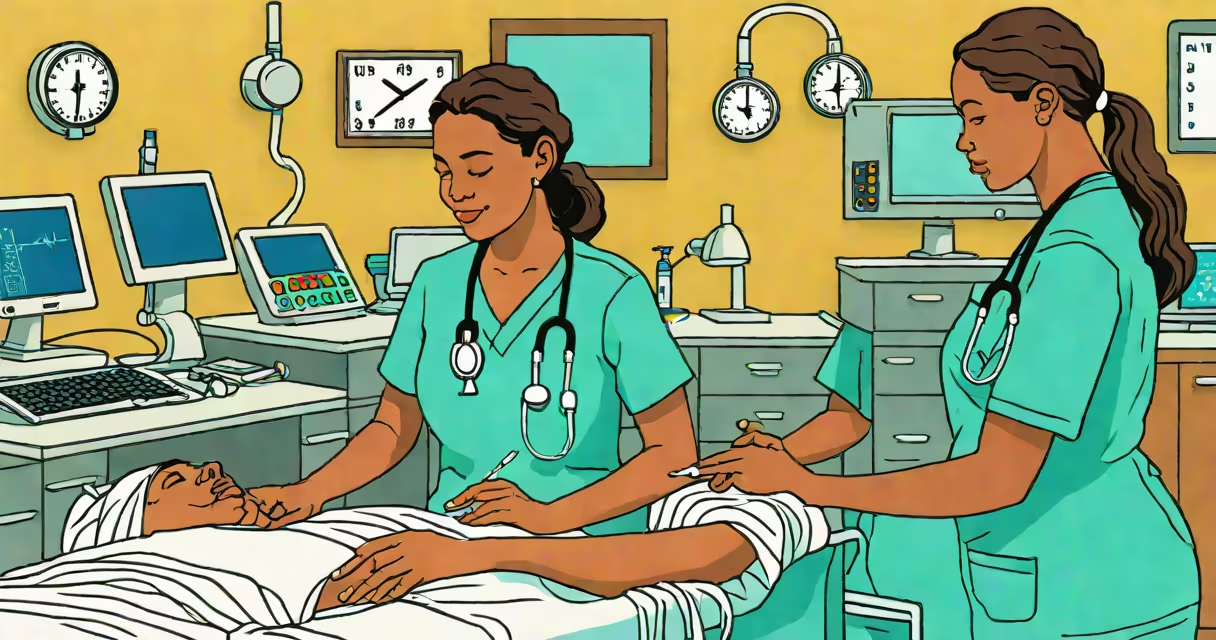
A PN nursing program is a postsecondary educational track that prepares individuals to become licensed practical nurses (LPNs) through classroom instruction and supervised clinical experience. These programs typically last 12 to 18 months and lead to eligibility for the National Council Licensure Examination for Practical Nurses (NCLEX-PN).
Students enrolled in a PN nursing program study anatomy, physiology, pharmacology, and patient care techniques. They complete hands-on training in hospitals, long-term care facilities, and outpatient clinics under the supervision of registered nurses and clinical instructors. Upon passing the NCLEX-PN, graduates earn state licensure and qualify for employment in diverse healthcare settings.
The U.S. Bureau of Labor Statistics reports that LPNs earned a median annual wage of $50,460 in 2023, with job growth projected at 6% through 2032-faster than average for all occupations. This demand stems from aging populations and increased need for preventive and chronic care services.
PN nursing programs follow a structured sequence of didactic and clinical learning. Students attend lectures and labs during the first half of the term, then transition into clinical rotations in the second half. Most programs require full-time enrollment, with classes held Monday through Friday, often from 8 a.m. to 4 p.m.
Clinical hours are mandatory and vary by state, but most programs require between 500 and 600 hours of supervised practice. These rotations cover medical-surgical, obstetrics, pediatrics, mental health, and long-term care settings. For example, a student at Miami Dade College's PN program spends 120 hours in acute care units, 80 in skilled nursing facilities, and 40 in home health visits.
Programs are accredited by the Accreditation Commission for Education in Nursing (ACEN) or the Commission on Collegiate Nursing Education (CCNE). Graduates from non-accredited schools cannot sit for the NCLEX-PN. The National Council of State Boards of Nursing (NCSBN) maintains the official test blueprint and administers the exam.
PN nursing programs are offered in community colleges, technical schools, and some universities. The primary differences lie in duration, format, and admission requirements.
| Program Type | Duration | Format | Admission Requirements |
|---|---|---|---|
| Traditional Campus-Based | 12-18 months | Full-time, in-person | High school diploma, math and science prerequisites, entrance exam |
| Accelerated Online Hybrid | 9-12 months | Online theory, in-person clinicals | Prerequisite courses completed, minimum 2.5 GPA |
| Workforce Training (State-Funded) | 6-12 months | Part-time, flexible scheduling | Open enrollment, no prior coursework required |
Some programs offer dual credit pathways. For instance, the PN program at Central Piedmont Community College in Charlotte allows students to earn an associate degree in applied science while completing the LPN curriculum. This option supports future advancement to RN programs.
PN nursing programs serve as a direct pipeline into healthcare roles requiring immediate workforce readiness. They are especially common in rural areas and underserved urban communities where access to RN programs is limited. According to the American Association of Colleges of Nursing (AACN), 68% of LPNs work in long-term care facilities, where they assist with daily living activities, administer medications, and monitor patient vitals.
These programs also function as stepping stones for aspiring nurses. A 2022 study published in the Journal of Nursing Education found that 43% of LPNs who entered RN programs had previously completed a PN nursing program. The clinical experience gained during the LPN phase improves retention and performance in advanced nursing curricula.
One non-obvious fact: many PN programs do not require applicants to have prior healthcare experience. However, competitive programs may prefer candidates with EMT certification or volunteer work in hospice or assisted living centers. For example, the PN program at Los Angeles Trade-Technical College prioritizes applicants with at least 20 hours of documented patient contact.
Many confuse PN nursing programs with vocational training for medical assistants. While both prepare individuals for healthcare roles, LPNs are regulated professionals with legal authority to perform specific tasks, such as administering injections and documenting patient care. Medical assistants are not licensed and cannot perform invasive procedures.
Another misconception is that PN programs are less rigorous than RN programs. This is false. The NCLEX-PN includes questions on complex topics like drug calculations, infection control, and ethical decision-making. A 2023 NCSBN report showed that the pass rate for first-time test-takers from PN programs was 86.7%, compared to 89.4% for RN candidates-indicating comparable academic standards.
I once observed a PN student at a Texas community college successfully manage a patient with unstable blood pressure during a clinical rotation. She recognized early signs of hypotension, initiated oxygen therapy, and alerted the supervising RN within minutes. Her actions prevented a potential emergency. That moment confirmed the value of focused, high-quality training in a PN nursing program.
After graduation, LPNs can pursue further education through bridge programs that allow them to enter RN programs with advanced standing. Some states, including California and New York, have articulation agreements between PN programs and RN schools. These agreements reduce redundancy in course content and shorten the time to RN licensure.
A PN nursing program offers a clear, efficient path to a stable healthcare career. With consistent training, clinical exposure, and national certification, graduates enter the workforce equipped to deliver essential patient care across multiple settings.