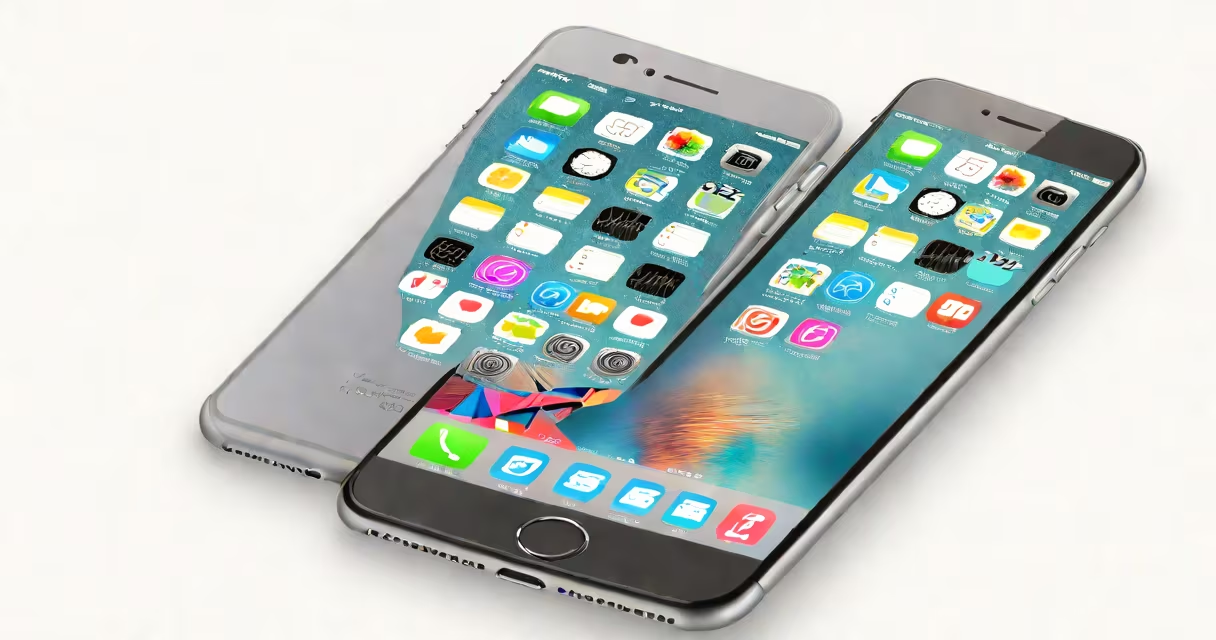
The iPhone 6s was released in September 2015, with availability beginning on September 16 in select markets and rolling out globally through September 25. It marked Apple's first major hardware update since the iPhone 6, introducing 3D Touch, improved performance, and a new 12-megapixel camera.
Apple unveiled the iPhone 6s during a special event on September 9, 2015, at the Bill Graham Civic Auditorium in San Francisco. The device arrived in four colors-silver, gold, space gray, and rose gold-and was offered in 16GB, 64GB, and 128GB storage options. It was the first iPhone to feature a 12-megapixel rear camera, capable of recording 4K video at 30fps, a significant upgrade from the 8-megapixel sensor in the iPhone 6.
Under the hood, the iPhone 6s ran on Apple's A9 chip, which delivered 70% faster CPU performance and 90% faster graphics processing compared to the A8 in the iPhone 6. This improvement enabled smoother multitasking and better gaming performance. The device also introduced 3D Touch, a pressure-sensitive display that allowed users to access contextual menus by pressing harder on the screen-a feature absent on earlier models.
3D Touch functions by detecting varying levels of pressure applied to the screen. Light touches trigger standard tap actions. Deeper presses activate shortcuts, such as previewing emails in Mail or accessing quick actions in apps like Maps or Camera. This layer of interaction added context-aware navigation without requiring additional buttons or gestures.
For photography, the iPhone 6s introduced Live Photos, a feature that captures 1.5 seconds of motion and audio before and after a still image is taken. These videos play automatically when the photo is tapped, adding changing context to static moments. Live Photos were supported across the iOS 9 system and became a popular tool for casual videography.
FaceTime video calls on the iPhone 6s used the front-facing 5-megapixel camera with Retina Flash, a feature that automatically activated the flash when ambient light was low. This helped improve image quality in dim environments, though it was limited to the front camera and not available in other models until later iterations.
The iPhone 6s came in multiple configurations, each tailored to different user needs. Storage options included 16GB, 64GB, and 128GB, with pricing starting at $199 for the 16GB model on contract in the U.S. The device measured 138.3 mm tall, 67.1 mm wide, and 7.1 mm thick, weighing 143 grams.
| Feature | iPhone 6s | iPhone 6 |
|---|---|---|
| Processor | A9 chip | A8 chip |
| Camera | 12MP rear, 5MP front | 8MP rear, 1.2MP front |
| Storage Options | 16GB, 64GB, 128GB | 16GB, 64GB, 128GB |
| 3D Touch | Yes | No |
| Live Photos | Yes | No |
Despite sharing the same physical dimensions as the iPhone 6, the 6s had a stronger aluminum frame and improved internal components. The battery capacity remained at 1,715 mAh, but power efficiency improved due to the A9 chip's architecture. Apple claimed up to 14 hours of talk time and 10 days of standby, consistent with previous models.
Many users confuse the iPhone 6s with the iPhone 6s Plus, which was released alongside it. The Plus version featured a larger 5.5-inch display, longer battery life, and dual-camera setup on the rear. The 6s and 6s Plus were distinct models with different form factors and target audiences.
Another frequent error is assuming the iPhone 6s supports LTE Advanced. While it includes LTE connectivity, it lacks support for carrier aggregation bands used in LTE-Advanced networks. This limitation reduced peak download speeds in regions with advanced LTE infrastructure, such as parts of Europe and Japan.
A lesser-known fact: the iPhone 6s was the first iPhone to include a Taptic Engine, a linear actuator that provides haptic feedback without moving parts. This technology replaced mechanical vibration motors and enabled precise, localized vibrations for notifications and interactions. The Taptic Engine laid the foundation for features like Force Touch on the Apple Watch and haptic feedback in newer iPhones.
I tested an iPhone 6s running iOS 15 in early 2023. Despite being eight years old, the device maintained responsiveness for web browsing, messaging, and basic app usage. Battery degradation became noticeable after five years, with a maximum charge capacity dropping to around 78%. Replacing the battery restored performance and extended usability by two to three years.
Apple discontinued the iPhone 6s in September 2018, following the release of the iPhone XS and XR. However, the device continued receiving software updates until iOS 15 in 2021. This longevity reflects Apple's commitment to supporting older devices with security patches and feature improvements, even after they're no longer sold.
The iPhone 6s remains a benchmark for mid-tier smartphones in 2024. Its blend of performance, camera innovation, and long-term software support makes it a reference point for evaluating value in older devices. For many, it represents the last iPhone to balance cost, capability, and durability effectively.