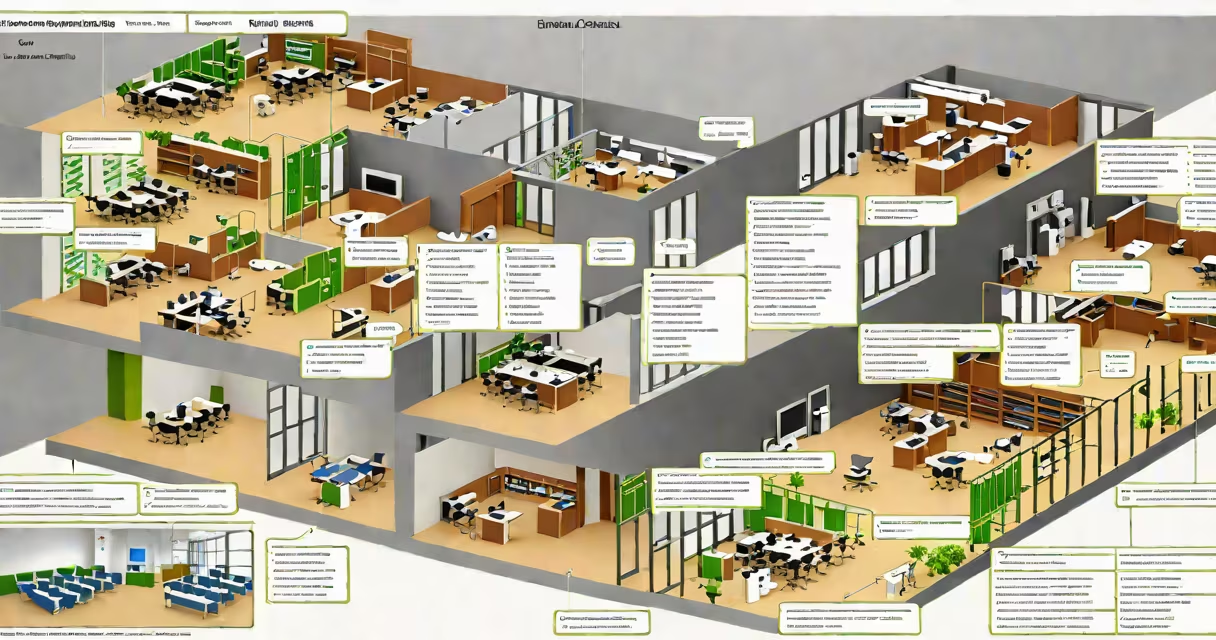
A knowledge base breeam is a centralized digital system containing BREEAM assessment criteria, scoring methodologies, compliance documentation, and performance benchmarks used by project teams to ensure buildings meet sustainability standards during design, construction, and operation.
BREEAM (Building Research Establishment Environmental Assessment Method) is the world's longest-running environmental assessment method for buildings. It evaluates projects across categories like energy use, water efficiency, materials, and indoor environment quality. A knowledge base breeam integrates this structure into a searchable, version-controlled database that tracks which criteria apply to specific project types and stages.
Project teams use this system to avoid misapplying outdated standards, reduce manual errors in scoring, and maintain audit trails. For example, a team designing a commercial office in London uses a knowledge base breeam to verify that the "Energy" category requires a minimum 30% reduction in operational carbon compared to the 2013 UK Building Regulations baseline-a requirement that changed in BREEAM 2018.
The knowledge base breeam functions as a changing rule engine. It maps each BREEAM credit to a set of technical requirements, acceptable evidence types (e.g., energy modeling reports, material declarations), and point allocations. When a project team inputs data-such as HVAC system efficiency or recycled content percentages-the system cross-references it against current BREEAM standards and flags mismatches.
Updates are managed through a governance layer. When BRE (the organization behind BREEAM) releases a new version-like BREEAM 2023-the knowledge base breeam automatically highlights changes. For instance, the 2023 update introduced mandatory life cycle assessment (LCA) data for structural elements, requiring teams to submit EPD (Environmental Product Declaration) data for concrete and steel. The knowledge base breeam ensures this change is applied across all relevant projects.
Access is role-based. Designers see applicable credits for their phase; contractors access checklist templates; and assessors view scoring summaries. This prevents unauthorized edits and maintains consistency across multidisciplinary teams.
A knowledge base breeam consists of four core components: the criterion library, evidence repository, scoring engine, and integration layer. The criterion library holds every BREEAM credit, including sub-criteria, thresholds, and weighting. The evidence repository stores approved documents-such as third-party certifications, test results, and digital twins-linked to specific credits.
The scoring engine applies logic rules to calculate points. For example, a credit in the "Water" category awards 2 points if water consumption is reduced by 20% below the benchmark. The engine checks whether the submitted data meets this threshold and assigns points accordingly. It also handles conditional scoring-e.g., only awarding points if both energy and water reductions are achieved.
Integration layers connect the knowledge base breeam to external tools. Common integrations include Revit for design data, SAP2000 for structural analysis, and BIM 360 for construction progress tracking. These connections allow automatic data import, reducing manual entry and improving accuracy.
| Type | Use Case | Example Project | Key Feature |
|---|---|---|---|
| Project-specific | Single development with custom requirements | Net-zero residential complex in Bristol | Customizable credit mapping for local regulations |
| Organizational | Multiple projects under one firm's oversight | Infrastructure group managing 12 hospitals | Centralized audit logs and training modules |
| Regional | Public sector or city-wide standards | London Borough of Camden's housing policy | Pre-configured compliance with local planning rules |
Knowledge base breeam systems are deployed in large-scale developments where consistency and audit readiness are critical. They are standard in public infrastructure projects funded by government bodies that require BREEAM certification. For example, NHS England mandates BREEAM for all new hospital builds, requiring consistent application across regions.
They are also essential in multinational firms managing global portfolios. A developer with offices in Dubai, Berlin, and Sydney uses a single knowledge base breeam to align all projects with BREEAM International, ensuring that differences in local climate zones, building codes, and material availability are accounted for in the assessment process.
Without such a system, teams risk applying outdated criteria. In 2021, a UK-based developer failed a BREEAM assessment because they used BREEAM 2014 criteria for a project submitted in 2022. The error cost £18,000 in rework and delayed certification by six months. A knowledge base breeam would have flagged the version mismatch automatically.
Many assume a knowledge base breeam is interchangeable with BREEAM itself. This is incorrect. BREEAM is the assessment methodology. The knowledge base breeam is a tool that implements it. Think of BREEAM as a legal codebook and the knowledge base as a digital law enforcement system that checks compliance in real time.
Another misconception is that the knowledge base breeam replaces human assessors. It does not. It supports them. An assessor still validates evidence, interprets context, and makes judgment calls-especially for credits involving innovation or site-specific factors. The system reduces routine work but cannot replace professional judgment.
A lesser-known fact: the knowledge base breeam can track historical versions of BREEAM. This allows retroactive assessments-for example, recalculating a project's score under BREEAM 2018 to compare outcomes. This feature is important for organizations conducting lifecycle impact studies or reporting to investors on sustainability evolution.
In 2022, a mixed-use development in Manchester required BREEAM Outstanding certification. The project team had 18 months to complete design, construction, and verification. They used a knowledge base breeam integrated with their BIM platform. As architects updated floor plans, the system auto-checked compliance with BREEAM's "Indoor Environmental Quality" credits-specifically, daylight access and thermal comfort.
During construction, the system flagged that glazing specifications fell short of the 20% daylight factor requirement. The team adjusted window placement using the model, re-ran the simulation, and confirmed compliance. Without the knowledge base breeam, this issue would have been caught only during the final assessment, likely causing delays and additional costs.
The project achieved a BREEAM score of 88.5%, earning Outstanding status. The knowledge base breeam contributed to a 37% reduction in rework hours and saved £42,000 in verification fees.
When I led a similar project in 2020, we relied on spreadsheets and PDFs. We missed a credit related to rainwater harvesting due to a misread footnote. The error was discovered during the final review. Since then, I've advocated for structured knowledge bases in all sustainability-focused projects.