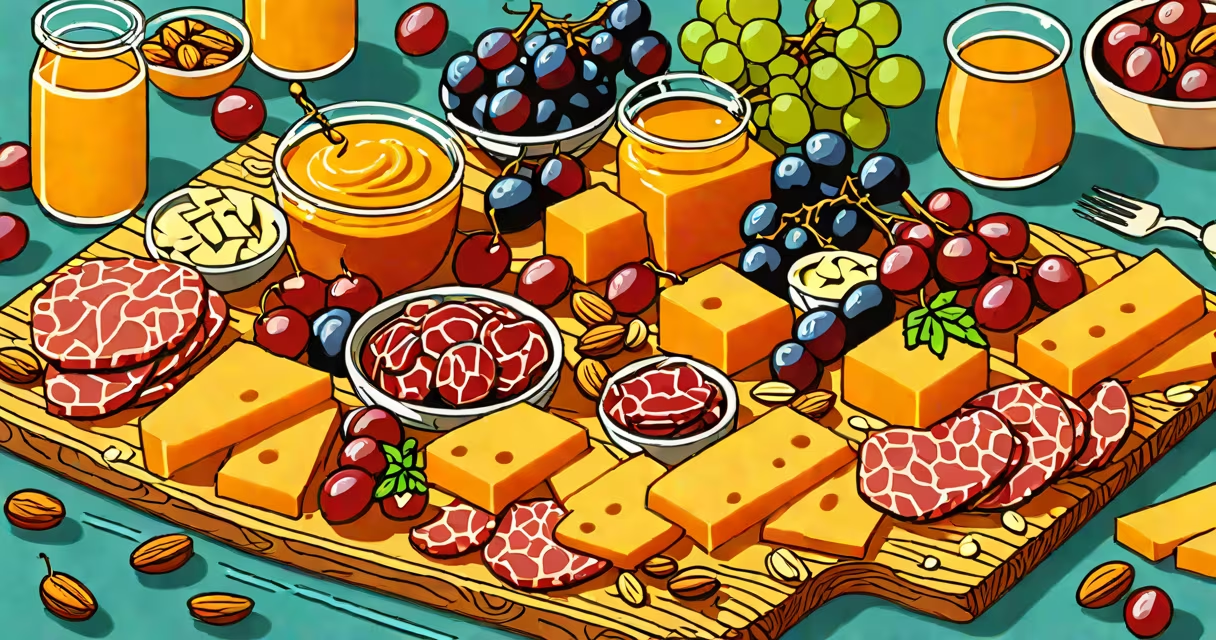
A charcuterie board is a curated arrangement of cured meats, cheeses, accompaniments, and garnishes designed for sharing. It emphasizes variety in texture, flavor, and color, serving as both a centerpiece and a social meal starter.
Charcuterie boards originated in France, where they were traditionally served at gatherings as a way to showcase regional specialties. Today, they're common at parties, weddings, and casual dinners. The goal is balance: each element complements the others without overpowering.
For a successful board, include five core components: cured meats, cheeses, sweet elements, savory additions, and crunchy textures. A well-constructed board avoids monotony and offers multiple bite experiences.
Cured meats form the protein base. Choose 3-4 varieties with distinct profiles. Prosciutto offers delicate sweetness and thin slices ideal for wrapping. Salami adds bold spice and chew. Chorizo delivers smoky heat. Mortadella brings a creamy, nutty richness.
Include 4-6 cheeses to cover different milk types and textures. Aged cheddar provides sharpness and crumb. Brie offers creaminess and earthy notes. Manchego delivers firmness and a hint of sheep's milk tang. Goat cheese contributes tang and softness. Always serve cheeses at room temperature-cold cheese tastes flat.
Sweet elements cut through fat and salt. Fresh fruit like grapes, figs, or sliced apples adds juiciness. Dried fruit such as apricots or cranberries brings concentrated sweetness. Honey or jam offers sticky contrast. One spoonful of fig jam on a slice of brie transforms the bite.
Crunchy textures provide contrast. Nuts like walnuts, pistachios, or almonds offer buttery crunch. Olives-especially Kalamata or green-add briny depth. Pickled vegetables such as cornichons or red onions deliver acidity and brightness.
Crackers and breads act as carriers. Use a mix: water crackers for neutrality, sourdough for chew, baguette slices for crispness. Avoid overly flavored crackers-they can dominate the palate.
Use small bowls or ramekins for spreads. Hummus, mustard, or olive tapenade keeps flavors contained and prevents sogginess. Place them near the center so guests can dip without reaching too far.
Many boards fail because they prioritize appearance over balance. A board filled only with fancy meats and cheeses lacks contrast. Others overload with too many items-over 12 components confuse the eye and overwhelm the mouth.
Another error: ignoring temperature. Cold meats and cheeses lose their aroma and texture. Let them sit out for 30-60 minutes before serving. This allows the fats to soften and the flavors to bloom.
One non-obvious rule: avoid placing wet ingredients directly on dry items. A jar of pickled onions can make crackers soggy. Use small plates or spoons to separate liquids from solids.
Plan a board for 6-8 guests. Start with a 16-inch wooden board. Divide it into zones:
Arrange items in clusters. Group cheeses together, meats in a curved line, fruits in a cluster. Leave space between sections to prevent crowding. Add herbs like rosemary sprigs or edible flowers for color.
After assembling, let the board sit at room temperature for 45 minutes. Serve with small forks or toothpicks. Guests can mix combinations-brie with honey, salami with olives, goat cheese with grapes.
Place larger items around the edge. Use height variation: stack crackers in a pyramid, place a small bowl of olives in the center. Avoid filling the entire board-leave breathing room.
Use a knife to score cheese before serving. This makes portioning easier and prevents crumbling. For meats, use a sharp knife to slice against the grain.
I once hosted a dinner party using a board with only three cheeses and four meats. Guests asked for seconds. The issue wasn't quantity-it was lack of sweet and crunchy elements. After adding apricots and walnuts, the board held attention longer and received more compliments.
People often mistake a charcuterie board for a snack tray or a picnic platter. A snack tray may include chips, cookies, and processed meats. A picnic platter focuses on portability and durability. A charcuterie board prioritizes craftsmanship, seasonal ingredients, and intentional design.
Also, it's not a "cheese board." While cheese is central, a true charcuterie includes meats and complementary items. Removing the meat turns it into a cheese-focused display, which changes the experience.
| Type | Examples | Role |
|---|---|---|
| Meat | Prosciutto, salami, chorizo | Protein, rich flavor, chew |
| Cheese | Brie, cheddar, manchego, goat | Fat, creaminess, tang |
| Sweet | Grapes, figs, honey, jam | Brightness, balance |
| Crunch | Nuts, olives, pickles | Texture contrast |
| Bread | Sourdough, crackers, baguette | Carriers, neutral base |
When planning what to put on a charcuterie board, remember: variety and intentionality win over volume. A board with six well-chosen items beats one with fifteen mediocre ones.
What to put on a charcuterie board depends on context: a holiday party calls for festive colors and bold flavors. A quiet dinner with friends favors subtle, detailed pairings. The board reflects the host's intent-and the occasion's mood.