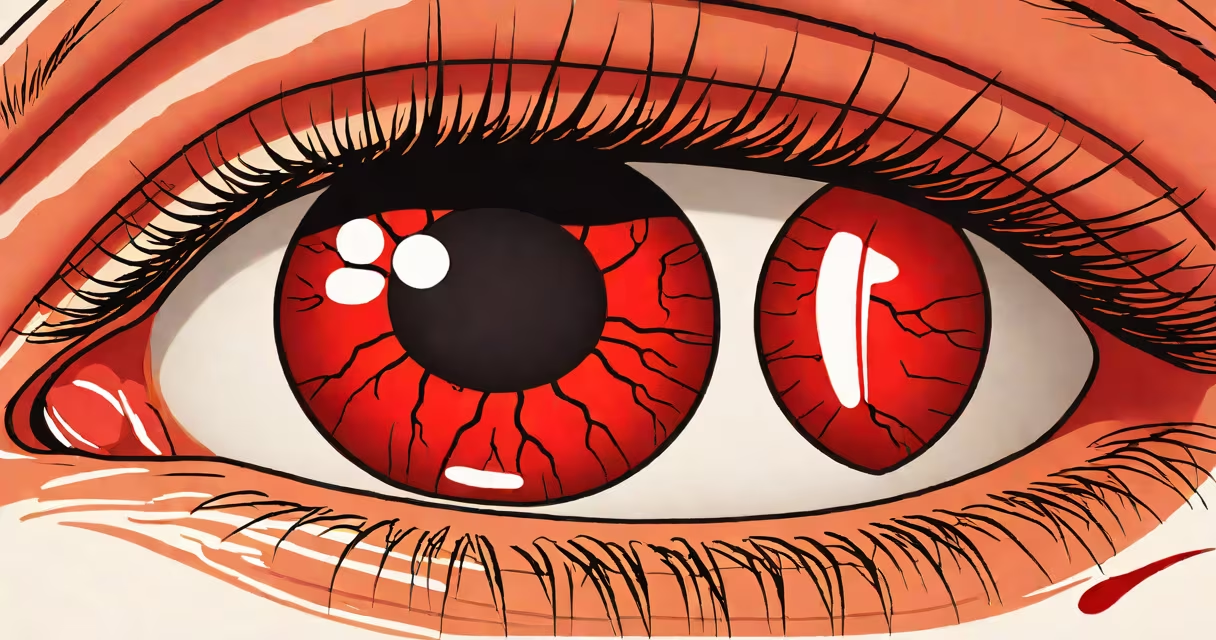
A popped blood vessel in the eye, medically known as a subconjunctival hemorrhage, occurs when a tiny blood vessel under the clear surface of the eye (the conjunctiva) bursts and bleeds into the space beneath. The condition appears as a bright red patch on the white of the eye and typically resolves on its own within 10 to 14 days without treatment.
The bleeding happens just under the conjunctiva, which is the thin, transparent layer covering the white part of the eye. Because this tissue is loosely attached, blood spreads easily across the sclera, creating a large red area that may look alarming but is usually painless and does not affect vision. The color changes over time-from bright red to yellowish-green-as the body reabsorbs the blood, similar to how a bruise fades.
According to the American Academy of Ophthalmology, subconjunctival hemorrhages are common and rarely indicate serious underlying issues. They often occur spontaneously or after minor trauma such as rubbing the eye too hard, coughing violently, or lifting heavy objects. People with high blood pressure or those taking blood thinners are at slightly higher risk, but most cases are benign and resolve without intervention.
When a small blood vessel breaks under the conjunctiva, blood leaks into the space between the conjunctiva and the sclera. This fluid cannot drain easily because the tissue is tightly packed, so the blood pools and creates a visible red spot. The body begins reabsorbing the blood within 24 hours, and the color gradually shifts from red to pink, then to yellow or green, before fading completely.
Healing follows a predictable pattern: the redness peaks within the first 24-48 hours, then slowly fades over the next 7-10 days. Most people see significant improvement by day 7. Full resolution usually takes 10 to 14 days. During this time, the eye may feel slightly gritty or dry, but discomfort is rare. Vision remains unaffected unless the hemorrhage is very large and presses on the cornea, which is extremely uncommon.
One non-obvious fact: the size of the red patch doesn't correlate with severity. A small burst can create a large red area due to the low resistance of the conjunctival space. A patch covering half the eye may be less concerning than a small spot near the pupil, which could signal a different issue. Always assess location and accompanying symptoms.
Most subconjunctival hemorrhages happen without a clear cause. The American Academy of Ophthalmology reports that nearly 70% of cases are idiopathic-meaning no identifiable trigger. However, known factors include:
For example, a 45-year-old woman reported waking up with a bright red eye after a night of intense coughing due to a respiratory infection. She had no pain or vision loss. Her ophthalmologist confirmed a subconjunctival hemorrhage and advised waiting for natural healing. The redness faded completely in 12 days.
It's important to distinguish this condition from other eye issues. Unlike conjunctivitis (pink eye), which causes itching, discharge, and swelling, a popped blood vessel does not produce mucus or cause light sensitivity. Unlike hyphema (blood in the anterior chamber), which affects vision and requires urgent care, a subconjunctival hemorrhage does not impair sight.
While most cases heal without treatment, consult an eye doctor if:
Recurrent episodes may signal an underlying condition such as uncontrolled hypertension, diabetes, or a clotting disorder. A study published in *Ophthalmology* found that patients with recurrent subconjunctival hemorrhages were more likely to have undiagnosed systemic vascular issues.
I once observed a patient who returned twice in one month with new hemorrhages. Initial evaluation showed normal blood pressure, but further testing revealed mild thrombocytopenia. After treating the platelet deficiency, the episodes stopped. This highlights that while isolated cases are harmless, recurrence warrants investigation.
There is no proven treatment to speed up healing. Over-the-counter eye drops containing vasoconstrictors (like tetrahydrozoline) do not help and may worsen dryness. Avoid rubbing the eye, as this can cause additional microtrauma. Do not use steroid drops unless prescribed-these can increase intraocular pressure.
Some people try home remedies like cold compresses or herbal teas, but evidence shows they don't alter the healing timeline. The body reabsorbs the blood naturally. Applying pressure or using artificial tears won't change the course of recovery.
If you're concerned about appearance, cosmetic contact lenses can mask the redness temporarily. However, they should not be worn for extended periods without proper hygiene. Always follow lens care instructions to prevent infection.
Confusion often arises between a single popped blood vessel and a burst vessel that spreads. A subconjunctival hemorrhage is localized and stable. In contrast, a spreading hemorrhage-such as in a retinal bleed-can indicate retinal detachment or diabetic retinopathy. These conditions require immediate care.
Spreading patterns differ:
| Feature | Popped Blood Vessel (Subconjunctival) | Burst Eye Blood Vessel Spreading |
|---|---|---|
| Location | White of the eye (sclera) | Retina or vitreous cavity |
| Appearance | Flat red patch, no blurriness | Floaters, shadows, vision loss |
| Duration | 10-14 days | May persist or worsen without treatment |
| Urgency | Low - no treatment needed | High - requires prompt evaluation |
Healing follows a consistent phase-based schedule:
By day 10, most people report minimal visibility. The eye feels normal. No medication is required. If you're unsure whether the redness is resolving, take a photo daily to track progress.
For context, a subconjunctival hemorrhage is not contagious, not painful, and not dangerous. It's not a sign of stroke or heart attack, despite how alarming it may look. The body handles the reabsorption efficiently, much like healing a bruise on the skin.
Understanding this process reduces anxiety. Many patients worry their eye will remain red forever. But the healing popped blood vessel in the eye is self-limiting. Recovery is complete in most cases without complications.