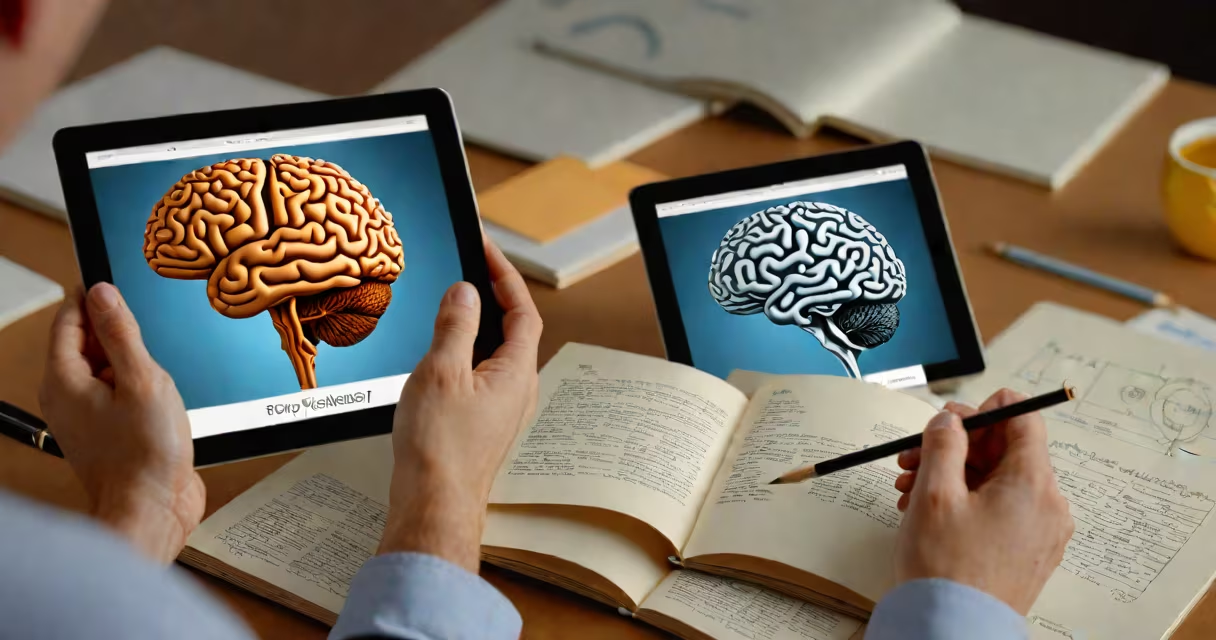
What to learn in psychology centers on understanding human behavior, mental processes, and emotional development through scientific study. This field examines how people think, feel, act, and interact across diverse contexts, using evidence-based methods to explain individual and group patterns.
Psychology is not a single subject but a broad discipline with distinct areas of focus. These include cognitive psychology, developmental psychology, social psychology, clinical psychology, and neuropsychology. Each area investigates different aspects of the mind and behavior, from memory formation to interpersonal relationships and brain function.
The foundation of what to learn in psychology lies in empirical research. Findings come from experiments, longitudinal studies, neuroimaging, and statistical analysis-not speculation. For example, the Stanford Prison Experiment revealed how situational factors influence behavior, while fMRI studies show which brain regions activate during decision-making.
Understanding what to learn in psychology begins with identifying its major branches. Each branch uses specific tools and theories to explore human experience.
Cognitive psychology focuses on internal mental processes such as attention, perception, memory, problem-solving, and language. Researchers measure reaction times, eye movements, and neural activity to understand how people process information. A 2018 study published in *Nature Human Behaviour* showed that working memory capacity predicts performance in complex tasks, reinforcing the importance of cognitive training.
Developmental psychology tracks changes across the lifespan-from infancy to old age. It explores milestones in motor skills, language acquisition, moral reasoning, and identity formation. Lawrence Kohlberg's stages of moral development, for instance, illustrate how ethical thinking evolves from childhood to adulthood, based on decades of interviews with children and adolescents.
| Branch | Focus Area | Example Method |
|---|---|---|
| Clinical Psychology | Mental health disorders and treatment | DSM-5 diagnostic criteria, therapy outcome tracking |
| Neuropsychology | Brain-behavior relationships | fMRI scans, patient case studies |
| Industrial-Organizational Psychology | Workplace behavior and productivity | Employee satisfaction surveys, leadership assessments |
Social psychology examines how individuals are influenced by others. Concepts like conformity, persuasion, and group dynamics are studied through controlled experiments. Solomon Asch's line judgment task demonstrated that 75% of participants conformed to incorrect group answers at least once, highlighting the power of social pressure.
What to learn in psychology applies directly to everyday life. Understanding cognitive biases helps people make better decisions. Recognizing emotional regulation strategies improves relationships. Knowing how stress affects the body informs healthier coping mechanisms.
A 2020 meta-analysis in *The Lancet Psychiatry* found that brief psychological interventions reduced symptoms of anxiety and depression in primary care settings. This shows that foundational psychological principles can be effective even in time-limited clinical environments.
For students, learning psychology builds critical thinking. It teaches how to evaluate claims, distinguish correlation from causation, and interpret data. These skills transfer to fields like education, healthcare, business, and public policy.
Many assume psychology is only about therapy or diagnosing mental illness. That's a narrow view. While clinical applications exist, psychology includes research on learning, motivation, perception, and cultural differences in behavior.
Another mistake is equating psychology with common sense. Just because something feels intuitive doesn't mean it's accurate. For example, the idea that "opposites attract" contradicts research showing that similarity in values and interests predicts long-term relationship success. A 2016 study in *Journal of Personality and Social Psychology* analyzed over 10,000 couples and found that partners with similar personalities reported higher satisfaction.
There's also confusion between psychology and psychiatry. Psychiatrists are medical doctors who prescribe medication. Psychologists typically hold PhDs or PsyDs and provide therapy, assessment, and research-but cannot prescribe drugs in most U.S. states.
Consider a high school counselor noticing rising anxiety among students. Instead of assuming it's due to academic pressure alone, they apply what to learn in psychology to assess root causes.
They review data from anonymous surveys showing sleep deprivation and social media use correlate strongly with anxiety scores. Using cognitive-behavioral principles, they design a workshop teaching students to identify negative thought patterns and replace them with balanced ones. They also partner with teachers to reduce homework load during exam weeks.
After six weeks, anxiety levels drop by 30% according to follow-up surveys. This outcome reflects how applied psychology leads to measurable improvements in well-being.
When I taught introductory psychology, I saw students initially dismiss concepts like classical conditioning. But after demonstrating Pavlov's dogs with a recorded bell-and-food experiment, their engagement shifted. One student later told me, "I finally see why I panic before tests-I've been conditioned to fear them." That moment confirmed how real-world relevance transforms abstract ideas into lasting understanding.
What to learn in psychology isn't just academic-it's a toolkit for understanding yourself and others. From improving communication to managing stress, the insights gained have lasting impact on personal and professional life.