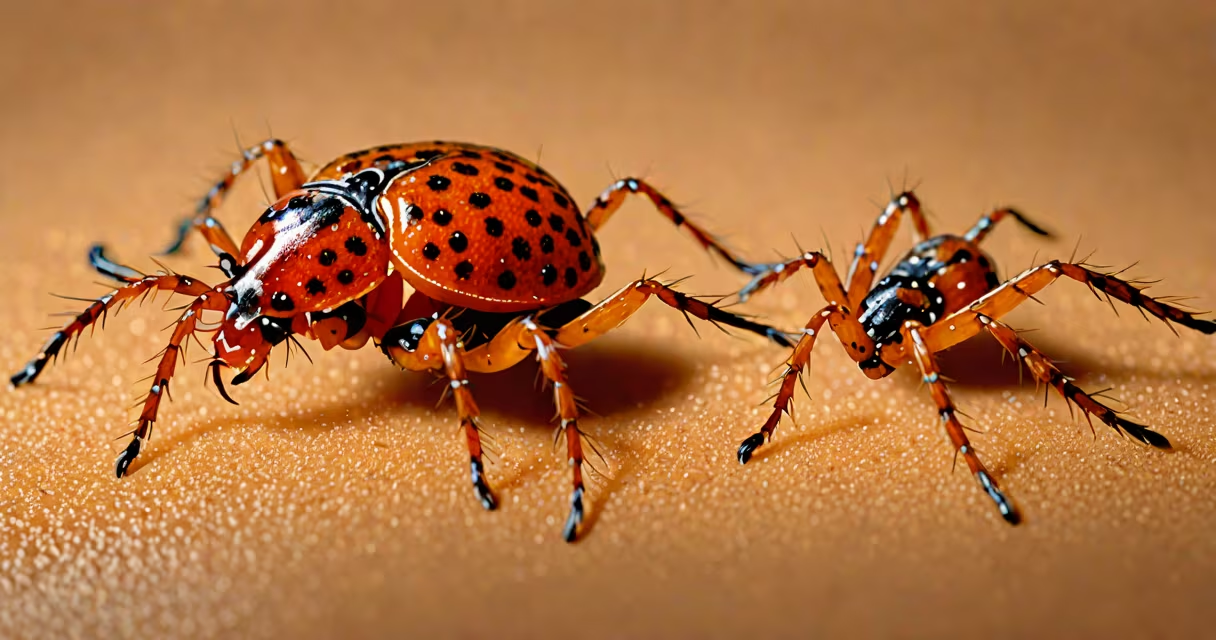
The bacterium Rickettsia rickettsii, transmitted by the bite of an infected American dog tick (Dermacentor variabilis), causes Rocky Mountain spotted fever. This tick species is the primary vector in the eastern and central United States.
Rickettsia rickettsii is a gram-negative, obligate intracellular bacterium that invades endothelial cells lining small blood vessels. Once inside, it replicates rapidly, triggering systemic inflammation and vascular damage. The infection typically begins within 2 to 14 days after a tick bite, though symptoms may appear later in some cases.
According to the Centers for Disease Control and Prevention (CDC), approximately 100 to 1,000 cases of Rocky Mountain spotted fever are reported annually in the U.S., with peak incidence occurring in May through July. The disease is most prevalent in the southeastern and south-central states, including North Carolina, Oklahoma, and Arkansas.
Dermacentor variabilis acquires Rickettsia rickettsii during a blood meal from an infected host-commonly a wild rodent or domestic animal. The bacteria then multiply in the tick's salivary glands. During feeding, which lasts 24 to 48 hours, the tick injects saliva containing the pathogen into the human host.
Transmission requires the tick to remain attached long enough for the bacteria to enter the bloodstream. Studies show that transmission risk increases after 24 hours of attachment. Prompt removal reduces infection likelihood substantially.
A 2021 study published in *Emerging Infectious Diseases* found that 68% of confirmed RMSF cases in the Southeast were linked to tick bites from Dermacentor variabilis. The study also noted that many patients did not recall seeing a tick, underscoring the stealth nature of initial exposure.
While Dermacentor variabilis is the dominant vector in the eastern U.S., other tick species can transmit Rickettsia rickettsii under certain conditions:
| Tick Species | Geographic Range | Transmission Risk |
|---|---|---|
| Dermacentor variabilis | Eastern and central U.S. | High - primary vector |
| Dermacentor andersoni | Western U.S. (e.g., Montana, Wyoming) | High - historically associated with RMSF outbreaks |
| Amblyomma americanum | South and southeast U.S. | Low - primarily transmits Ehrlichia chaffeensis, but can carry R. rickettsii in rare cases |
Although Amblyomma americanum (the lone star tick) is not a major vector for RMSF, it can harbor Rickettsia rickettsii in regions where multiple tick species coexist. A 2019 survey in Georgia detected Rickettsia DNA in 3.2% of lone star ticks tested, indicating potential for incidental transmission.
The presence of the bacterium in a tick does not guarantee transmission. Factors such as tick engorgement level, duration of attachment, and host immune response influence whether infection occurs.
Rocky Mountain spotted fever is often misattributed to mosquitoes or fleas due to its flu-like onset. However, the CDC confirms that only ticks transmit Rickettsia rickettsii. Mosquitoes do not carry or spread this specific pathogen.
Another common error is assuming that all tick bites lead to RMSF. In reality, infection rates among people bitten by infected ticks are low-estimates suggest less than 1% of individuals develop symptomatic disease, even after a known bite.
The disease is not limited to mountainous regions. Despite its name, over 80% of cases occur in the southeastern U.S., particularly in areas with high deer and rodent populations that support tick life cycles.
In June 2022, a 42-year-old man in rural Virginia developed a fever, severe headache, and a rash on his wrists and ankles after hiking in a wooded area. He had no memory of a tick bite but noticed a small red spot near his ankle that had turned into a bruise-like lesion.
He was admitted to a local hospital with suspected viral infection. By day four, his platelet count dropped to 80,000/μL (normal: 150,000-450,000), and a rash spread to his palms and soles. A serological test confirmed IgM antibodies against Rickettsia rickettsii.
He was treated with doxycycline, 100 mg twice daily for seven days. His temperature normalized within 48 hours, and the rash resolved over five days. The patient later recalled finding a small, dark tick on his leg the morning after the hike, which he removed and discarded.
This case illustrates the insidious nature of RMSF: early symptoms mimic common illnesses, and tick attachment may go unnoticed. It also highlights the importance of prompt antibiotic treatment-doxycycline remains the gold standard for both adults and children.
Preventive measures include wearing long sleeves and pants in tick-prone areas, using permethrin-treated clothing, and performing thorough tick checks after outdoor activities. The CDC recommends checking the entire body, especially behind ears, in the groin, and around the waistline.
If a tick is found, remove it promptly with fine-tipped tweezers. Grasp the tick close to the skin and pull upward steadily. Do not twist or crush the body. After removal, clean the site with soap and water.
For those who develop fever, rash, or muscle pain within two weeks of a tick bite, seek medical care immediately. Early diagnosis and treatment prevent complications such as kidney failure, neurological deficits, and death. Mortality rates exceed 10% in untreated cases, according to the CDC.
Understanding the role of Dermacentor variabilis in spreading Rocky Mountain spotted fever is critical for prevention. Recognizing early signs, removing ticks quickly, and seeking timely care can stop the progression of this potentially fatal illness.