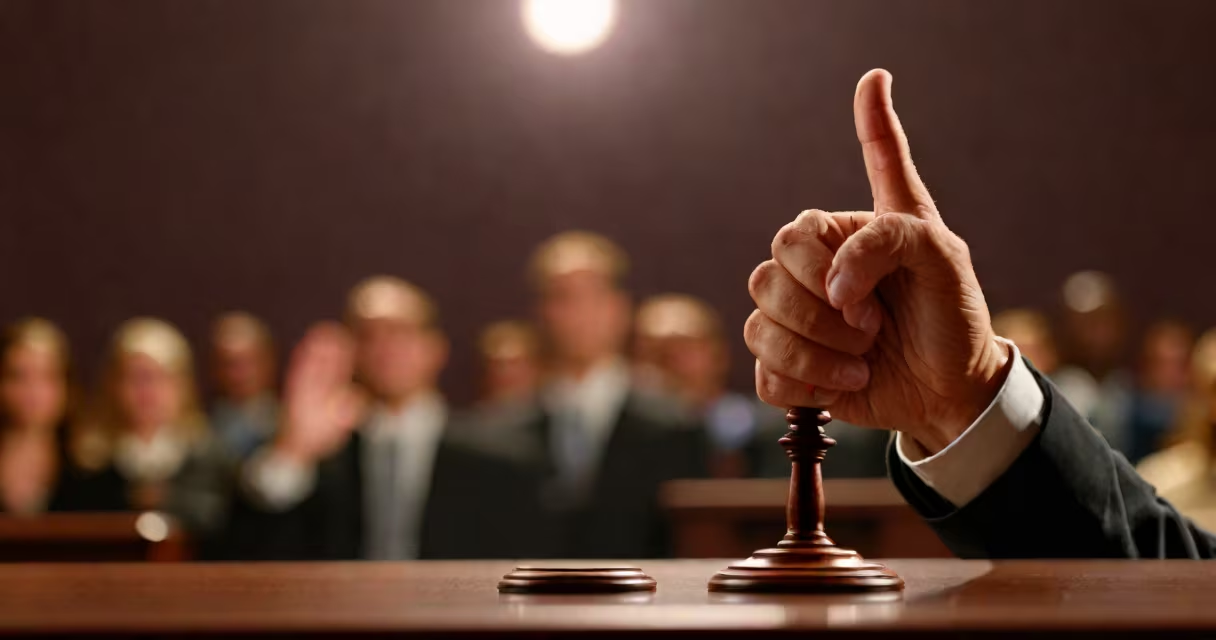
Testimony is a sworn or formal statement given by a person who has direct knowledge of events, used as evidence in legal proceedings or as a declaration of belief in religious or personal contexts. It serves as a primary source of truth when facts are contested.
In law, testimony is the spoken or written account of someone who witnessed an event or possesses relevant information. It forms the foundation of many trials, especially when physical evidence is absent. In religion, testimony often refers to a personal affirmation of faith, such as a believer's account of spiritual experiences. Both uses rely on credibility and consistency.
When a witness testifies in court, they are required to swear or affirm to tell the truth. This oath reinforces the ethical weight of their words. The judge may allow cross-examination to assess reliability. For example, in a traffic accident trial, a driver who saw the collision may testify about speed, weather, and vehicle movements. Their testimony, combined with skid marks and camera footage, helps determine fault.
Religious testimony differs in formality but shares the core idea: reporting what one personally experienced or believes. In Christian worship, members often share "personal testimonies" during services-brief narratives describing how faith changed their lives. These are not meant to prove doctrinal points but to convey emotional and spiritual transformation.
A 2021 study by the National Institute of Justice found that eyewitness testimony influenced verdicts in 60% of criminal cases where no forensic evidence existed. However, the same study noted that misidentification occurred in 25% of those cases, highlighting the fallibility of human memory even under oath.
Testimony varies by context and structure. Legal testimony includes direct, circumstantial, and expert testimony. Direct testimony states what the witness observed firsthand. Circumstantial testimony infers facts from indirect evidence. Expert testimony comes from professionals-such as forensic scientists or psychiatrists-who interpret data beyond lay understanding.
| Type | Use Case | Example |
|---|---|---|
| Direct | Witness to a crime | "I saw the man in a red jacket push the victim." |
| Circumstantial | Linking suspect to scene | "The suspect's shoes matched the footprint near the door." |
| Expert | Medical or technical analysis | "DNA from the knife matched the defendant's profile." |
Personal testimony-common in recovery groups like Alcoholics Anonymous-focuses on lived experience rather than objective facts. A member might say, "I lost my job and home because of drinking. Now I've been sober for three years." This is not evidence in a court, but it holds persuasive power within communities of shared struggle.
Testimony is often mistaken for hearsay. Hearsay is secondhand information passed through others-like "My friend said the defendant was at the bar." Courts exclude hearsay unless it falls under a recognized exception. Testimony, by contrast, must come from someone who directly perceived the event.
Another misunderstanding is equating testimony with proof. A witness can be truthful and still mistaken. Memory is unreliable. A 2018 report from the Innocence Project revealed that faulty eyewitness testimony contributed to 70% of wrongful convictions later overturned by DNA evidence.
Some assume religious testimony must be dramatic or miraculous. But many faith-based testimonies are quiet and ordinary. A woman might testify in church that her daily prayer routine helped her manage anxiety. The value lies in authenticity, not spectacle.
Consider a robbery trial in New York City. The prosecution calls Maria Lopez, a cashier at a convenience store. She testifies she saw a man enter at 11:47 p.m., buy a soda, and then pull out a gun. She described his clothing-a dark hoodie-and the sound of his voice. Her testimony was consistent with security footage showing a figure matching that description entering and exiting quickly.
The defense challenged her identification, arguing the lighting was poor and she had no prior contact with the suspect. The judge allowed the jury to weigh her credibility., the jury convicted the defendant based on her testimony and video evidence.
This case illustrates how testimony functions not as absolute truth but as a piece of a larger evidentiary puzzle. Its strength depends on detail, consistency, and corroboration.
I once attended a small community hearing where a survivor of domestic abuse gave testimony about repeated incidents. Her account was calm, specific, and detailed-she listed dates, times, and injuries. When asked if she was sure, she said, "I remember the smell of burnt toast that night because he lit a cigarette in the kitchen." That sensory detail anchored her story in reality. The panel accepted her testimony as credible, leading to protective orders being issued.
That moment reminded me that testimony is not just about facts-it's about presence. The way a person speaks, the pauses they take, the details they choose-all signal truthfulness or hesitation.
Testimony differs from affidavit, which is a written sworn statement. While both are legally binding, affidavits are submitted without oral presentation. Affidavits are common in divorce filings or immigration cases where witnesses cannot appear in court.
Also distinct is deposition testimony-recorded statements taken before trial. Depositions are used to preserve testimony and identify contradictions early. They are not presented directly in court unless the witness is unavailable.
The meaning of testimony lies in its dual role: as a tool of justice and a vessel of personal truth. Whether in a courtroom or a church pew, it reflects humanity's enduring need to speak what we have seen, felt, or believed.