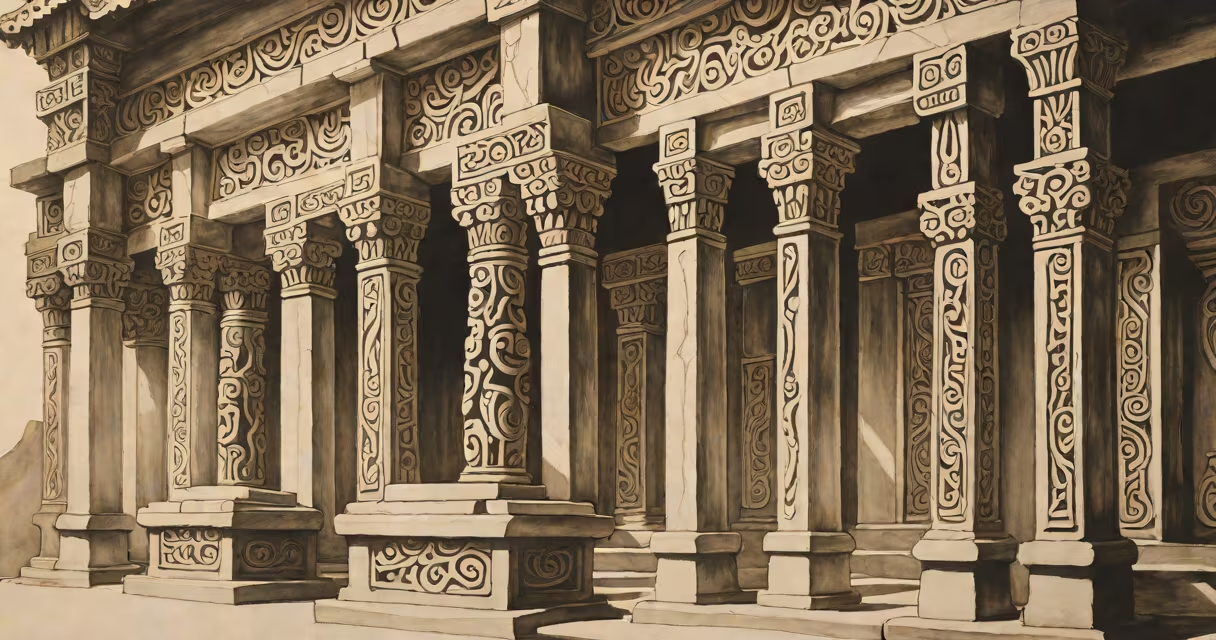
The term "sacred" describes something regarded as holy, set apart from ordinary use, and worthy of deep reverence due to its spiritual or religious significance. It denotes a state of being consecrated, often linked to divine presence, ritual practice, or profound cultural value.
Sacred is not a universal concept defined by physical properties. Instead, it emerges through belief systems, communal agreement, and historical context. A mountain may be physically indistinguishable from others, yet hold sacred status in indigenous traditions due to ancestral stories. A prayer book may look like any other volume, but becomes sacred through repeated use in worship.
Academic sources confirm that sacredness arises from human perception, not inherent qualities. According to Mircea Eliade, a scholar of religion, the sacred represents a rupture in time and space-"a manifestation of the divine in the world." His work, *The Sacred and the Profane* (1959), shows how rituals and symbols create sacred spaces, such as temples or altars, separating them from daily life.
Sacred objects, places, times, or actions are treated with special care. They are not merely symbolic-they are believed to carry power. For example, the Kaaba in Mecca is not just a building; it is the holiest site in Islam, toward which Muslims pray five times a day. Pilgrims circumambulate it during Hajj, following a ritual pattern unchanged for centuries.
In Christian tradition, the Eucharist-bread and wine-is considered sacred because believers accept it as the body and blood of Christ. This belief transforms the elements from food into a spiritual offering. The Catholic Church teaches that transubstantiation changes the substance of bread and wine, though their appearance remains unchanged.
Anthropologists observe that sacredness often functions to reinforce social cohesion. Rituals centered on sacred objects or events strengthen group identity. In Japan, Shinto shrines mark sacred ground where kami (spirits) are believed to dwell. Visitors cleanse hands and mouths before entering, reflecting the idea that sacred space demands purity.
Sacredness manifests in different forms across cultures and belief systems. These categories help clarify how the concept operates in practice.
| Type | Description | Example |
|---|---|---|
| Place | A location deemed holy due to religious history or divine occurrence. | The Western Wall in Jerusalem, a remnant of the Second Temple. |
| Object | An item imbued with spiritual significance through use or symbolism. | The Hindu lingam, representing Shiva's formless energy. |
| Time | A period marked by ritual observance and spiritual focus. | Ramadan in Islam, a month of fasting and nightly prayers. |
| Text | A written document considered divinely inspired or spiritually authoritative. | The Quran, believed by Muslims to be the literal word of God. |
These categories are not mutually exclusive. A place like the Vatican contains sacred objects (relics), sacred texts (the Bible), and sacred times (Pope's feast days).
Many assume that sacred means "old" or "ancient." But age doesn't determine sacredness. A newly created prayer shawl worn in a modern synagogue can be sacred even if it was made last week. Conversely, an ancient artifact may lack sacred status if it wasn't used in ritual or veneration.
Another error is equating sacred with moral. Something can be sacred without being ethically good. In some traditions, sacrifices were made to appease gods-even if they involved violence. The Hebrew Bible records burnt offerings of animals as sacred acts, though modern ethics reject such practices.
A less obvious point: sacredness is relational. An object is sacred only within a community that recognizes it as such. A statue of a deity may be central to a temple's worship, but to someone outside the faith, it's just carved stone. Sacredness depends on shared belief, not objective features.
In 2016, the U.S. Supreme Court ruled in *Masterpiece Cakeshop v. Colorado Civil Rights Commission* that a baker could refuse service based on religious beliefs. The case centered on whether a same-sex couple could request a wedding cake from a business owner who viewed marriage as sacred between a man and woman.
The court did not rule on the legality of discrimination. Instead, it focused on whether the government had shown religious hostility. Justice Anthony Kennedy wrote that "the sincere exercise of religion must be accommodated unless there is a compelling state interest."
This decision illustrates how "sacred" shapes legal and social boundaries. The baker's view of marriage as sacred influenced his business decisions. The ruling acknowledged that religious beliefs-especially those tied to sacred values-can affect public conduct, even in commercial settings.
My own observation: I attended a small Buddhist ceremony in Kyoto where participants offered incense at a shrine. The act was silent, deliberate. No one spoke. The air carried the scent of sandalwood. To outsiders, it looked like routine behavior. But to those present, the moment was charged with sacred meaning. That difference-between external appearance and internal significance-is central to understanding the term.
Sacred is often confused with "holy," "divine," or "spiritual." While related, each term differs in usage. Holy refers to purity or sanctity, often applied to people (e.g., "Saint Francis"). Divine implies direct connection to God or gods. Spiritual describes inner experience, not necessarily tied to ritual or place.
For example, a person may feel spiritually moved at a concert-yet the event isn't sacred. A church service, however, combines spiritual feeling with sacred structure: designated space, liturgical language, ritualized actions.
Understanding the difference matters in interfaith dialogue. A Muslim praying in a mosque sees the space as sacred. A secular visitor may see only a building. Without recognizing this distinction, misunderstandings arise.
The meaning of sacred lies not in a single definition but in patterns of reverence, ritual, and collective belief. It appears in temples, homes, songs, and silence. It is not always visible-but it is always felt.