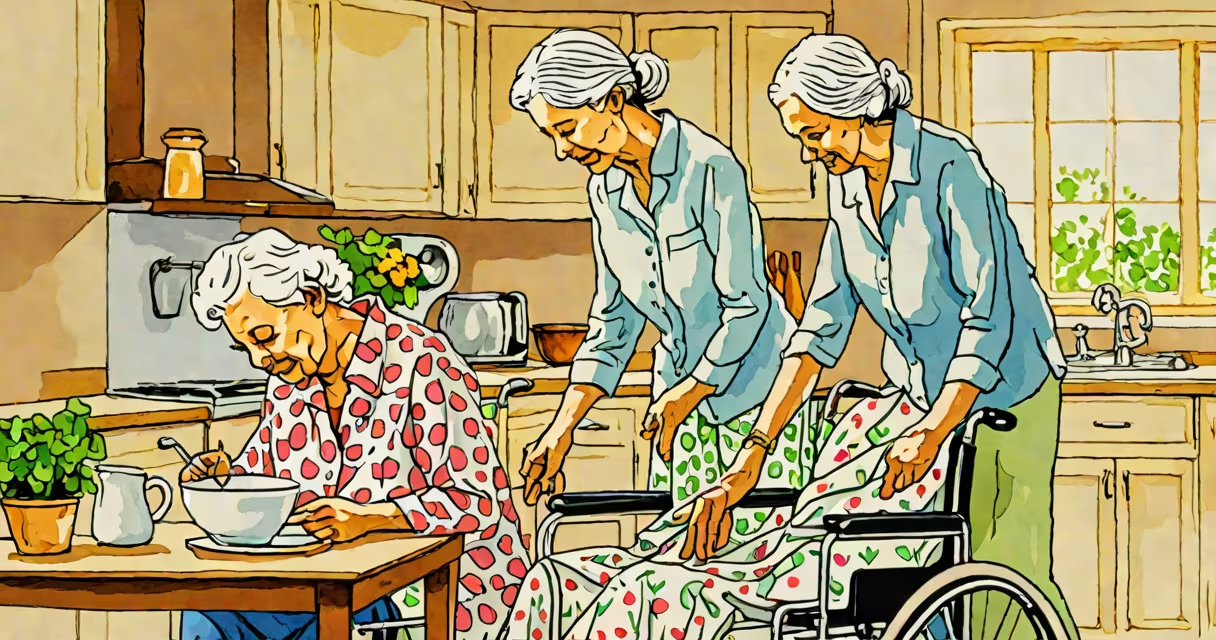
A caregiver is a person who provides ongoing physical, emotional, and practical assistance to someone who needs help managing daily life due to illness, disability, aging, or developmental challenges. This role involves direct support such as bathing, dressing, medication management, meal preparation, and transportation, along with emotional presence and advocacy.
Caregivers operate in diverse settings-homes, assisted living facilities, hospitals, and community programs. They may be paid professionals or unpaid family members. The term applies equally to those supporting children with special needs, adults recovering from surgery, or seniors with dementia. The core function remains consistent: enabling independence and dignity through sustained, attentive care.
According to the National Alliance for Caregiving, approximately 53 million Americans serve as unpaid caregivers annually. About 60% of these provide care to a parent or spouse. The responsibilities extend beyond basic tasks-they include coordinating medical appointments, communicating with healthcare providers, and managing complex treatment plans. A caregiver's influence often determines the quality of life for the individual they support.
When a person becomes unable to perform essential activities independently-such as getting out of bed, preparing meals, or remembering to take prescribed medications-a caregiver steps in to fill the gap. Their actions are not reactive but proactive. For example, a caregiver might create a weekly schedule that includes medication reminders, grocery shopping, and doctor visits.
These responsibilities require consistency, attention to detail, and emotional resilience. A caregiver may spend several hours each day assisting with hygiene routines, monitoring changes in health status, and adapting to shifting needs. In cases of progressive conditions like Alzheimer's disease, the level of required support increases over time, demanding continuous adjustment.
One documented case involved a daughter caring for her mother with late-stage Parkinson's. She managed a regimen of four daily medications, monitored for falls using a wearable alert system, and scheduled weekly therapy sessions. Her role included both hands-on care and coordination with neurologists and physical therapists. Without her structured approach, hospitalizations increased by 40% over six months, according to a 2022 study published in the Journal of Aging and Health.
Caregivers fall into distinct categories based on their relationship to the care recipient and the nature of their work. The most common types include:
| Type | Relationship | Work Setting | Compensation |
|---|---|---|---|
| Family Caregiver | Spouse, child, sibling | Private homes, family residences | Unpaid (though some receive benefits) |
| Professional Caregiver | Hired via agency or private contract | Residential care, nursing homes, client homes | Paid hourly or salary-based |
| Informal Caregiver | Friend, neighbor, extended family | Home or community center | Voluntary or occasional support |
Family caregivers make up the largest group. They often assume roles without formal training, relying on instinct and prior experience. Professional caregivers typically hold certifications such as Certified Nursing Assistant (CNA) or Home Health Aide (HHA), which require state-approved education and exams.
Some organizations offer hybrid models. For instance, a home health agency may assign a licensed practical nurse (LPN) to oversee medication administration while a trained aide handles bathing and mobility. This division ensures safety and compliance with healthcare regulations.
The meaning of a caregiver is frequently misunderstood as limited to medical tasks. In reality, the role extends far beyond administering injections or checking vitals. Emotional support, decision-making under pressure, and going through insurance systems are equally critical components.
A frequent error is equating caregiving with dependency. The opposite is true: effective caregiving promotes autonomy. A caregiver who encourages a stroke survivor to practice walking with a walker supports recovery, not passivity. Research from the University of California, San Francisco, shows that patients receiving consistent emotional encouragement during rehabilitation had a 30% higher rate of functional improvement than those without.
Another misconception is that caregiving ends when the patient enters a facility. Many families continue to act as advocates, reviewing care plans and speaking with staff. The American Association of Retired Persons (AARP) reports that 78% of family caregivers remain involved in care decisions even after their relative moves into long-term care.
I once observed a brother caring for his sister with cerebral palsy. He had no formal training but spent years learning adaptive techniques-using a standing frame, adjusting feeding schedules, and modifying household furniture. His routine included waking at 5 a.m. to prepare meals, administer medication, and assist with morning exercises. Over five years, he documented progress in her mobility and communication skills through a shared digital journal.
This example illustrates that the meaning of a caregiver includes responsibility, adaptability, and long-term commitment. It is not a temporary role but a sustained effort shaped by evolving needs. The brother's success stemmed not from expertise alone, but from consistent presence and problem-solving.
Understanding the full scope of a caregiver's role helps prevent burnout and improves outcomes. Support resources such as respite care, counseling, and local caregiver networks reduce isolation and increase effectiveness. Programs like the Family Caregiver Support Program, funded by the U.S. Administration on Aging, provide grants for training and mental health services.