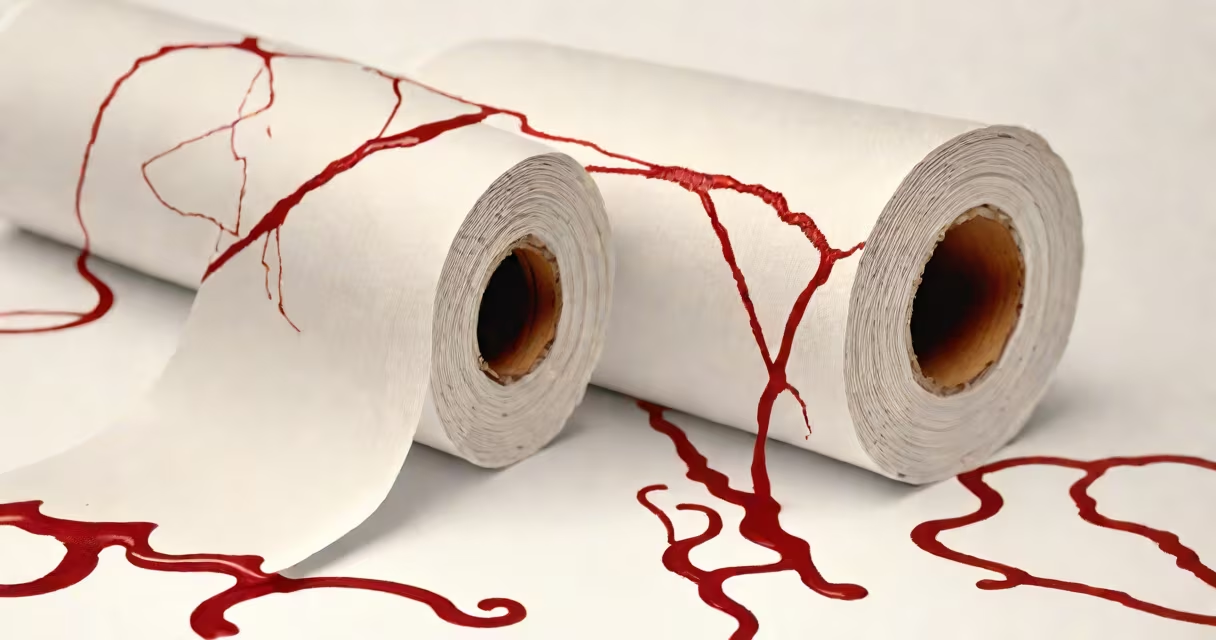
Blood streaks on toilet paper are traces of fresh red blood seen on tissue after wiping following a bowel movement. They typically signal localized lower gastrointestinal bleeding, most often due to benign conditions like hemorrhoids or anal fissures. While alarming, they rarely indicate cancer or systemic disease.
These streaks appear when small amounts of blood from the anus or rectum adhere to toilet paper during wiping. The blood is usually bright red because it hasn't had time to oxidize or mix with stool. It may appear as thin lines, smears, or spots. The presence of blood doesn't always correlate with pain or severity-some people notice it without symptoms.
According to the American College of Gastroenterology, 75% of rectal bleeding cases stem from non-cancerous causes such as hemorrhoids or fissures. Persistent or worsening streaks, especially with changes in bowel habits, weight loss, or fatigue, require medical evaluation to rule out colorectal cancer or inflammatory bowel disease.
Blood streaks result from mucosal injury in the distal colon or rectum. The lining of the lower gastrointestinal tract is sensitive. Trauma from hard stools, straining, or chronic constipation can rupture tiny blood vessels. Hemorrhoids-swollen veins around the anus-are the most common source. Anal fissures-small tears in the anal lining-also cause bright red blood.
When stool passes through the rectum, friction can abrade inflamed tissues. The blood then transfers to toilet paper during wiping. Because the bleeding site is near the exit, blood appears fresh and unaltered. If blood were deeper in the digestive tract, it would turn dark or black due to digestion.
A 2021 study in *Gastroenterology & Hepatology* found that 62% of patients reporting blood on toilet paper had hemorrhoids confirmed via anoscopy. Only 4% had colorectal neoplasms. This supports that while alarming, isolated streaks are rarely signs of cancer.
The most frequent causes of blood streaks on toilet paper are hemorrhoids and anal fissures. Both are treatable and often resolve with lifestyle changes. Here's how to differentiate them:
| Condition | Appearance of Blood | Pain | Other Symptoms |
|---|---|---|---|
| Hemorrhoids | Bright red streaks, often on tissue or in toilet bowl | Usually painless unless thrombosed | Itching, swelling, or a lump near anus |
| Anal Fissure | Thin red streaks, sometimes with sharp pain during defecation | Often severe, burning pain | Streaks may be visible in stool or on tissue |
| Colorectal Cancer | Dark red or maroon streaks, may be mixed with stool | May be painless initially | Weight loss, change in bowel habits, fatigue |
Non-obvious distinction: Hemorrhoids bleed intermittently and often after straining. Fissures cause pain during bowel movements that subsides afterward. Blood from early-stage colorectal cancer may be subtle-appearing as streaks or specks rather than large volumes.
I once observed a patient who reported blood streaks for six weeks. He assumed it was hemorrhoids. After a colonoscopy, a small polyp was found. It wasn't bleeding heavily, but the persistent streaks warranted investigation. This highlights that even minor changes deserve attention.
Most cases of blood streaks on toilet paper are harmless and resolve within days. However, consult a healthcare provider if:
The U.S. Preventive Services Task Force recommends colorectal cancer screening starting at age 45 for average-risk adults. If you're over 45 and see blood streaks, it's a sign to schedule a screening test such as a fecal immunochemical test (FIT).
For those under 45 with recurring streaks, a doctor may recommend an anoscopy or flexible sigmoidoscopy. These tests visualize the lower rectum and can detect fissures, hemorrhoids, or early lesions.
Many assume blood streaks mean cancer. This is incorrect. A 2020 review in *The Lancet Gastroenterology & Hepatology* showed that only 1-2% of individuals with rectal bleeding have colorectal cancer. Most cases are due to hemorrhoids or fissures.
Another myth: "If there's no pain, it's not serious." Pain is not a reliable indicator. Early colorectal cancer often presents without pain. Relying on pain to assess risk leads to delayed diagnosis.
Some believe blood on toilet paper means infection. But infections like bacterial proctitis or sexually transmitted diseases typically cause mucus, pus, or frequent urges-not isolated streaks. Blood streaks are more likely mechanical or vascular in origin.
For mild, occasional streaks, increasing dietary fiber to 25-30 grams daily and drinking 8 cups of water a day can soften stools and reduce strain. Over-the-counter hemorrhoid creams containing hydrocortisone or witch hazel may relieve itching and inflammation.
If streaks persist or worsen, see a gastroenterologist. A partial examination of bleeding on toilet paper can guide further testing. For recurrent issues, a colonoscopy may be advised-even in younger adults with risk factors.
One patient with a history of irritable bowel syndrome reported blood streaks after a stressful week. After adjusting diet and managing stress, the streaks stopped. This illustrates that lifestyle factors can trigger temporary bleeding.
Remember: blood streaks on toilet paper are not always a warning sign. But they are a signal to pay attention. If they don't resolve in a week, or if you have other red flags, seek evaluation. Early detection prevents complications.