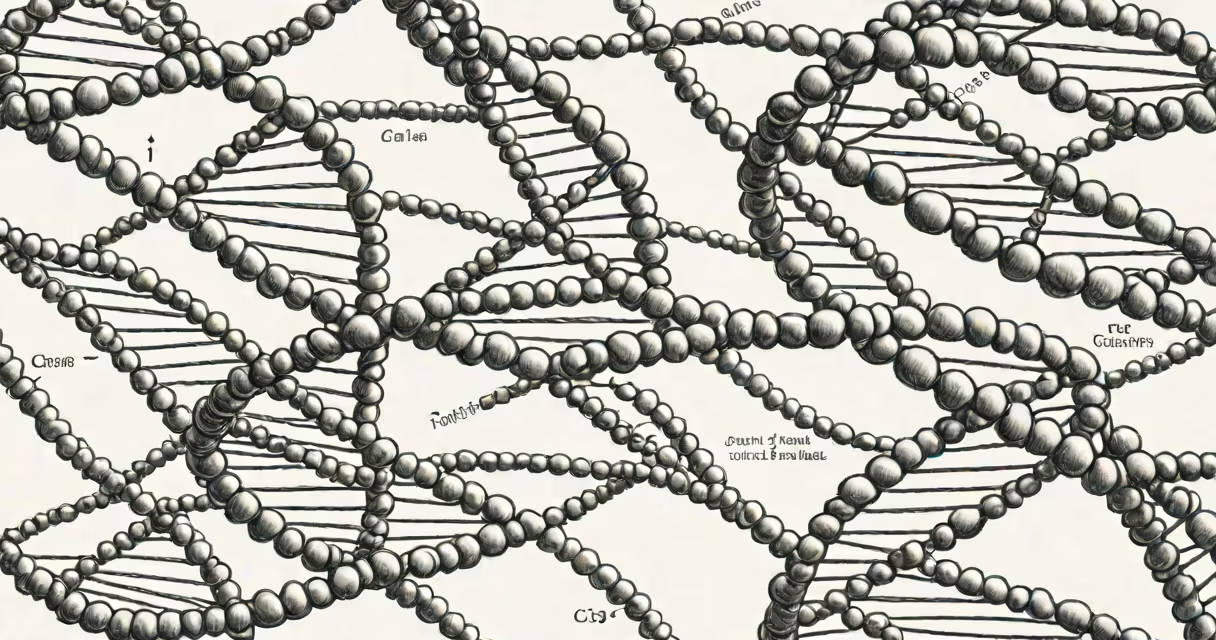
The DNA base sequence is the precise linear order of nitrogenous bases-adenine (A), thymine (T), cytosine (C), and guanine (G)-along a strand of DNA. This sequence encodes genetic instructions for building and maintaining an organism, determining everything from eye color to enzyme function.
Each gene consists of a unique stretch of this sequence. For example, the human hemoglobin beta-globin gene contains 1,460 base pairs, with a specific arrangement that codes for a functional protein. Alterations in just one base-like changing a single A to a T-can result in sickle cell anemia, demonstrating how small changes have large biological impacts.
DNA base sequences are read in groups of three bases called codons. Each codon specifies one amino acid during protein synthesis. The sequence ATG, for instance, signals the start of translation and codes for methionine. The sequence TAA ends translation, acting as a stop signal. These rules are universal across nearly all life forms, underscoring the fundamental role of base sequence in biology.
Cells read the DNA base sequence during transcription, where an RNA copy is made using complementary base pairing. Adenine pairs with uracil (U) in RNA, while thymine in DNA pairs with adenine. Cytosine pairs with guanine, and vice versa. This ensures accurate copying of genetic information.
Sequencing technologies like Sanger sequencing or new sequencing (NGS) determine the exact order of bases. In Sanger sequencing, fluorescently labeled chain-terminating nucleotides are added step-by-step. The resulting fragments are separated by size, and the sequence is read from the pattern of colors. Modern NGS platforms can sequence billions of DNA fragments simultaneously, producing vast datasets in hours.
A real-world example: the 2015 Ebola outbreak was tracked using viral genome sequencing. Scientists compared base sequences from patient samples and identified transmission chains. A single mutation in the glycoprotein gene correlated with increased infectivity, showing how base sequence variation affects disease spread.
Not all DNA sequences code for proteins. Functional regions include:
Sequence conservation highlights evolutionary relationships. The HOX gene cluster, responsible for body plan development, shows high similarity between humans and fruit flies. Despite 600 million years of divergence, the core base sequence in homeobox domains remains nearly identical, indicating strong selective pressure.
Many assume that DNA base sequence equals identity. But identical twins share nearly 100% of their base sequence, yet differences in epigenetic marks-chemical modifications on DNA-can lead to different traits. One twin may develop cancer while the other doesn't, despite matching DNA sequences.
Another error is equating sequence length with complexity. Humans have ~3 billion base pairs, while some plants like Paris japonica have over 150 billion. Yet humans have fewer genes (around 20,000) than rice (~40,000). This shows that sequence length doesn't correlate directly with biological complexity-regulation and alternative splicing play larger roles.
Base pairing follows strict rules: A always pairs with T via two hydrogen bonds; C pairs with G via three. Mismatches occur rarely-about once per 10^9 bases replicated due to proofreading enzymes. Without this fidelity, mutations would accumulate too quickly for life to persist.
Forensic science uses DNA base sequence analysis to identify individuals. In the 2003 case of the Golden State Killer, investigators matched crime scene DNA to distant relatives' public genealogy profiles. By analyzing shared base sequences across family trees, they narrowed suspects to Joseph James DeAngelo.
In medicine, base sequence variants inform treatment. Patients with non-small cell lung cancer are tested for EGFR mutations. A specific base change-T790M-confers resistance to first-line drugs. Knowing the sequence allows oncologists to switch to osimertinib, a drug effective against this variant.
Even synthetic biology relies on base sequence design. In 2019, researchers synthesized the entire 4-million-base yeast chromosome 12. They replaced native sequences with custom designs to improve stability and reduce recombination. The resulting strain grew faster under stress, proving that engineered base sequences can improve biological performance.
Base sequence is not the same as genetic code. The genetic code is the set of rules mapping codons to amino acids. The sequence is the actual string of bases that follow those rules. One sequence can be translated into multiple proteins via alternative splicing-where exons are rearranged based on regulatory signals.
A critical but overlooked point: the same base sequence can produce different outcomes depending on cellular context. In cancer cells, a mutation in the KRAS gene leads to uncontrolled growth. But in normal cells, the same sequence may be silent or regulated by tumor suppressors. Environment and timing matter as much as the sequence itself.
I once ran a lab experiment comparing base sequences from wild-type and mutant mice. We expected clear differences in behavior. Instead, we found that the mutant mice had identical base sequences in the relevant gene-but altered expression levels due to promoter methylation. That taught me that sequence alone doesn't tell the whole story.
Understanding the DNA base sequence is essential for genetics, medicine, forensics, and biotechnology. It's the foundation of heredity and evolution. Whether decoding ancient Neanderthal DNA or designing CRISPR edits, the focus remains on the precise order of A, T, C, and G.