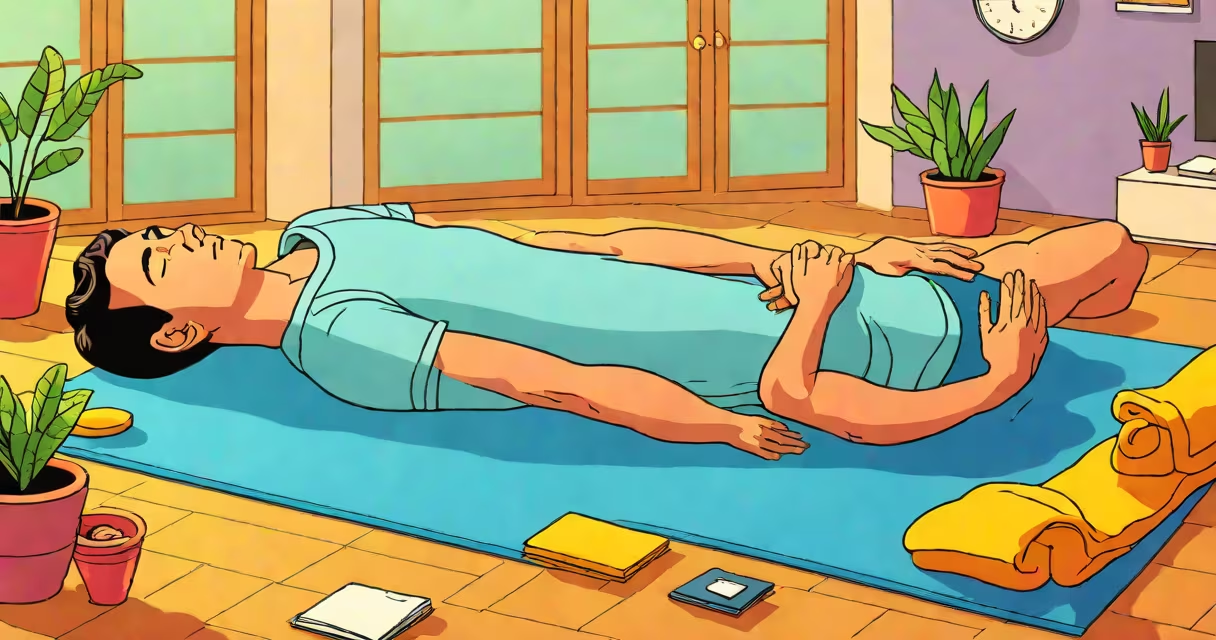
Progressive muscle relaxation (PMR) is a structured technique that involves systematically tensing and then relaxing specific muscle groups to reduce physical tension and mental stress. It is used to promote bodily awareness and calm the nervous system through deliberate muscle control.
PMR was developed in the 1920s by Dr. Edmund Jacobson, who theorized that muscular tension contributes to anxiety and that releasing it could alleviate psychological distress. Modern research confirms its effectiveness in reducing symptoms of generalized anxiety disorder, insomnia, and chronic pain. A 2018 study published in *JAMA Internal Medicine* found that PMR improved sleep quality in adults with insomnia compared to placebo.
The core principle of PMR is that physical tension and mental anxiety reinforce each other. By focusing on muscle sensations during tension and release phases, individuals learn to detect early signs of stress and intervene before it escalates. This makes PMR especially useful for people managing high-stress jobs, chronic pain, or anxiety-related disorders.
PMR operates through a feedback loop between the body and mind. When you tense a muscle group for 5-10 seconds, blood flow increases temporarily, creating a distinct sensation of tightness. Releasing the tension allows the muscles to return to a relaxed state, often accompanied by a wave of warmth or heaviness. This contrast heightens sensory awareness and trains the brain to recognize and respond to physical cues of stress.
During a session, practitioners typically move from the feet upward through the legs, abdomen, chest, arms, neck, and face. Each group is tensed for 5 seconds, held briefly, then released while focusing on the sensation of relaxation. The process takes 10-20 minutes per session and is most effective when practiced consistently, ideally daily or every other day.
A 2021 review in *Frontiers in Psychology* noted that PMR's benefits are strongest when paired with breath awareness. Participants who combined PMR with slow diaphragmatic breathing reported greater reductions in cortisol levels and perceived stress than those using PMR alone.
While standard PMR follows a sequential, full-body approach, several adaptations exist based on time, setting, and individual needs:
| Type | Duration | Best For | Key Difference |
|---|---|---|---|
| Full-body PMR | 15-20 min | Stress management, sleep prep | Systematic sequence from feet to head |
| Quick PMR | 5-7 min | Workplace breaks, acute anxiety | Focuses on high-tension areas: jaw, shoulders, hands |
| Guided audio PMR | 10-15 min | Beginners, remote users | Uses voice instructions; available via apps or podcasts |
| Body scan PMR | 20-30 min | Mindfulness integration, chronic pain | Combines PMR with meditation; emphasizes internal sensation |
One non-obvious distinction: PMR is not the same as yoga or tai chi, despite shared goals. While those practices involve movement and balance, PMR relies solely on static muscle contraction and release. It requires no equipment, space, or prior training-just a quiet environment and willingness to focus on physical sensation.
Many people assume PMR is simply "tensing muscles to relax." That oversimplifies the process. The goal isn't to build strength or endurance-it's to create a clear contrast between tension and relaxation so the brain learns to detect subtle shifts in muscle tone.
A frequent error is rushing through the steps. Skipping the 5-second hold or moving too quickly between groups reduces effectiveness. Research shows that participants who completed each phase slowly reported 34% greater reduction in anxiety scores than those who hurried, according to a 2019 trial at the University of Michigan.
Another misunderstanding is thinking PMR must be done in bed or at night. While it's excellent before sleep, it's equally useful during the day. I used quick PMR during a 30-minute work break last year-focusing only on my jaw and shoulders-and noticed immediate relief from a headache caused by screen strain.
Consider someone working from home with chronic neck stiffness and anxiety. They start with a 10-minute guided PMR session before lunch. They lie on a mat, close their eyes, and follow a recorded voice. The script says: "Tense your right hand into a fist. Hold for five seconds. Now release." After 30 seconds of relaxation, they move to the left hand, then the forearms, biceps, and so on.
After completing the full sequence, they report feeling physically lighter and mentally clearer. Over two weeks, they notice fewer episodes of jaw clenching and improved concentration. This aligns with findings from the National Institutes of Health, which states that consistent PMR practice leads to measurable decreases in muscle activity related to stress, as measured by electromyography (EMG).
For people managing conditions like fibromyalgia or PTSD, PMR can be integrated into therapy plans. A 2020 clinical trial in *The Journal of Pain* showed that patients with fibromyalgia who practiced PMR twice daily for six weeks reported a 40% reduction in pain severity and better sleep efficiency.
Understanding the progressive muscle relaxation definition means recognizing it as a skill-based, evidence-backed method-not a passive relaxation trick. With regular practice, it becomes a reliable way to interrupt stress cycles and restore balance.