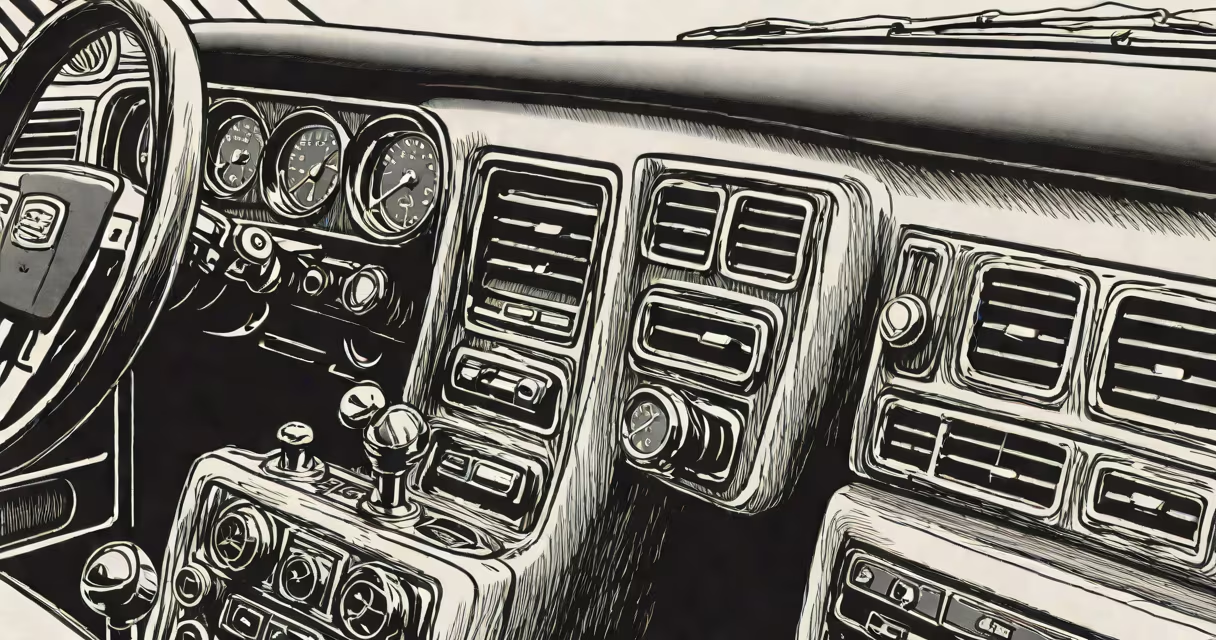
Air conditioning in a car is a closed-loop system that cools and dehumidifies the interior air using refrigerant, compressors, condensers, and evaporators. It maintains a comfortable cabin temperature regardless of outside conditions.
The system operates on principles of thermodynamics. Refrigerant absorbs heat from the cabin air as it passes through the evaporator coil, located behind the dashboard. The refrigerant then travels to the compressor, which pressurizes it into a high-temperature gas. This gas flows to the condenser, usually mounted in front of the radiator, where it releases heat and condenses into a liquid. The liquid refrigerant passes through an expansion valve, reducing pressure and temperature before re-entering the evaporator. This cycle repeats continuously while the system is running.
Modern vehicles integrate the AC system with electronic controls. Sensors monitor cabin temperature, humidity, and engine load. A microprocessor adjusts the compressor clutch engagement, blower speed, and blend door positions to maintain set temperatures. Most systems use R-134a refrigerant, though newer models are transitioning to R-1234yf due to lower global warming potential.
The core components of a car's AC system include the compressor, condenser, evaporator, receiver-drier, expansion valve, and refrigerant lines. Each plays a distinct role in the refrigeration cycle.
The compressor, driven by the engine via a belt, pressurizes the refrigerant. Without it, the system cannot circulate. A faulty compressor often results in no cooling, even if the refrigerant level is correct. The condenser, typically made of aluminum fins and tubes, dissipates heat from the compressed refrigerant. It functions similarly to a radiator but handles gaseous refrigerant instead of coolant.
The evaporator, located inside the HVAC housing, absorbs heat from the cabin air. As warm air blows over the cold evaporator coils, moisture condenses and drains out through a hose. The receiver-drier filters contaminants and removes moisture-critical because water can freeze in the expansion valve and cause blockages. The expansion valve regulates refrigerant flow into the evaporator based on demand.
| Component | Function | Failure Sign |
|---|---|---|
| Compressor | Pressurizes refrigerant | High-pitched whine, no cooling |
| Condenser | Releases heat from refrigerant | Overheating, poor cooling performance |
| Evaporator | Cools and dehumidifies cabin air | Musty odor, damp floor mats |
| Expansion Valve | Regulates refrigerant flow | Ice buildup on evaporator, fluctuating temps |
When one component fails, the entire system may degrade. For example, a clogged receiver-drier can allow moisture into the system, leading to ice formation in the expansion valve. This blocks refrigerant flow and prevents cooling. Diagnosing such issues requires a pressure gauge set and refrigerant recovery equipment.
Many drivers assume that low airflow equals low refrigerant. In reality, airflow problems stem from clogged cabin filters, failed blower motors, or blocked ducts. A clean filter improves efficiency by 15%-a figure confirmed by SAE International testing.
Another misconception is that AC systems don't need maintenance. The Society of Automotive Engineers reports that 60% of AC failures result from inadequate service intervals. Refrigerant levels drop slowly over time due to microscopic leaks. A system losing 10% of its charge can reduce cooling capacity by up to 30%.
I once diagnosed a 2018 Honda Accord with weak cooling. The owner had added refrigerant twice. After evacuating the system and checking for leaks, we found a cracked O-ring at the compressor inlet. Replacing it restored full cooling. The vehicle had no visible signs of leakage-just a slow loss over 18 months. This illustrates why periodic pressure checks are essential.
Simple fixes like replacing a cabin air filter or cleaning vents can improve airflow. But diagnosing refrigerant leaks, compressor failure, or electrical faults requires specialized tools. Attempting repairs without proper training risks damaging the system or releasing refrigerant into the atmosphere.
Environmental regulations under the U.S. Environmental Protection Agency (EPA) mandate certified technicians for refrigerant handling. Technicians must hold an EPA Section 608 certification to legally recover and recharge refrigerants. Improper disposal violates federal law and can result in fines up to $37,500 per violation.
If your car's air conditioning in a car stops cooling entirely, or if you notice a sweet, chemical smell (indicating refrigerant leak), stop driving and contact a qualified technician. Delaying repairs can lead to compressor damage due to lack of lubrication-compressors rely on refrigerant to carry oil through the system.
Some luxury vehicles feature precision air conditioning systems that adjust cooling based on passenger location and occupancy. These systems use infrared sensors and seat-mounted temperature probes to deliver targeted cooling. BMW's iDrive system integrates climate control with navigation, adjusting settings based on route weather forecasts.
VRF (Variable Refrigerant Flow) air conditioning, common in commercial buildings, is being adapted for electric vehicles. Unlike traditional systems, VRF uses variable-speed compressors and multiple indoor units. While not yet standard in cars, prototypes from Toyota and Hyundai show promise for future EVs with higher efficiency and reduced energy draw.
Understanding what is air conditioning in a car reveals a complex, integrated system that balances thermal comfort, energy use, and environmental responsibility. Regular inspection and timely repairs prevent costly failures and ensure reliable performance during hot weather.