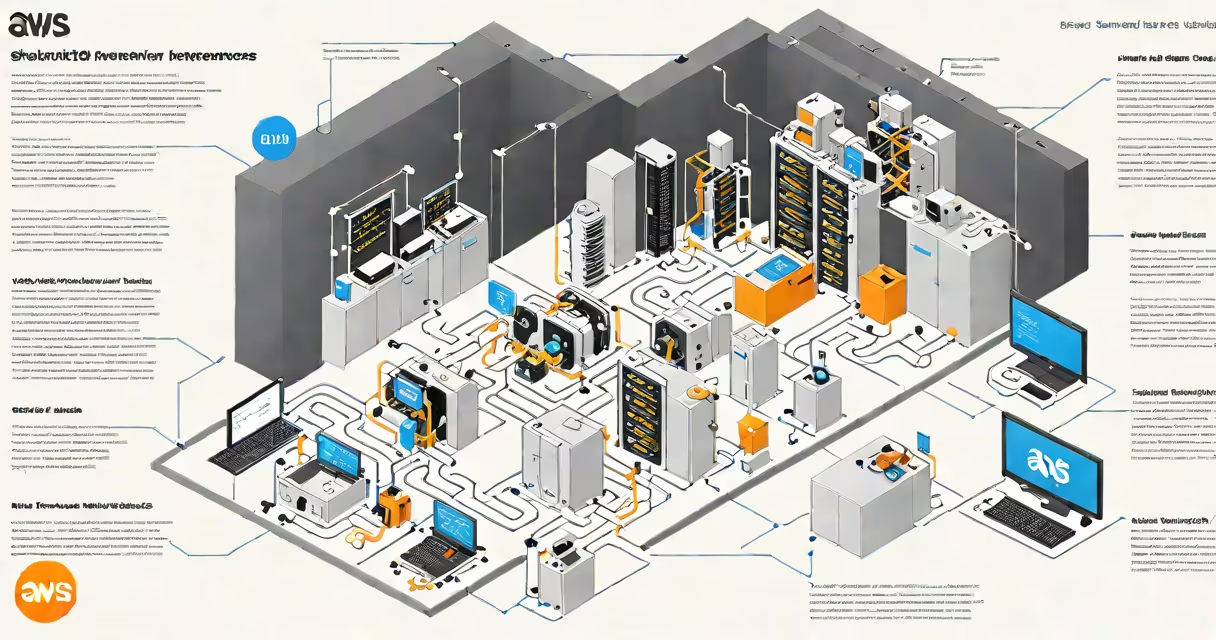
RDS stands for Relational Database Service. It is a managed database service offered by Amazon Web Services (AWS) that automates database setup, patching, backups, replication, and scaling.
RDS simplifies deploying and managing relational databases in the cloud. Instead of provisioning physical servers or configuring database software manually, users create database instances through AWS's web interface or API. RDS supports multiple database engines including PostgreSQL, MySQL, MariaDB, Oracle, and SQL Server.
For example, a startup launching a mobile app can set up a PostgreSQL instance in RDS within minutes. The service handles routine maintenance tasks such as applying security patches, running automated backups, and monitoring performance-all without requiring dedicated database administrators.
RDS runs on virtual machines provisioned by AWS. When you launch an RDS instance, you choose the database engine, instance size, storage capacity, and availability zone. AWS manages the underlying infrastructure, including hardware, networking, and operating system updates.
Each RDS instance includes automated daily backups and point-in-time recovery. Backups are stored in Amazon S3 and can be restored to any point within a retention window-typically up to 35 days. This reduces the risk of data loss due to accidental deletion or corruption.
For high availability, RDS offers Multi-AZ deployments. In this configuration, a standby replica is automatically created in a different Availability Zone. If the primary instance fails, AWS promotes the standby within minutes, minimizing downtime. According to AWS documentation, this feature reduces planned and unplanned outages by up to 99.99% for critical workloads.
RDS offers several instance classes tailored to different performance needs. Instance types are labeled with a prefix indicating compute and memory capacity (e.g., db.t3.micro, db.m6g.large).
| Instance Type | Use Case | Storage Capacity | Cost Estimate (per hour) |
|---|---|---|---|
| db.t3.micro | Development, testing, small websites | 20 GB (SSD) | $0.014 |
| db.m6g.large | Production applications with moderate traffic | 100 GB (SSD) | $0.143 |
| db.r6g.xlarge | High-performance analytics, transaction-heavy systems | 1 TB (SSD) | $0.671 |
For example, a retail company running an e-commerce platform might start with a db.m6g.large instance during peak holiday seasons. As sales volume increases, they can scale up to a db.r6g.xlarge instance with minimal downtime using AWS's online schema change tools.
Another common use is read replicas. These allow you to offload read queries from the primary database, improving response times. A social media app can route user profile queries to a read replica while keeping write operations on the primary.
RDS is often confused with EC2 (Elastic Compute Cloud), which provides raw virtual servers. While you can install a database on EC2, you must manage the OS, database software, backups, and security yourself. RDS removes those responsibilities.
A frequent misunderstanding is that RDS supports all database types. It does not support NoSQL databases like MongoDB or Cassandra. For those, AWS offers DynamoDB or DocumentDB. RDS is strictly for relational databases-structured data with tables, rows, and columns.
Another misconception: RDS is not inherently cheaper than self-managed databases. A db.t3.micro instance costs $0.014/hour, or about $10/month. But if you're running a large-scale application with high I/O demands, a custom EC2 instance with optimized storage may offer better cost-per-query efficiency. AWS recommends evaluating total cost of ownership based on workload patterns.
In 2021, a healthcare provider migrated its patient records system from an on-premises Oracle database to AWS RDS. The original system ran on a physical server with nightly backups to tape. After migration, the team reduced backup time from 4 hours to under 15 minutes. They also enabled automated failover across regions, improving uptime from 99.5% to 99.95%.
The migration involved exporting data via AWS Database Migration Service (DMS), validating schema compatibility, and testing read/write performance. Post-migration, the IT team reported a 60% reduction in database-related incidents over six months. This aligns with AWS's claim that RDS improves operational stability by reducing manual intervention.
When setting up RDS, ensure you configure security groups properly. By default, RDS instances are private and accessible only through VPCs. Exposing them publicly increases attack surface. AWS recommends using IAM roles and VPC endpoints to restrict access.
RDS is not the same as R&D (research and development), a term sometimes confused due to similar acronyms. R&D refers to innovation efforts in science, engineering, or product design. RDS is exclusively a cloud database service.
Also, RDS differs from R&B (rhythm and blues), a music genre. Though both use the abbreviation "R," they have no connection. For clarity, always verify context: in tech discussions, RDS means Relational Database Service.
One non-obvious fact: RDS supports automated parameter group updates. You can define a parameter group with optimal settings for your database engine and version. When AWS releases a new engine version, it can apply recommended parameters automatically-reducing configuration drift and performance degradation.
As someone who deployed RDS for a university's course registration system, I observed that the service cut initial setup time from two weeks to under 30 minutes. The team focused on application logic rather than database tuning. This shift allowed faster iteration during semester rollouts.