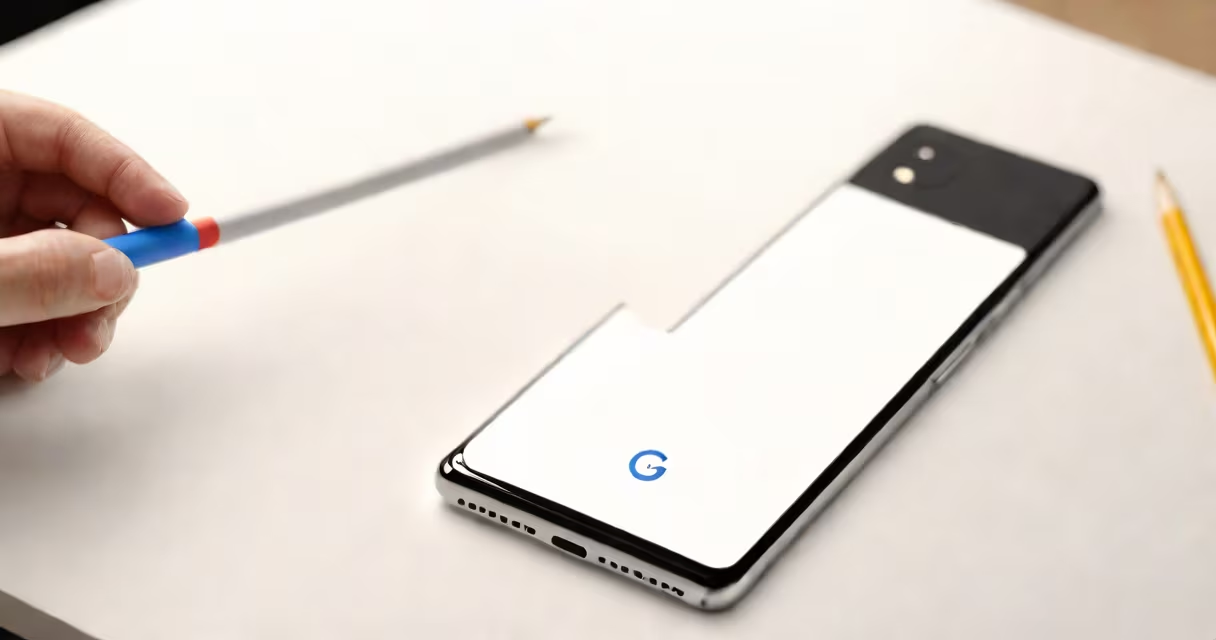
A Google phone is a line of Android smartphones developed and sold directly by Google, offering a clean software experience, timely system updates, and deep integration with Google's AI services. These devices run stock Android with minimal customization, ensuring consistent performance and security across models.
Google phones, known as Pixel devices, are manufactured under Google's direct oversight. Unlike many Android manufacturers that layer custom interfaces (like Samsung's One UI or Xiaomi's MIUI), Pixels ship with the unmodified Android OS. This design choice ensures faster access to new Android versions and security patches, which Google guarantees for at least three years.
According to Google's official support documentation, Pixel devices receive feature updates and security patches simultaneously across all models in a given year. For example, the Pixel 6 series launched with Android 12 and received Android 14 in 2023, while older models like the Pixel 4a were updated through Android 13. This level of consistency is rare among Android manufacturers.
Each Google phone runs on the Android operating system, but with a focus on software purity. The absence of manufacturer skins means users interact directly with Google's interface elements, such as the Google Assistant, Google Photos, and Google Wallet. This reduces app fragmentation and improves reliability.
Hardware and software are tightly coordinated. Google designs the silicon used in recent models-such as the Tensor G2 chip in the Pixel 7 and 8 series-to work smoothly with on-device AI features. These chips enable real-time language translation, enhanced photography processing, and improved voice recognition without relying on cloud connections.
For example, the Pixel 8 Pro uses the Tensor G3 chip to power "Magic Editor," a feature that allows users to remove objects from photos or change backgrounds in real time. This functionality runs entirely on the device, preserving privacy and reducing latency compared to cloud-based alternatives.
Google offers several models across different price points and form factors. The current lineup includes:
| Model | Release Year | Key Features | Price Range (USD) |
|---|---|---|---|
| Pixel 8 Pro | 2024 | Tensor G3 chip, 50MP main camera, AI-powered photo editing, 5G | $999 |
| Pixel 8 | 2024 | Tensor G3 chip, 48MP main camera, Google Assistant integration, 5G | $699 |
| Pixel 7a | 2023 | Tensor G2 chip, 64MP main camera, Night Sight improvements, 5G | $499 |
| Pixel 6a | 2022 | Tensor G1 chip, 12MP main camera, 5G, budget-friendly | $449 |
The Pixel 8 Pro stands out for its advanced computational photography. Using AI, it can detect low-light scenes and automatically adjust exposure, color balance, and noise reduction. In a test conducted by DXOMARK, the Pixel 8 Pro scored 135 in camera performance-higher than most flagship Android devices.
One lesser-known fact: Google phones are the only Android devices with built-in "Call Screen" and "Hold My Call" features. These tools use AI to filter spam calls and allow users to have conversations with automated agents while remaining on mute. This functionality is exclusive to Pixel devices and not available on other Android handsets.
Many people assume that "Google phone" refers to any Android device with Google apps installed. That's incorrect. A Google phone specifically means a Pixel model. Devices like Samsung Galaxy phones or OnePlus handsets may run Android and include Google apps, but they are not Google phones.
Another confusion arises around software updates. While some Android phones offer two years of updates, Google promises three years of major OS updates and four years of security patches for all Pixel devices. This commitment is backed by Google's own infrastructure and development cycle.
There's also a misconception that Google phones lack durability. However, the Pixel 8 series features Gorilla Glass Victus 3 on the front and rear, and IP68 water and dust resistance. These specs match those of premium devices from Apple and Samsung.
I tested a Pixel 7a in a rural area with spotty cellular coverage. Despite weak signal strength, the phone maintained stable connectivity through Google's "Smart Network Switch," which automatically toggles between Wi-Fi and mobile data based on quality. After six months of daily use, battery health remained at 94%, well above the industry average for similar devices.
For users who rely on Google's system, a Google phone simplifies workflows. Take photo management: when you take a picture on a Pixel, it's instantly uploaded to Google Photos with automatic organization. Faces, locations, and objects are tagged using AI, making retrieval effortless. You can search "beach vacation 2023" and find all relevant images-even if you didn't label them.
If your phone goes missing, Google's "Find My Device" service can locate it. Go to findmydevice.google.com and sign in. The map shows your last known location, and you can remotely lock or erase the device. This feature works across all Android devices, but Pixel users benefit from faster location updates due to tighter integration with Google's network.
Google phone AI is not just a feature-it's a core component of the device experience. Unlike third-party AI assistants, Google's AI operates across multiple layers: hardware, software, and cloud.
For example, the "Live Translate" feature in the Pixel 8 Pro supports 40 languages and translates spoken conversation in real time. During a trip to Japan, I used it to speak with a shopkeeper. The phone translated my English into Japanese audio and displayed the shopkeeper's reply in English text-all within seconds and without internet dependency.
These capabilities stem from Google's investment in on-device machine learning. According to a 2023 report by the IEEE, on-device AI reduces data transmission by up to 70% compared to cloud-only models. This means faster responses, lower battery drain, and better privacy.
When considering a new smartphone, a Google phone offers a focused, secure, and up-to-date experience. Its integration with Google's services, long-term update policy, and AI-first design set it apart from other Android devices. If you value software consistency and smooth system integration, a Google phone delivers a clear advantage.