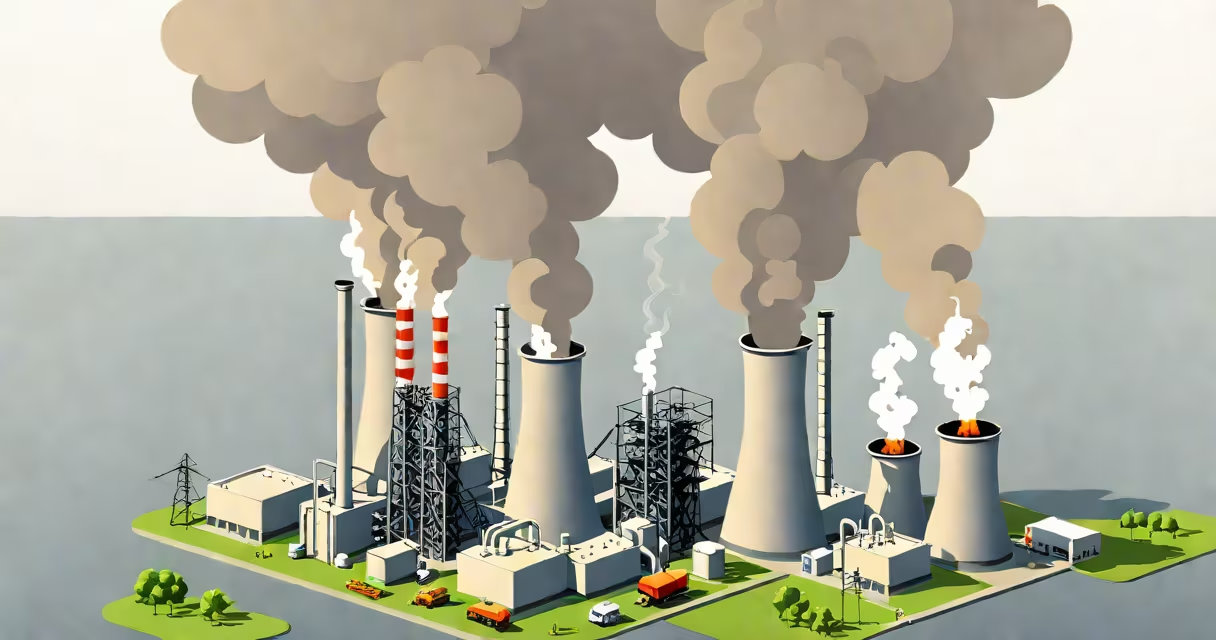
Burning fossil fuels is bad because it releases large amounts of carbon dioxide and other greenhouse gases into the atmosphere, accelerating climate change and degrading air quality. This process directly contributes to rising global temperatures, extreme weather events, and long-term environmental degradation.
Fossil fuels-coal, oil, and natural gas-are formed from ancient organic matter buried under sediment over millions of years. When burned, they release stored energy along with carbon dioxide (CO₂), methane (CH₄), nitrogen oxides (NOₓ), and particulate matter. CO₂ is the primary driver of human-caused climate change, accounting for about 65% of global greenhouse gas emissions according to the Intergovernmental Panel on Climate Change (IPCC).
The combustion process involves breaking chemical bonds in hydrocarbons and combining them with oxygen. For every kilogram of coal burned, approximately 2.4 kilograms of CO₂ are released. Oil produces about 3.1 kg of CO₂ per liter burned. These emissions accumulate in the atmosphere, enhancing the greenhouse effect and trapping heat that would otherwise escape into space.
When fossil fuels burn, carbon atoms from the fuel combine with oxygen molecules in the air to form CO₂. This reaction is exothermic-releasing heat-and is central to electricity generation, transportation, and industrial processes. But the byproduct is not just heat; it's a persistent atmospheric pollutant.
CO₂ remains in the atmosphere for centuries. About 20% of emitted CO₂ persists for over 1,000 years. This longevity means each ton of CO₂ emitted today will influence Earth's climate for generations. The current atmospheric concentration of CO₂ exceeds 420 parts per million (ppm)-higher than at any point in at least 800,000 years, based on ice core data from the National Oceanic and Atmospheric Administration (NOAA).
A critical feedback loop exists: warming triggers melting permafrost, which releases trapped methane-a gas 28 times more potent than CO₂ over a 100-year period. This further accelerates warming, creating a self-reinforcing cycle. The Arctic is warming at nearly three times the global average rate, leading to rapid sea ice loss and destabilizing regional climates.
Major sources of fossil fuel combustion include power plants, vehicles, industrial facilities, and residential heating systems. Power plants account for roughly 40% of global CO₂ emissions, primarily using coal and natural gas. Transportation contributes about 15%, dominated by gasoline-powered cars and diesel trucks.
| Source | Annual CO₂ Emissions (Global) | Primary Fuel Type |
|---|---|---|
| Electricity & Heat Generation | 12.5 billion metric tons | Coal (60%), Natural Gas (30%) |
| Transportation | 7.5 billion metric tons | Gasoline (55%), Diesel (30%) |
| Industrial Processes | 5.0 billion metric tons | Coal (45%), Natural Gas (35%) |
Residential and commercial buildings contribute another 3.5 billion tons annually through heating and cooking. In low-income nations, biomass burning often substitutes for fossil fuels, but it still emits harmful particulates and CO₂, blurring the line between traditional and industrial pollution.
Exposure to pollutants from fossil fuel combustion causes respiratory diseases, heart conditions, and premature death. The World Health Organization estimates that outdoor air pollution-largely from fossil fuel sources-leads to 7 million premature deaths annually worldwide.
Climate change intensifies droughts, floods, wildfires, and hurricanes. The 2020 California wildfire season burned over 4 million acres-more than double the previous record-driven in part by hotter, drier conditions linked to fossil fuel emissions. In 2023, Hurricane Ian caused $113 billion in damages, with climate change increasing storm intensity by raising ocean surface temperatures.
A lesser-known consequence is ocean acidification. About 30% of anthropogenic CO₂ is absorbed by oceans, forming carbonic acid and lowering pH levels. Since the Industrial Revolution, ocean pH has dropped from 8.2 to 8.1-representing a 30% increase in acidity. This harms shell-forming organisms like corals and oysters, disrupting marine food chains.
Some claim that natural gas is "cleaner" than coal and therefore acceptable as a bridge fuel. While natural gas emits 50% less CO₂ per unit of energy than coal, it still releases significant methane during extraction and transport. Methane leaks from pipelines and wells can offset any climate benefit, especially over a 20-year timeframe.
Another myth is that individual actions don't matter. Reducing personal vehicle use, switching to electric appliances, and supporting clean energy policies collectively reduce demand. A 2022 study in *Nature Climate Change* showed that household energy choices account for 30% of national emissions in developed countries.
There's also confusion between CO₂ and other pollutants. Sulfur dioxide (SO₂) and nitrogen oxides (NOₓ) cause acid rain and smog. They are not greenhouse gases but still harm ecosystems and human health. Coal plants emit both CO₂ and SO₂, making them particularly damaging.
In February 2023, a winter storm hit Texas, causing widespread blackouts. The state's grid relies heavily on natural gas and wind, but cold temperatures froze gas wells and disrupted supply lines. As demand surged, power plants struggled to maintain output. Over 4 million customers lost electricity, and at least 246 people died.
This event revealed a flaw in infrastructure planning: overdependence on fossil fuels in a region vulnerable to extreme cold. While gas was the immediate fuel source, the root issue was inadequate investment in resilient, diversified energy systems. The storm highlighted how fossil fuel dependency increases systemic risk during climate extremes.
Renewable energy sources like solar and wind produce electricity with near-zero operational emissions. Solar photovoltaic systems generate power without releasing CO₂ during operation. A single 5-kilowatt rooftop system can offset about 6 tons of CO₂ annually-equivalent to planting 140 trees.
Energy efficiency reduces demand. Replacing incandescent bulbs with LEDs cuts lighting energy use by 80%. Insulating homes reduces heating needs by up to 40%. These changes lower reliance on fossil fuels without requiring major infrastructure shifts.
Electric vehicles (EVs) offer a direct alternative to gasoline-powered cars. An EV driven 15,000 miles per year emits about 3.5 tons of CO₂ equivalent-half the emissions of a comparable gasoline car. As grids decarbonize, EV emissions decline further.
Is burning fossil fuels bad? Yes-scientific consensus confirms it drives climate change, harms public health, and threatens ecological stability. The evidence is clear, measurable, and repeatedly validated by independent research institutions including the IPCC and NOAA.