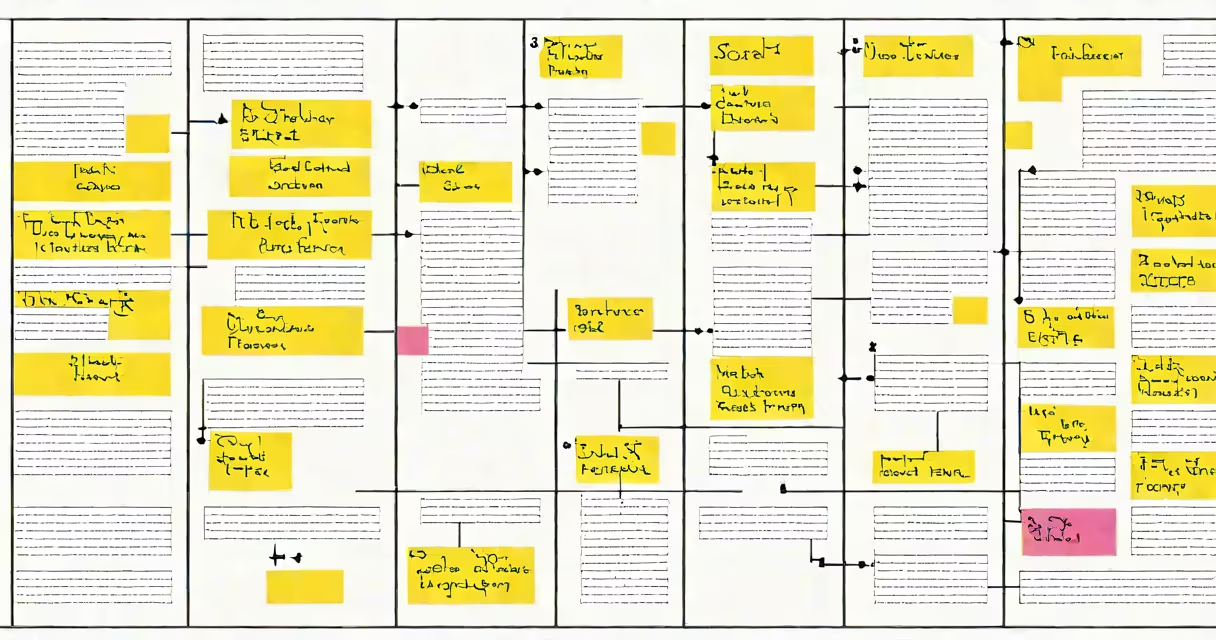
An agile workflow is a structured, iterative process for managing projects that emphasizes continuous improvement, cross-functional collaboration, and incremental delivery of working results. It breaks work into small, manageable units called sprints or iterations, typically lasting one to four weeks, allowing teams to adapt quickly to changing requirements.
Agile workflow originated in software development but now applies widely across product management, marketing, and operations. It's defined by the Agile Manifesto's core values: individuals and interactions over processes and tools, working software over complete documentation, customer collaboration over contract negotiation, and responding to change over following a plan.
Unlike traditional waterfall models that move linearly from planning to deployment, agile workflow enables teams to deliver functional components early and often. For example, a mobile app team using agile workflow might release a basic login feature in Week 1, then add profile setup in Week 2, and integrate payment functionality in Week 3-each stage validated by user feedback.
At its core, agile workflow operates through repeated cycles known as sprints. Each sprint begins with a planning session where the team selects tasks from a prioritized backlog-items that represent user needs or business goals. These tasks are broken into actionable items, assigned to team members, and tracked daily via stand-up meetings.
Daily stand-ups last 15 minutes and focus on three questions: What did you do yesterday? What will you do today? Are there blockers? This transparency prevents delays and keeps momentum high. After each sprint, the team holds a review and retrospective: the review demonstrates completed work to stakeholders, while the retrospective identifies improvements for the next cycle.
For instance, a web design team building a client portal uses agile workflow to deliver features incrementally. They start with a wireframe (Week 1), develop the login module (Week 2), test access permissions (Week 3), and deploy analytics tracking (Week 4). Feedback from stakeholders during the review leads to adjustments before the next sprint, ensuring alignment with actual needs.
Agile workflow isn't a single method-it's a structure supported by several structured approaches. The most common types are Scrum, Kanban, and Extreme Programming (XP), each tailored to different team dynamics and project types.
| Type | Structure | Best For | Example |
|---|---|---|---|
| Scrum | Fixed-length sprints, defined roles (Product Owner, Scrum Master, Team) | Software teams with evolving requirements | A fintech startup launching a new payment gateway in 2-week sprints |
| Kanban | Visual board with continuous flow; no fixed timeboxes | Support teams, maintenance, or ongoing operations | A customer service team managing tickets using a live board with "To Do," "In Progress," "Resolved" columns |
| Extreme Programming (XP) | Pair programming, test-driven development, frequent releases | High-risk development with tight deadlines | A healthcare software team releasing updates every 3 days to meet regulatory compliance deadlines |
While Scrum enforces strict roles and timelines, Kanban allows flexibility in task flow. A common mistake is treating Kanban as "unstructured"-but it's not. Kanban uses work-in-progress (WIP) limits to prevent overload and maintain steady throughput. For example, limiting WIP to three items per developer ensures no bottlenecks form.
Another misconception is that agile workflow requires constant meetings. Research from the Project Management Institute (PMI) shows that teams using agile report 25% higher productivity than those using traditional methods-but only when meetings stay focused and time-boxed. Unproductive meetings undermine agility, not the model itself.
Many organizations adopt agile workflow without understanding its cultural underpinnings. Agile isn't just a set of rituals-it's a mindset centered on trust, transparency, and continuous learning. Teams that copy Scrum ceremonies without fostering psychological safety often fail to realize benefits.
One major confusion is equating agile workflow with "fast delivery." Speed isn't the goal-value delivery is. A team might complete ten sprints rapidly but deliver features users don't want. According to a 2023 McKinsey study, 64% of failed agile transformations stem from misaligned priorities, not poor execution.
Another error is applying agile uniformly across departments. Marketing teams may benefit from Kanban's visual flow, but finance teams handling quarterly audits often need predictive planning. Agile workflow works best when adapted to context-not forced onto every function.
I once observed a dev team switch from Waterfall to Scrum overnight. They held daily stand-ups and created a backlog-but no one reviewed progress with stakeholders. After three sprints, they realized their product didn't solve the user problem. Only after adding biweekly demos to clients did they align on real needs. That shift turned their workflow from mechanical to meaningful.
Consider Spotify's engineering model, which uses agile workflow at scale. They organize teams into "squads" (small, autonomous units), each responsible for a feature area. Squads operate in two-week sprints, hold retrospectives, and deploy to production weekly. This structure enables rapid innovation while maintaining quality.
Spotify's approach includes "chapters" (skill-based groups) and "guilds" (interest-based communities), which support knowledge sharing across squads. This hybrid model-agile at the team level, networked at the organization level-has helped Spotify ship over 100 new features annually while reducing release failures by 40%.
Another example: a university library digitizing 50,000 rare manuscripts. Using agile workflow, they divided the project into 100-item batches. Each batch was processed in a two-week sprint: scan, metadata entry, quality check, upload. By reviewing outcomes weekly, they caught OCR errors early and adjusted workflows before scaling. The entire project finished in 18 months-six months faster than the original plan.
These cases show that agile workflow isn't limited to tech. Its principles apply wherever complex, evolving work exists. The key is not rigid adherence to templates, but consistent reflection and adaptation.
When implemented correctly, what is agile workflow becomes a living system-one that evolves with the team, the product, and the market. It's not a one-time adoption. It's a practice refined over time.