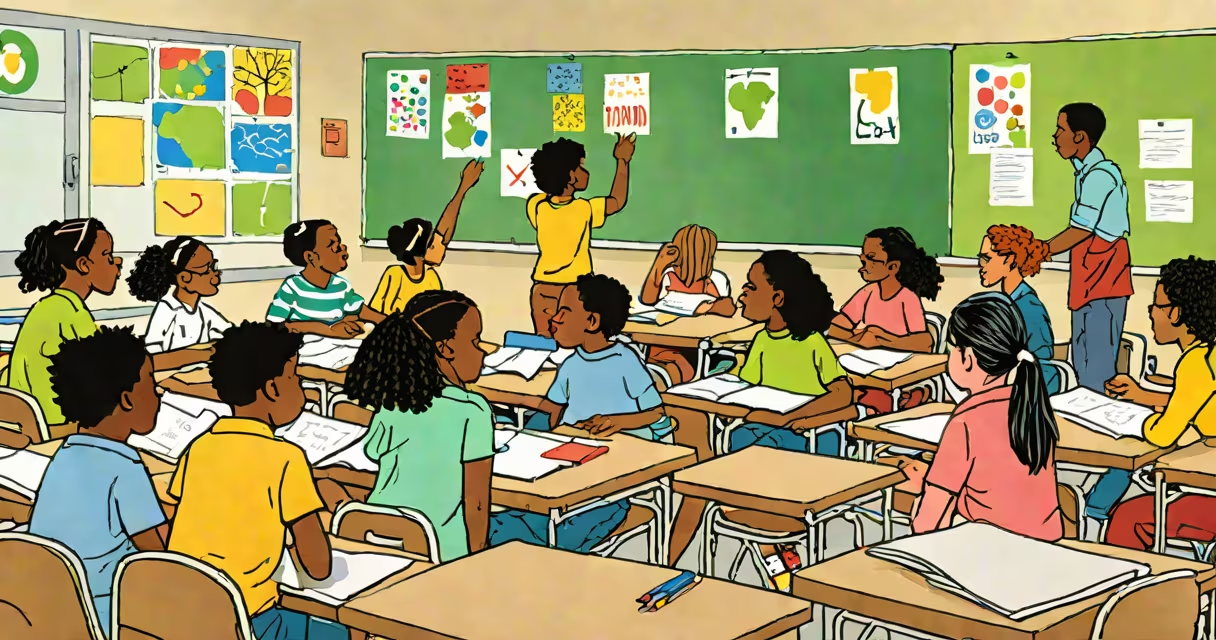
A classroom culture is the collective set of norms, values, routines, and interpersonal dynamics that define how students and teachers relate to one another and engage with learning each day. It shapes behavior, influences motivation, and determines whether students feel safe, seen, and capable. This culture emerges not from a single rule or poster, but from consistent actions, verbal cues, and emotional tone over time.
Classroom culture operates beneath the surface of lesson plans and assessments. It's the unspoken agreement among students about how they treat each other during group work, the way a teacher responds to off-topic comments, or the ease with which a student raises their hand to ask a question. It's not a checklist-it's a living system shaped by daily interactions.
According to the National Association of Secondary School Principals (NASSP), a strong classroom culture reduces behavioral incidents by up to 30% and improves academic performance by increasing student participation and reducing absenteeism. The American Psychological Association (APA) notes that students in classrooms with positive cultures report higher levels of intrinsic motivation and lower stress during assessments.
Classroom culture runs on consistency and intentionality. It begins with the teacher's choices-how they greet students, how they frame mistakes, and how they respond to disruptions. These micro-moments accumulate into patterns that students internalize.
For example, a teacher who says "I'm glad you tried that" instead of "That's incorrect" reinforces effort over perfection. Over time, students learn that risk-taking is valued. A study published in the Journal of Educational Psychology found that classrooms where teachers emphasized growth-oriented feedback saw a 22% increase in student persistence on challenging tasks compared to those using performance-based praise.
Classroom culture also includes physical and procedural elements. The placement of desks, the display of student work, and the structure of morning meetings all signal what matters. A room with rotating student-led discussions and visible collaboration charts communicates that peer learning is central. A classroom where students enter quietly, take out notebooks, and begin a warm-up activity without instruction shows that routines are trusted and respected.
While no two classroom cultures are identical, they share common dimensions. These include psychological safety, mutual respect, shared responsibility, and a focus on growth. Some educators categorize classroom cultures by dominant tone:
| Type | Key Features | Impact on Students |
|---|---|---|
| Authoritative | Clear expectations, consistent consequences, high warmth | Students show greater self-regulation and academic engagement |
| Democratic | Student input in rules and activities, collaborative decision-making | Higher ownership of learning; improved conflict resolution skills |
| Permissive | Limited structure, low accountability, high flexibility | Short-term comfort, long-term disengagement and inconsistent achievement |
| Authoritarian | Strict control, minimal student voice, punitive responses | Risk of resentment, avoidance, and decreased intrinsic motivation |
Research from the University of Michigan's Center for the Study of Youth and Society shows that democratic classrooms produce students who are 1.7 times more likely to volunteer in class and 40% more likely to complete homework independently. Authoritative cultures, while less flexible, lead to stronger academic outcomes in standardized testing-particularly in math and science.
Classroom culture is not static. It evolves with student needs, curriculum shifts, and teacher reflection. A culture built around resilience during remote learning may shift toward community-building when students return to in-person instruction.
Many assume classroom culture is about decor or fun activities. A school in Portland, Oregon, spent $12,000 on colorful rugs, bean bags, and themed bulletin boards. After one semester, student behavior worsened. The issue wasn't the aesthetics-it was the absence of clear norms and consistent enforcement. Decor doesn't create culture; it reflects it.
Another misconception is that culture is solely the teacher's responsibility. While teachers initiate and sustain norms, students co-create culture through their choices. A student who consistently interrupts may disrupt the flow, but so too does a student who remains silent throughout group work. Both behaviors shape the environment. Research from Harvard's Graduate School of Education shows that when students are invited to co-design classroom agreements, compliance increases by 60% compared to top-down rule-setting.
Some educators confuse culture with discipline. Discipline is reactive-responding to misbehavior. Culture is proactive-preventing issues through shared understanding. A classroom with a strong culture doesn't need constant redirection because students understand expectations and care about the group's success.
In Ms. Rivera's seventh-grade math class, students began each week with a "problem of the week" that had no single correct answer. They discussed solutions in small groups, then presented their reasoning to the class. The teacher did not grade the presentations-she only asked, "What did you learn?"
Over six weeks, she noticed students who rarely spoke began contributing. One student, Jamal, who had previously avoided math, presented a creative solution involving fractions and ratios. He didn't get the "right" answer, but his explanation revealed deep conceptual understanding. Ms. Rivera praised his reasoning, not the result. She wrote, "Jamal showed how thinking differently can lead to new ways of solving problems."
By the end of the term, the class average on unit tests rose from 72% to 86%. More, student surveys showed a 45% increase in confidence when solving unfamiliar problems. The culture wasn't built on rewards or punishments-it was built on trust, curiosity, and the belief that mistakes were part of learning.
When asked later what changed, one student said, "We stopped being afraid to be wrong." That statement captured the shift: from performance anxiety to intellectual courage.
Classroom culture affects long-term outcomes. Students in supportive environments are more likely to graduate, pursue higher education, and report life satisfaction. The OECD's 2021 Teaching and Learning International Survey (TALIS) found that schools with strong classroom cultures reported 28% fewer instances of student disengagement and 35% higher teacher retention rates.
Culture influences equity. A classroom where all voices are heard-even those from marginalized backgrounds-creates space for diverse perspectives. A study in the journal Teachers College Record found that Black and Latinx students in culturally responsive classrooms were 2.3 times more likely to identify with school and see themselves as capable learners.
Even small changes have ripple effects. A teacher who starts class with a 30-second check-in ("How are you feeling today?") and listens without judgment builds trust. Over time, students begin to share struggles, leading to earlier interventions for mental health concerns.
Classroom culture is not a side project. It is the foundation of effective teaching and meaningful learning. It's not about perfect rooms or flawless lessons-it's about creating a space where students feel they belong, grow, and matter.