Photovoltaic electricity generation is the direct conversion of sunlight into electrical energy using semiconductor materials, typically silicon, arranged in solar panels. This process occurs when photons from sunlight strike the semiconductor surface, dislodging electrons and creating a flow of electric current.
The core principle relies on the photovoltaic effect, first observed in 1839 by Alexandre-Edmond Becquerel. Modern systems use crystalline silicon cells, which achieve typical conversion efficiencies between 15% and 22%. The most efficient commercial panels exceed 23%, while laboratory prototypes have reached over 47% under concentrated light.
When sunlight hits a photovoltaic cell, it excites electrons in the semiconductor material. These freed electrons move through an internal electric field created by a p-n junction-formed by doping adjacent layers of silicon with different elements. This movement generates direct current (DC), which is then converted to alternating current (AC) via an inverter for use in homes or feeding into the power grid.
A photovoltaic system consists of multiple interconnected components. Solar panels, composed of individual photovoltaic cells, capture sunlight. The DC electricity they produce flows through a combiner box and into a solar inverter. The inverter transforms DC into AC, matching the frequency and voltage of the local grid.
For residential installations, the AC output connects to the home's electrical panel. Excess power can be sent to the grid through net metering, where utilities credit homeowners for surplus generation. In off-grid setups, batteries store excess energy for use during nighttime or cloudy periods.
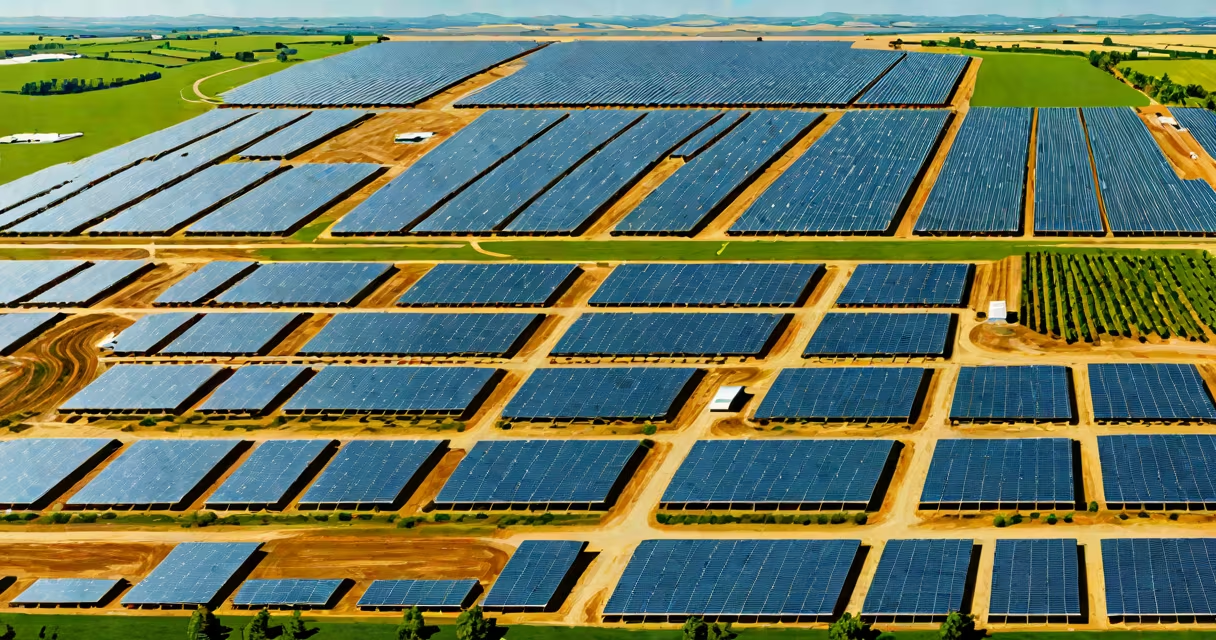
Utility-scale solar farms deploy thousands of panels across hundreds of acres. A 100-megawatt (MW) plant, such as the Topaz Solar Farm in California, uses over 9 million panels to generate enough electricity annually to power approximately 90,000 homes. These facilities feed high-voltage transmission lines, distributing power regionally.
Photovoltaic systems fall into three main categories based on semiconductor material: monocrystalline, polycrystalline, and thin-film.
| Type | Efficiency Range | Cost per Watt | Best Use Case |
|---|---|---|---|
| Monocrystalline | 18%-22% | $0.60-$0.80 | Roof spaces with limited area, high-performance needs |
| Polycrystalline | 15%-17% | $0.45-$0.60 | Large ground-mounted arrays, cost-sensitive projects |
| Thin-film (e.g., CdTe, CIGS) | 10%-13% | $0.35-$0.50 | Building-integrated applications, curved surfaces |
Monocrystalline panels are cut from single-crystal ingots, giving them a uniform dark appearance and higher efficiency. Polycrystalline cells are cast from molten silicon poured into molds, resulting in a speckled blue look and slightly lower performance. Thin-film technologies use layers of semiconductors deposited on substrates like glass or metal, offering lightweight, flexible options but lower efficiency and shorter lifespans.
Per the National Renewable Energy Laboratory (NREL), monocrystalline modules maintain performance over 25 years with less than 0.5% degradation per year. Thin-film panels degrade faster-up to 1% annually-and are less common in rooftop installations due to space requirements.
Residential photovoltaic systems average 5-10 kilowatts (kW) in capacity. A typical 6-kW system in Arizona generates around 9,000 kWh annually-enough to cover 70% of the average U.S. household's electricity usage. The U.S. Department of Energy reports that over 3.5 million homes had solar installations by 2023, with cumulative capacity exceeding 140 gigawatts (GW).
Commercial buildings use larger systems. Walmart installed solar panels on over 300 stores by 2022, generating 150 MW of clean power. These systems reduce operational costs and support corporate sustainability goals.
Utility-scale projects dominate new solar capacity additions. In 2023, the U.S. added 27 GW of solar capacity, nearly half of all new renewable energy generation. The Desert Sunlight Solar Project in California, with 550 MW of capacity, powers approximately 160,000 homes. It spans 4,000 acres and uses single-axis trackers to follow the sun, increasing annual yield by up to 25% compared to fixed-tilt systems.
Photovoltaic electricity generation is often mistaken for solar thermal energy. While both use sunlight, solar thermal systems heat fluids to drive turbines and generate steam-used in large power plants like Ivanpah in Nevada. Photovoltaic systems do not involve heat transfer or moving parts, making them simpler and more modular.
Another misconception is that solar panels require direct sunlight to function. They operate under diffuse light, including on cloudy days. On overcast days, output drops to 10%-25% of peak capacity. A study by the University of California, San Diego, found that solar panels in Seattle still produced 40% of their rated output on heavily overcast winter days.
There's also confusion about recycling. While photovoltaic panels are durable, they eventually reach end-of-life. The International Renewable Energy Agency (IRENA) estimates that by 2050, 78 million metric tons of solar waste will accumulate globally. Recycling processes recover over 95% of silicon, silver, and aluminum from old panels. Companies like First Solar specialize in closed-loop recycling for thin-film modules.
I once observed a 20-kW system on a school roof in Colorado. During a winter storm, snow accumulated on the panels, reducing output by 60%. After a few hours of warm weather, residual heat melted the snow, and production returned to 90% within minutes. This demonstrated how temperature gradients and snow shedding affect real-time performance.
Photovoltaic electricity generation differs from biomass electricity generation. While both are renewable, biomass burns organic matter-wood, crop residues, or waste-to produce steam and drive turbines. This process emits carbon dioxide and particulates, unlike photovoltaic systems, which emit no greenhouse gases during operation.
Biomass plants operate continuously, providing baseload power. Solar panels generate only during daylight hours. However, solar has lower operating costs and faster installation times. A 100-MW biomass plant may take 3 years to build and requires a steady fuel supply. A comparable solar farm can be completed in 12-18 months and depends only on sunlight.
Photovoltaic electricity generation is the direct conversion of sunlight into electricity using semiconductor materials. It powers homes, businesses, and utility-scale grids worldwide. With proven reliability, declining costs, and minimal environmental impact during operation, it remains central to global decarbonization efforts. As efficiency improves and recycling infrastructure expands, photovoltaic systems will continue to grow in scale and significance.