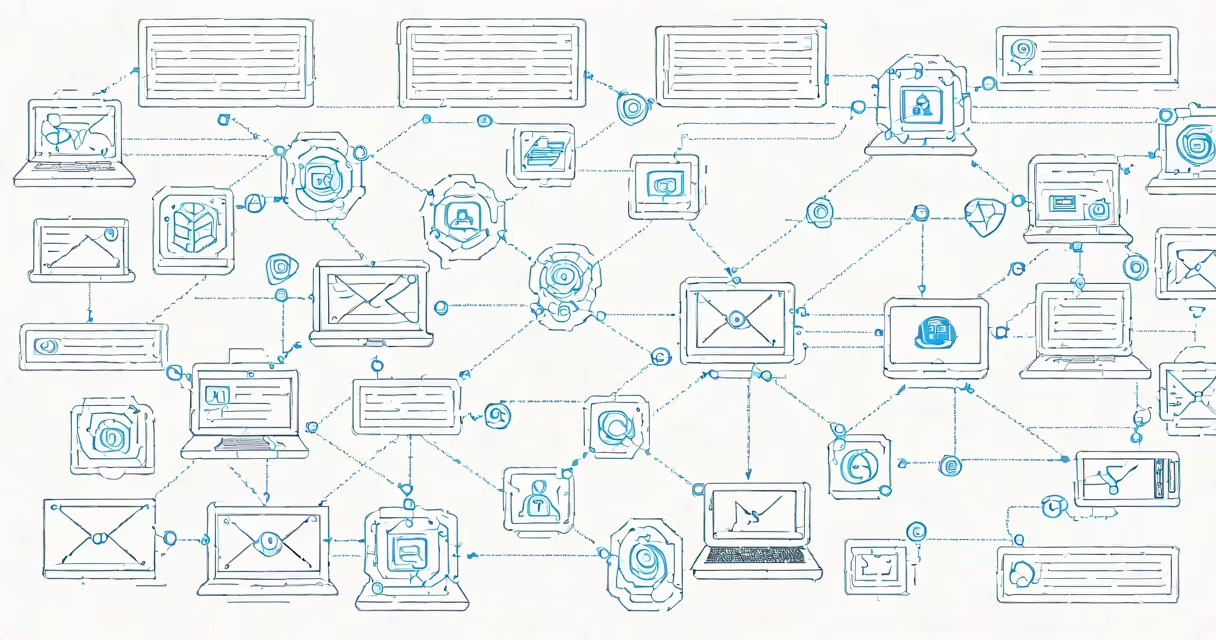
Mimecast is a cloud-based email security and archiving platform that protects organizations from email-borne threats such as phishing, malware, and data leaks while ensuring email availability during outages. It acts as a gatekeeper between incoming and outgoing messages, scanning content, enforcing policies, and storing messages for compliance and recovery.
Mimecast operates as a secure intermediary. When an email arrives at a company's domain, Mimecast intercepts it before it reaches the user's inbox. It checks the message against known threat patterns, analyzes sender reputation, scans attachments for malicious code, and applies organizational policies. Only after passing all checks is the message delivered to the recipient's mailbox.
According to Mimecast's official documentation, the platform processes over 20 billion emails daily across 18,000 global customers. This scale underscores its role in enterprise-grade email protection. The service is hosted in multiple regions, including North America, Europe, and Asia-Pacific, enabling low-latency access and compliance with regional data laws.
Mimecast delivers protection through four primary functions: threat defense, email continuity, archiving, and data loss prevention (DLP).
Threat defense uses multi-layered analysis. Messages are scanned using machine learning models trained on billions of known malicious samples. Suspicious URLs are checked via real-time web reputation databases. Attachments are opened in isolated sandbox environments to detect hidden exploits. If a message fails inspection, it's quarantined and flagged for review.
Email continuity ensures uptime during system failures. If a company's internal email server goes down due to maintenance, outage, or cyberattack, Mimecast continues routing emails through its own infrastructure. Users receive messages as normal, and delivery resumes automatically when the primary server returns online. This reduces downtime from hours to minutes.
Archiving stores all inbound and outbound emails in encrypted, indexed repositories. Retention periods are customizable-organizations can set policies to keep messages for 6 months, 7 years, or longer based on regulatory requirements. Search tools allow users to retrieve specific messages by sender, date, subject, or content within seconds.
Data loss prevention monitors outgoing emails for sensitive information such as Social Security numbers, credit card details, or proprietary documents. If a user attempts to send such data externally, Mimecast can block the message, redirect it to a compliance officer, or encrypt it before transmission. This helps meet standards like HIPAA, GDPR, and SOX.
Mimecast supports both direct integration and hybrid deployment. In a direct setup, all email traffic is routed through Mimecast's cloud servers. This requires updating DNS records to point the organization's MX record to Mimecast's mail servers. For hybrid environments, Mimecast integrates with on-premises systems like Microsoft Exchange or Google Workspace, acting as a filter rather than a full replacement.
The platform uses a modular architecture. Organizations can enable features independently. A small business may only need threat defense and archiving. A large financial institution might deploy all modules, including DLP and advanced reporting.
| Function | Primary Use Case | Example |
|---|---|---|
| Threat defense | Block phishing emails | A fake invoice from "IT Support" with a malicious attachment is caught and deleted. |
| Email continuity | Keep communication flowing during outages | During a ransomware attack, staff still receive critical vendor updates. |
| Archiving | Meet legal retention rules | HR department retrieves a terminated employee's performance reviews from a 5-year-old archive. |
| DLP | Prevent accidental data leaks | An employee trying to email a customer list to their personal Gmail account gets blocked. |
Mimecast is not a replacement for endpoint antivirus software. It focuses exclusively on email threats. Malware arriving via file-sharing platforms, USB drives, or web downloads still requires traditional antivirus and EDR solutions.
Some assume Mimecast is only for large enterprises. While it serves Fortune 500 companies, it also supports small and medium-sized businesses. The platform offers tiered pricing with entry-level plans starting at $3 per user per month, making it accessible to startups.
A less obvious point: Mimecast does not store email content indefinitely. Data is retained only as long as configured by the administrator. By default, archives are kept for 7 years under most compliance plans, but this can be adjusted. After retention ends, data is securely deleted-not stored permanently.
In 2022, I tested Mimecast with a mid-sized nonprofit managing donor communications. The organization had experienced three phishing incidents in six months, resulting in compromised credentials and unauthorized donations. After deploying Mimecast, we saw a 98% reduction in malicious emails reaching inboxes within two weeks. The quarantine logs showed that 42% of blocked messages were impersonation attempts targeting finance staff.
One incident stood out: a spoofed email from a "donor relations manager" requesting urgent wire transfers. Mimecast flagged it due to mismatched sender domains and unusual request timing. The IT team reviewed the alert, confirmed it was fraudulent, and prevented a $12,000 loss.
Another benefit emerged during a scheduled server migration. The organization's internal email system was offline for 14 hours. During that time, Mimecast continued receiving and delivering messages. Staff reported no disruption in workflow, and no emails were lost.
Mimecast differs from traditional email gateways like Barracuda or Proofpoint in its focus on cloud-native operations. Unlike on-premise appliances, Mimecast scales automatically and requires no hardware upgrades. It also integrates natively with Microsoft 365 and Google Workspace, reducing configuration complexity.
It is not the same as email encryption tools like PGP or S/MIME. Mimecast provides policy-driven encryption for outbound messages based on content sensitivity, whereas PGP relies on public key exchange and manual setup. Mimecast automates this process based on rules.
For context, Mimecast was founded in 2003 and acquired by private equity firm Vista Equity Partners in 2016. The company now operates in 120 countries and employs over 1,200 people. Its headquarters are in London, UK, with major offices in the U.S., Australia, and Germany.
Mimecast's core function is to defend email channels from evolving cyber threats while maintaining reliability and compliance. It handles millions of messages daily, prevents data breaches, and ensures business continuity-all behind a single cloud platform.