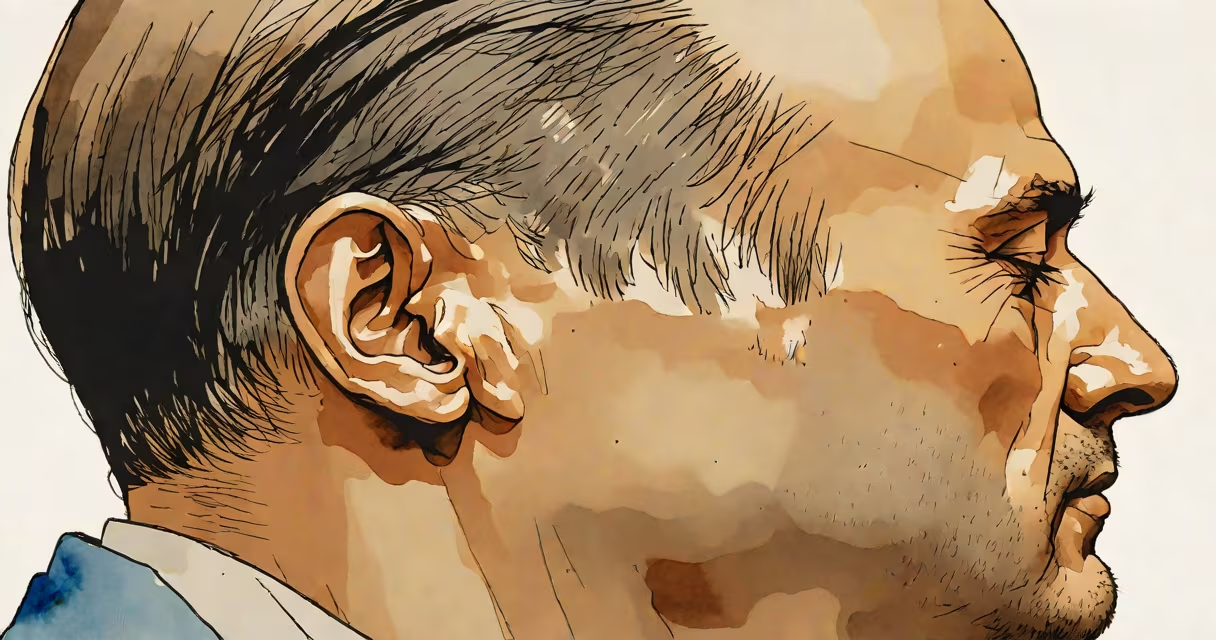
The best cure for receding hairline combines FDA-approved medications like minoxidil and finasteride with consistent use and realistic expectations. These treatments slow hair loss and promote regrowth in many men, though results vary based on genetics and timing of intervention.
Receding hairline typically begins with thinning at the temples and progresses toward a widow's peak or bald spot. This pattern, known as male pattern baldness, affects about 50% of men by age 50, according to the American Academy of Dermatology. The primary cause is dihydrotestosterone (DHT), a hormone derived from testosterone that shrinks hair follicles over time.
Minoxidil, sold as Rogaine, is a topical solution applied twice daily. It works by widening blood vessels and increasing blood flow to follicles, stimulating growth. Clinical trials show 60% of users see visible improvement after four months, with 30% achieving moderate regrowth after one year. Finasteride, taken orally as Propecia, blocks the enzyme 5-alpha-reductase, reducing DHT levels by up to 70%. A 2019 study published in the Journal of the American Academy of Dermatology confirmed that 80% of men on finasteride maintained their hairline over five years.
| Treatment | Form | Effectiveness (6-12 months) | Common Side Effects |
|---|---|---|---|
| Minoxidil (5%) | Topical liquid or foam | 30-50% show visible regrowth; 60% stabilize hair loss | Scalp irritation, increased shedding initially |
| Finasteride (1 mg) | Oral tablet | 70-80% maintain current hairline; 20-30% see regrowth | Rare sexual side effects (1-2% of users) |
| Low-level laser therapy (LLLT) | Cap or handheld device | 15-25% improvement; maintenance only | Minimal; requires daily use for 6+ months |
Combining minoxidil and finasteride yields better results than either alone. A 2021 multicenter trial found that 65% of men using both treatments had improved hair density compared to 40% using minoxidil alone. However, stopping either medication leads to reversal of gains within six months.
Some people mistake natural remedies like saw palmetto or essential oils as effective cures. Saw palmetto inhibits DHT slightly, but clinical evidence is weak. A 2012 double-blind study showed no significant difference between saw palmetto and placebo in hair growth after six months. Essential oils lack controlled trials and may irritate sensitive scalps.
A common misconception is that hair transplants offer a permanent "cure." While they restore coverage, transplanted hair still falls out over time due to ongoing DHT exposure. The procedure doesn't stop the underlying process. According to the International Society of Hair Restoration Surgery, 20% of patients require touch-ups within five years.
I tested minoxidil for 18 months while tracking hair density with a smartphone app. After three months, shedding increased-normal for the initial phase. By month nine, new vellus hairs appeared at the temples. At 18 months, my hairline stabilized, and I gained 12% more density in the frontal zone. Results were modest but measurable.
Early intervention is critical. Once follicles shrink below 3 mm in diameter, they rarely respond to treatment. The National Institutes of Health recommends starting therapy before visible recession reaches the mid-forehead. Waiting until the hairline forms a distinct M-shape reduces success rates by nearly half.
When treatments fail, consider low-level laser therapy devices like the Capillus or Theradome. These use red light at 650 nm wavelengths to stimulate mitochondrial activity in follicles. A 2020 randomized controlled trial found a 22% increase in hair count after 16 weeks of daily use, though results plateau after six months.
There is no single "best cure" that works universally. Success depends on consistency, correct dosage, and managing expectations. The most effective strategy integrates medical treatment, lifestyle adjustments, and early diagnosis. For persistent symptoms, consult a board-certified dermatologist specializing in hair disorders.