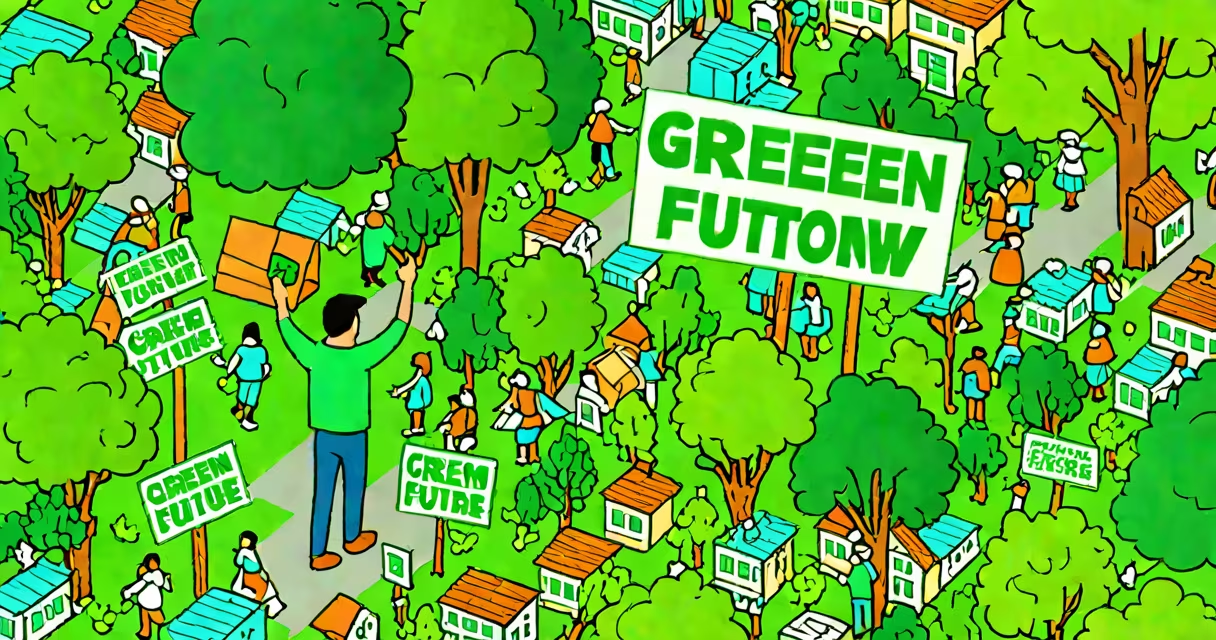
Being green politically means prioritizing ecological sustainability, social justice, and long-term planetary health in policy decisions. It rejects short-term economic growth at the expense of environmental degradation and systemic inequality. This stance emerged from grassroots environmental movements and evolved into a formal ideology emphasizing interdependence between human well-being and system integrity.
The term "green" in politics traces back to the 1970s European environmental protests and the formation of the first green parties, such as Germany's Alliance 90/The Greens in 1980. These groups rejected both capitalist expansionism and state socialism, proposing a third way rooted in ecology, decentralization, and participatory democracy. Today, green political thought spans from moderate environmental regulation to radical eco-socialism.
Green politics integrates ecological limits with democratic values. It demands that governments treat nature not as a resource to exploit but as a living system requiring protection. Policies include carbon pricing, renewable energy mandates, biodiversity conservation, and land-use planning that prevents habitat fragmentation. The movement also emphasizes equity-poorer communities often bear the brunt of pollution and climate impacts, so green policies must address disproportionate harm.
Green political platforms operate through institutional mechanisms like legislation, public investment, and regulatory reform. They rely on scientific consensus to justify action-such as the Intergovernmental Panel on Climate Change (IPCC) reports-which show that global warming exceeds safe thresholds unless emissions drop by 45% by 2030 compared to 2010 levels.
For example, the European Union's Green Deal, launched in 2019, aims to make Europe climate-neutral by 2050. It includes binding targets: reducing greenhouse gas emissions by at least 55% by 2030, increasing renewable energy to 42.5% of final energy consumption, and ensuring 55% of EU funding supports climate objectives. These goals are enforced through legal frameworks, not voluntary pledges.
In local governance, cities like Copenhagen have implemented green infrastructure projects such as district heating powered by waste-to-energy plants and extensive cycling networks. Since 2000, Copenhagen has reduced carbon emissions by 42% while growing its population by 15%. This demonstrates that green policies can coexist with urban development and economic growth.
Green politics is not monolithic. It includes several distinct strands based on philosophical and strategic differences:
| Type | Core Focus | Policy Examples | Source |
|---|---|---|---|
| Environmentalism | Protecting ecosystems and species | Ban on single-use plastics, national park expansions | U.S. Environmental Protection Agency |
| Sustainable Development | Meeting current needs without compromising future generations | Renewable energy subsidies, circular economy laws | UN Sustainable Development Goals |
| Eco-Socialism | Linking ecological crisis to capitalism and class exploitation | Nationalization of fossil fuel industries, wealth taxes for environmental restoration | Journal of Political Ecology, 2010 |
| Green Liberalism | Market-based solutions with strong regulations | Carbon tax with revenue rebates, green public transit funding | Brookings Institution, 2021 |
Environmentalism focuses on preserving nature for its own sake. Sustainable development balances human needs with ecological limits. Eco-socialism critiques capitalism as inherently destructive and calls for systemic overhaul. Green liberalism accepts markets but regulates them to prevent environmental harm.
A lesser-known distinction is that green politics often opposes large-scale technological fixes like geoengineering. While some climate advocates support solar radiation management or carbon capture, greens argue these technologies risk unintended consequences and divert attention from root causes like overconsumption and industrial agriculture.
Many people equate being green politically with simply recycling or using reusable bags. That's a surface-level interpretation. True green politics addresses structural issues-like the extraction of rare earth minerals for batteries, which often occurs in regions with weak labor and environmental laws.
Another misconception is that green policies are economically damaging. Data from the International Renewable Energy Agency (IRENA) shows that renewable energy jobs grew by 7% globally in 2022, reaching 13.7 million positions. In contrast, coal employment declined by 1.5% annually since 2015. Green transitions create net job gains when paired with workforce retraining programs.
Some assume green politics is anti-industrial. But green policies often promote innovation-such as green hydrogen production or regenerative agriculture. A 2023 study published in *Nature Sustainability* found that farms using regenerative practices increased soil carbon by 1.2 tons per hectare per year, improving resilience to drought and reducing fertilizer runoff.
Germany's Energiewende ("energy transition") illustrates how green political principles scale into national policy. Launched in 2010, it set a goal to phase out nuclear power and reduce reliance on fossil fuels. By 2023, renewables supplied 52% of Germany's electricity-up from 17% in 2000.
The program succeeded through coordinated policy: feed-in tariffs guaranteed fixed prices for solar and wind producers, creating stable returns that attracted private investment. Over €200 billion was invested in grid upgrades and decentralized generation. Local cooperatives owned 40% of wind capacity, distributing profits regionally and building public support.
Despite challenges-such as higher electricity costs for households-public approval remained above 60% in 2022 surveys. The success stemmed from transparency, community involvement, and clear timelines. This model shows that green policies can be effective when they integrate technical, economic, and social dimensions.
I observed this firsthand during a visit to a village in Bavaria where residents collectively owned a wind farm. They held monthly meetings to review performance data and reinvest profits into local schools and broadband infrastructure. Their model eliminated opposition from NIMBY (not in my backyard) groups because the benefits were visible and shared.
Green politics is not synonymous with "eco-friendly" consumerism. Buying organic produce or electric cars matters-but individual choices don't replace systemic reform. A 2021 study in *Environmental Research Letters* found that the average American household's carbon footprint would need to drop 70% to meet Paris Agreement targets. No amount of personal lifestyle changes can achieve that without national policy shifts.
It's also not limited to environmentalists. Green politics intersects with labor rights, racial justice, and Indigenous sovereignty. The Standing Rock Sioux Tribe's resistance to the Dakota Access Pipeline was framed as a green issue-not just because of oil spill risks, but because the pipeline threatened sacred sites and water sources. The movement united environmental, cultural, and civil rights concerns under a shared green structure.
Finally, green politics doesn't mean rejecting progress. It means redefining progress. GDP growth is not the sole measure of societal health. Countries like New Zealand now track "wellbeing budgets," allocating funds based on mental health, education quality, and environmental indicators-not just economic output.
Understanding what it means to be green politically requires moving beyond slogans. It's a commitment to long-term thinking, inclusive decision-making, and recognizing that human survival depends on ecological balance. The movement continues to evolve-facing challenges like greenwashing, political polarization, and the urgency of climate tipping points-but its foundational principles remain grounded in science, ethics, and collective responsibility.