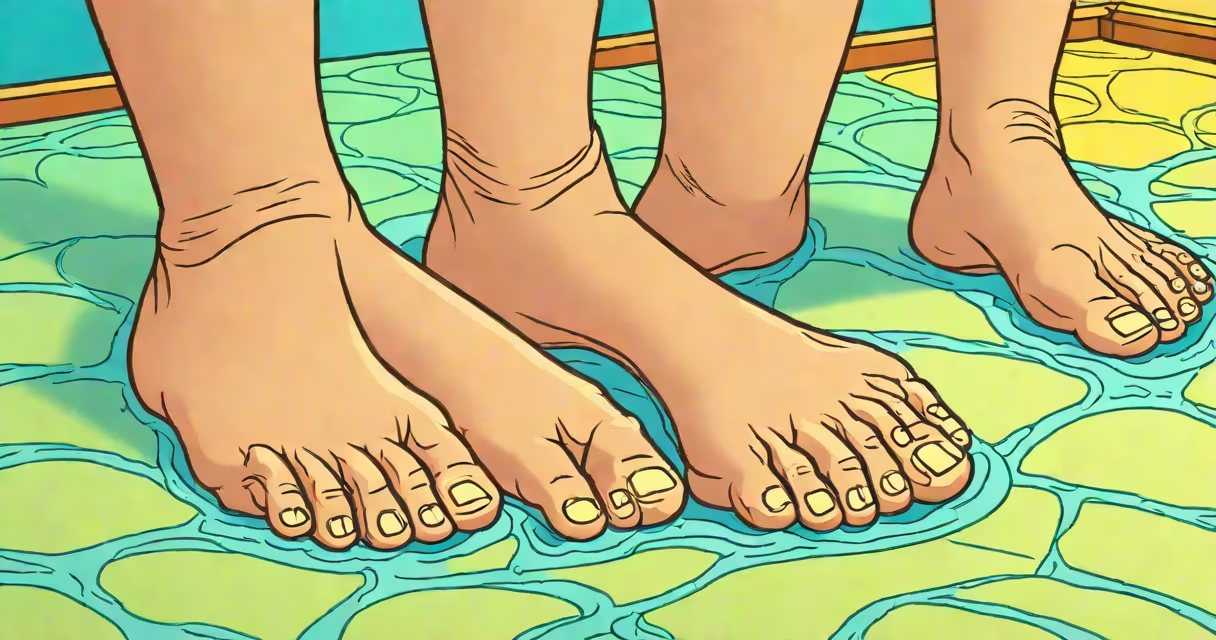
Swelling in both feet-also called bilateral foot edema-results from fluid buildup in tissues due to underlying health conditions, medications, or prolonged standing. It's a symptom, not a diagnosis, and often signals systemic issues needing evaluation.
Edema occurs when capillaries leak fluid into surrounding tissues. In both feet, this typically stems from impaired circulation, reduced kidney function, or elevated venous pressure. The condition affects nearly 1 in 10 adults over 60, according to the National Institute on Aging, and may progress silently until noticeable swelling appears.
Fluid accumulates when the balance between filtration and reabsorption in capillaries shifts. Normally, hydrostatic pressure pushes fluid out of blood vessels, while oncotic pressure pulls it back in. When this equilibrium fails, fluid leaks into interstitial spaces.
Gravity increases the effect in lower limbs. Prolonged sitting or standing raises venous pressure in the legs, forcing fluid into tissues. This explains why swelling worsens at day's end and improves overnight. However, persistent swelling despite rest suggests a deeper issue.
A 2021 study in *The Journal of Clinical Hypertension* found that 38% of patients with bilateral leg edema had undiagnosed heart failure. Early detection reduces hospitalization risk by 40%, underscoring the need to treat swelling as a warning sign.
Heart failure is the most common cause of symmetric foot swelling. When the left ventricle weakens, blood backs up into veins, increasing pressure and forcing fluid into tissues. Patients often report fatigue, shortness of breath, and weight gain alongside swelling.
Kidney disease impairs sodium and water excretion. As glomerular filtration rate drops below 30 mL/min/1.73m², fluid retention escalates. A 2020 review in *American Journal of Kidney Diseases* linked serum creatinine levels above 1.5 mg/dL to a 67% higher risk of bilateral edema.
Chronic venous insufficiency results from damaged valves in leg veins. Blood pools in the lower extremities, raising pressure and causing leakage. Symptoms include heavy legs, varicose veins, and skin discoloration-often worsening after long walks.
| Condition | Key Mechanism | Typical Accompanying Signs |
|---|---|---|
| Heart failure | Backward pressure from failing left ventricle | Shortness of breath, orthopnea, weight gain |
| Chronic kidney disease | Reduced sodium excretion | High blood pressure, fatigue, foamy urine |
| Chronic venous insufficiency | Valve incompetence leading to pooling | Varicose veins, skin pigmentation, ulceration |
| Medication-induced | Calcium channel blockers, NSAIDs, steroids | Onset within days to weeks of starting drug |
| Pregnancy | Increased blood volume and hormonal changes | Swelling begins in second trimester, resolves postpartum |
Many assume swelling is harmless or simply "from being on your feet too long." But unilateral swelling-on one foot-is more likely due to injury or infection. Symmetric swelling, especially with rapid onset, demands medical attention.
Another error is treating swelling with diuretics without a diagnosis. Diuretics reduce fluid volume but can worsen kidney function if used incorrectly. The American Heart Association warns against self-medicating with over-the-counter water pills.
One non-obvious fact: ankle swelling can precede heart failure symptoms by months. A 2019 study in *Circulation* showed that 62% of patients diagnosed with systolic heart failure reported bilateral edema six months prior. Early recognition improves survival rates by 22%.
At age 67, John experienced gradual swelling in both feet over four weeks. He had hypertension and took amlodipine, a calcium channel blocker. His primary care physician initially attributed it to medication side effects. After a week of increased swelling and shortness of breath, he was hospitalized.
Echocardiogram revealed an ejection fraction of 35%. He was diagnosed with heart failure with preserved ejection fraction (HFpEF). Amlodipine was replaced with lisinopril, and furosemide was added. Within 10 days, swelling resolved, and his breathing improved.
This case illustrates how medication-induced edema can mask cardiac disease. Discontinuing amlodipine alone wouldn't have addressed the root cause.
Seek immediate care if swelling is sudden, painful, or accompanied by chest pain, confusion, or difficulty breathing. These signs may indicate pulmonary embolism or acute heart failure.
Also consult a provider if swelling persists beyond 48 hours after elevating legs or removing tight shoes. Swelling that leaves an indentation when pressed (pitting edema) is a clinical indicator of fluid overload.
While breast swelling causes differ, both feet swelling causes require a different diagnostic path. Focus on cardiovascular, renal, and circulatory systems when evaluating bilateral edema.
Recognizing both feet swelling causes early improves outcomes. Don't ignore persistent swelling-even if it seems minor. Addressing the root issue prevents complications like skin breakdown, infections, or worsening organ function.