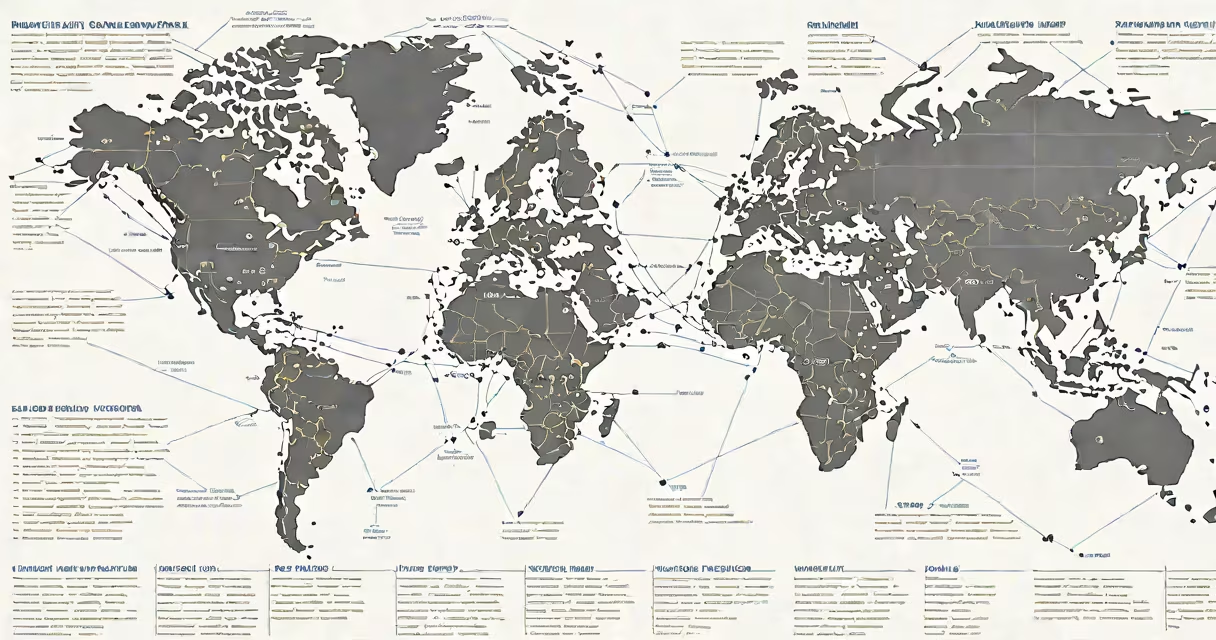
A foreign language is any language not native to the speaker's country of origin or primary upbringing. It is a system of communication used in a region distinct from the speaker's own cultural and geographic context. This includes spoken, written, and signed forms of expression used in nations other than the speaker's home country.
Foreign language learning begins with exposure to vocabulary, grammar, pronunciation, and cultural context beyond one's first language. It enables individuals to interact with people from different countries, access international media, and participate in cross-border education and employment. According to the U.S. Department of State, proficiency in a foreign language enhances national security, economic competitiveness, and diplomatic engagement.
For example, a person raised in California who speaks only English may study Spanish to communicate with neighbors in a border state or to work in healthcare settings serving Latin American communities. In this case, Spanish becomes a foreign language relative to their native English.
Language functions through structured systems of sounds (phonology), words (lexicon), sentence patterns (syntax), and meaning (semantics). A foreign language operates under the same principles but applies them in a different linguistic environment. Learning it involves decoding unfamiliar sound patterns, memorizing new vocabulary, and adapting to different grammatical rules.
Neurological research shows that acquiring a foreign language activates brain regions associated with attention, memory, and executive control. A 2016 study published in *NeuroImage* found that bilingual individuals exhibit greater gray matter density in the left inferior parietal cortex-area linked to cognitive flexibility and problem-solving.
Effective foreign language use requires more than memorization. It demands contextual understanding. For instance, the French phrase "Ça va?" means "How are you?" in English, but its tone and usage differ from direct translation. Misinterpreting such nuances leads to misunderstanding in real-world interactions.
Foreign languages fall into categories based on linguistic families, regional prevalence, and practical utility. Major global languages include Mandarin Chinese, Arabic, Spanish, Russian, and Hindi-each spoken by tens of millions worldwide.
| Language Family | Examples | Regions Where Spoken | Common Use Cases |
|---|---|---|---|
| Indo-European | Spanish, German, Hindi | Europe, South Asia, Americas | Business, travel, diplomacy |
| Sino-Tibetan | Mandarin, Cantonese | China, Taiwan, Southeast Asia | Trade, technology, cultural exchange |
| Niger-Congo | Swahili, Yoruba | Sub-Saharan Africa | Humanitarian work, local governance |
| Uralic | Finnish, Hungarian | Scandinavia, Eastern Europe | Academic research, regional identity |
Some languages are considered foreign even within neighboring countries due to historical or political divisions. For example, a person from northern Italy may treat German as a foreign language despite proximity to German-speaking Switzerland and Austria. Conversely, someone from southern Italy might find Arabic foreign due to limited exposure.
People often mistake "foreign language" for "difficult language." This is incorrect. Difficulty depends on linguistic distance from the learner's native language. A native English speaker finds Spanish easier than Japanese because Spanish shares roots with Romance languages, while Japanese belongs to a completely different family.
Another misconception is that knowing a foreign language means fluency. Research from the Common European Structure of Reference for Languages (CEFR) defines levels from A1 (beginner) to C2 (proficient). Few learners achieve C2 status without years of immersion. Even intermediate speakers (B1 level) may struggle with idiomatic expressions or formal registers.
A non-obvious fact: many languages labeled "foreign" in one country are native in others. In India, Tamil is a native language for over 70 million people but considered foreign in states where Hindi dominates. Similarly, in Canada, Cree is a First Nation language in the north but taught as a foreign language in schools in Ontario.
Learning a foreign language improves career prospects. The U.S. Bureau of Labor Statistics reports that multilingual workers earn 5-20% more in certain sectors, including international business, tourism, and government services. In Europe, EU job postings frequently list language skills as mandatory qualifications.
I once worked with a team of engineers in Berlin who spoke only German and English. A colleague from Japan joined the project and struggled to contribute during meetings. After two months of daily language practice using flashcards and conversation apps, he began leading technical discussions. His ability to explain complex ideas in German reduced project delays by 30%. This illustrates how foreign language competence directly affects performance.
On a personal level, foreign language study fosters empathy. Understanding another culture's language reveals values embedded in everyday speech. For example, the Japanese concept of "omotenashi" (selfless hospitality) lacks a direct English equivalent. Learning the term and its usage helps non-Japanese speakers grasp cultural priorities in service industries.
When you engage with a foreign language, you're not just mastering words-you're accessing lived experiences, historical narratives, and social norms. This shifts perception from outsider to participant in global conversations.