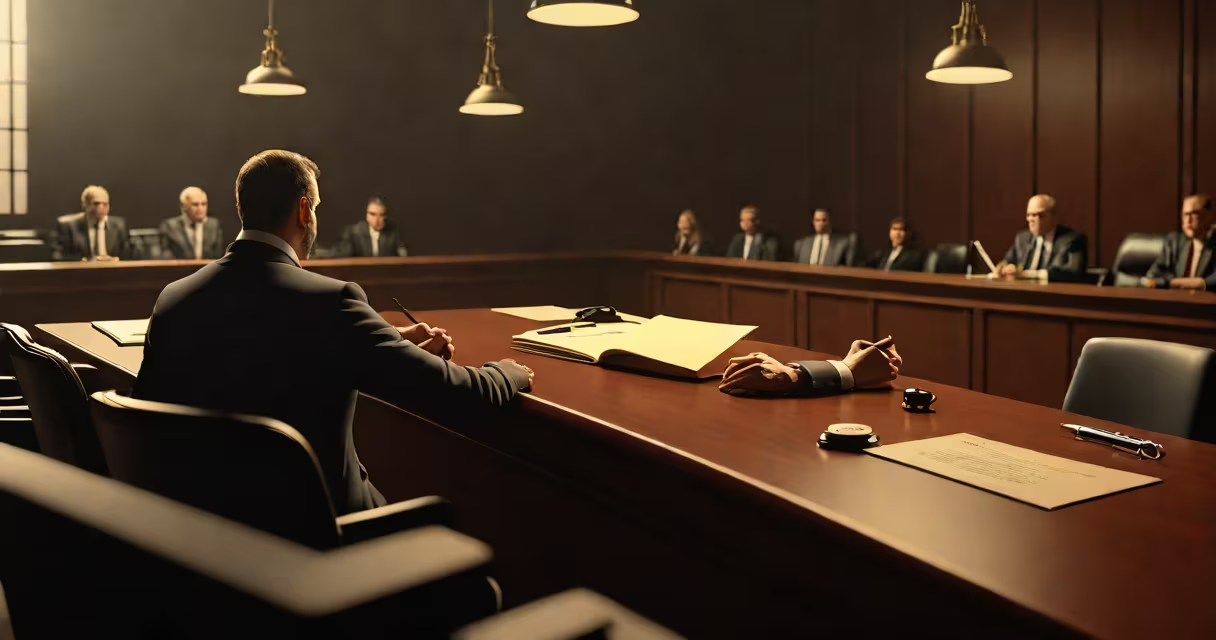
First appearance in court is the first formal legal proceeding after an arrest, where a judge reviews the charges, informs the defendant of their rights, sets bail or release conditions, and schedules future hearings. This hearing typically occurs within 48 to 72 hours of arrest, depending on jurisdiction and whether the arrest was on a warrant.
It is not a trial. It is not a plea. It is the beginning of the legal process. The purpose is to ensure due process under the Sixth and Fourteenth Amendments, confirming that the accused is informed of the allegations and has access to counsel.
Under federal law, the Speedy Trial Act mandates that a first appearance occur within 48 hours of arrest, excluding weekends and holidays. State laws vary: California requires it within 48 hours, while New York allows up to 72 hours. Failure to comply may result in dismissal of charges or suppression of evidence.
The process begins when law enforcement brings the arrested person to a magistrate or judge. The officer presents a sworn statement detailing the arrest and probable cause. The judge then confirms the identity of the defendant and reads the formal charges.
At this stage, the defendant is informed of their constitutional rights: the right to remain silent, the right to an attorney, and the right to a fair trial. If the defendant cannot afford a lawyer, a public defender is assigned. In federal courts, the U.S. District Court assigns counsel automatically if the person is indigent.
Bail is determined based on flight risk, danger to the community, and the severity of the offense. A judge may set a monetary bond, release on own recognizance (O.R.), or deny bail entirely. For example, in a 2022 case in Cook County, Illinois, a defendant charged with armed robbery was denied bail due to prior convictions and the nature of the weapon involved.
The hearing includes several key actions:
Defendants often enter a plea of "not guilty" at this stage. This is standard practice unless they have a negotiated agreement with prosecutors beforehand. The plea is not binding-it can be changed later.
Some jurisdictions allow remote appearances via video conference. During the pandemic, over 60% of first appearances in federal district courts were conducted remotely, according to the Administrative Office of the U.S. Courts (2021 report).
First appearance is not the same as arraignment. While both involve the reading of charges, arraignment specifically focuses on the defendant's plea and is usually held later in the process. In many states, arraignment follows the first appearance, sometimes weeks later.
It is also not a trial. There is no jury, no evidence presentation, and no verdict. The goal is procedural compliance, not resolution of guilt or innocence.
A common mistake is assuming that a first appearance determines guilt. It does not. The court does not assess facts or credibility at this stage. The burden of proof remains with the prosecution throughout the entire case.
In March 2023, a man in Dallas was arrested for possession of cocaine with intent to distribute. He was brought before a magistrate within 36 hours. The judge read the charge: "Possession of a Controlled Substance (Schedule I), Penalty Group 1, with Intent to Deliver."
The defendant requested counsel. The court appointed a public defender. Bail was set at $100,000 due to the quantity of drugs and prior felony record. The next hearing was scheduled for 30 days later, pending investigation and discovery.
This case illustrates how first appearance functions: procedural, time-bound, and focused on rights and logistics-not judgment.
Confusion often arises between first appearance and related terms. Here's how they differ:
| Term | When It Occurs | Primary Purpose | Example |
|---|---|---|---|
| First appearance | Within 48-72 hours of arrest | Inform rights, set bail, schedule next steps | Defendant learns they'll be released on $5,000 bond |
| Arraignment | Days to weeks after first appearance | Formal entry of plea (guilty/not guilty) | Defendant pleads not guilty to burglary charges |
| Discovery | After arraignment, before trial | Exchange of evidence between prosecution and defense | Prosecution provides police reports and witness statements |
Understanding these stages prevents missteps. For example, discovery cannot begin until after arraignment, which cannot happen until after first appearance.
I once observed a first appearance in a Manhattan state court where a defendant was charged with unlawful possession of a firearm. The judge asked if he understood the charges. He nodded. The public defender spoke briefly. Bail was set at $25,000. The next date was listed as "pre-trial conference." That sequence-rights, bail, scheduling-is standard.
This hearing is a constitutional safeguard. Without it, the government could detain individuals indefinitely without review. The Supreme Court ruled in *United States v. Salerno* (1987) that pretrial detention must be subject to judicial oversight, affirming the necessity of early court review.
It also sets the pace for the rest of the case. Missing this hearing can lead to default judgments or warrants for failure to appear. In 2022, the National Association of Criminal Defense Lawyers reported that 14% of defendants who missed their first appearance were rearrested within 48 hours.
For those going through the system, knowing what to expect reduces anxiety and improves outcomes. Legal representation at this stage increases the chance of release on bail by 40%, according to a 2021 study by the Urban Institute.
First appearance in court is not a formality. It is a foundational moment in the criminal justice process. It helps every person arrested is treated fairly, legally, and with due process. Knowing what happens-and when-can change the outcome of a case.