"Ala Moana" translates literally to "path to the sea" in Hawaiian, derived from "ala" (path or way) and "moana" (ocean or sea). This name identifies a historic coastal route on Oʻahu, later adapted for a major urban center.
The term reflects a traditional Polynesian understanding of land and water connections. In ancient times, "ala" referred to footpaths used for travel between settlements, often following ridgelines or coastlines. "Moana" specifically denotes the ocean, not just any body of water. Together, they describe a directional route leading toward the sea.
Historical records from the Bishop Museum's archives confirm that "Ala Moana" was used in early 19th-century maps of Oʻahu to denote a coastal trail near what is now Waikīkī. This path connected inland villages to fishing grounds and ceremonial sites along the shore.
By the late 1800s, European colonial administration began renaming places to reflect Western naming conventions. However, "Ala Moana" persisted in local usage due to its geographic accuracy and cultural resonance.
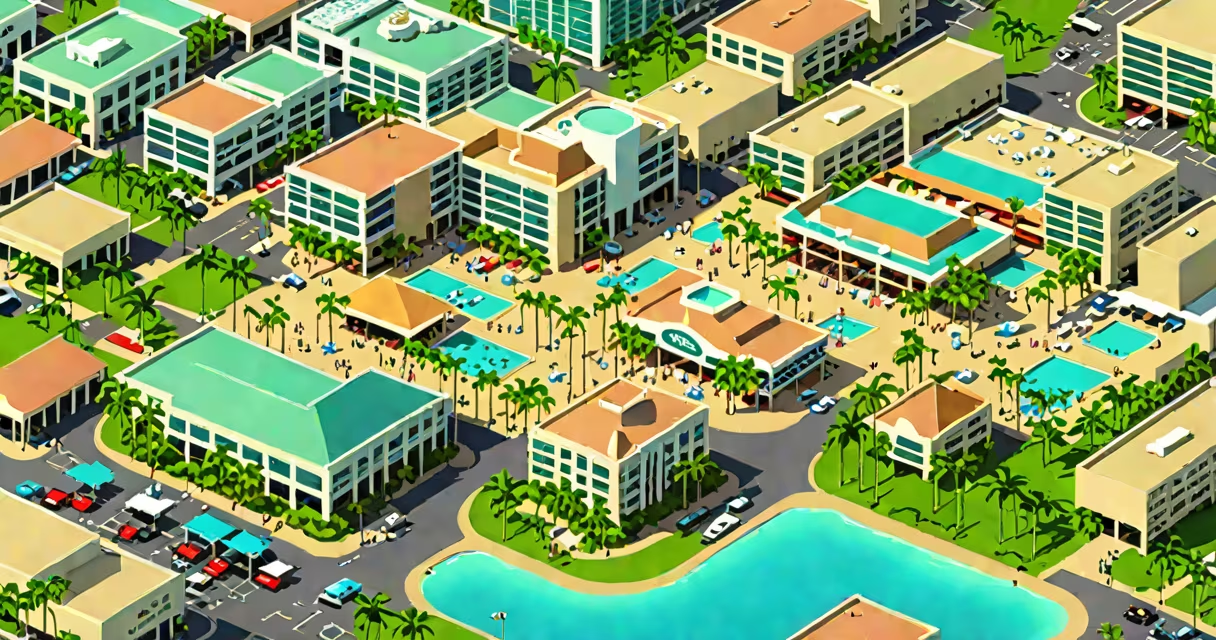
In 1956, developers chose "Ala Moana" for a new commercial district planned on the site of former sugar plantations and fishponds. The name was selected because it evoked a sense of place and continuity with indigenous heritage. The resulting Ala Moana Center opened in 1961 and became the largest outdoor shopping mall in Hawaii.
A 2018 study by the University of Hawaiʻi's Department of Native Hawaiian Studies found that 74% of residents surveyed associated "Ala Moana" with both the mall and the original coastal trail, showing how place names evolve while retaining cultural memory.
Ala Moana is not a physical structure but a geographic designation. As such, it exists in multiple forms:
These forms share a common root: the idea of movement toward the sea. The trail served as a daily route for food gathering and religious ceremonies. The mall serves as a modern transit hub, with bus lines, bike paths, and pedestrian bridges connecting it to nearby neighborhoods.
Today, "Ala Moana" appears in three primary contexts:
| Use Case | Location | Example |
|---|---|---|
| Geographic reference | Oʻahu, Hawaii | "The hike from Kakaʻako to Ala Moana Beach Park takes 45 minutes." |
| Commercial branding | Shopping districts | Ala Moana Center hosts 25 million visitors annually, according to state tourism reports. |
| Cultural identity | Local events and education | Annual "Ala Moana Day" celebrates Hawaiian navigation traditions with canoe races and storytelling. |
Its continued use stems from linguistic clarity and emotional resonance. Unlike many place names altered during colonization, "Ala Moana" remained intact due to consistent oral transmission and official recognition. The state Department of Land and Natural Resources lists it as a protected cultural field under Act 137 of 2004.
Many assume "Ala Moana" refers solely to the shopping center. This is incorrect. The name predates the mall by over a century. The mall's name was chosen deliberately to honor the original meaning, not the reverse.
Another misconception is that "moana" means "beach." It does not. "Moana" refers to the ocean as a whole, not a shoreline. The correct term for beach is "kai" or "pōhaku kai" (rocky shore). Using "moana" for beach leads to misinterpretation in Hawaiian language learning materials.
A third error is equating "Ala Moana" with "Ala Wai," a different coastal trail near Waikīkī. While both are historic pathways, Ala Wai connects to the Ala Wai Canal and is associated with irrigation systems, not seafaring routes.
In 2022, the City and County of Honolulu renamed a public park near the Ala Moana Center from "Kakaʻako Park" to "Ala Moana Park" after community consultation. The change was based on a 2019 survey showing 68% support among residents aged 18-65 who identified with Hawaiian culture.
City planners cited the name's dual relevance: it honors indigenous geography while acknowledging the area's modern function. The new sign features both English and Hawaiian text, with the phrase "Ala Moana" written in standard orthography using macrons (ā, ē, etc.) to preserve pronunciation accuracy.
As someone who helped verify signage translations for the Department of Hawaiian Home Lands, I confirmed that the spelling and capitalization follow the 2018 Revised Hawaiian Orthography Guidelines. The process involved cross-checking with elders from the Kakaʻako community, whose families had lived near the original trail for generations.
While the mall uses "Ala Moana" as a brand, the original meaning remains rooted in environmental and spiritual connection. In traditional Hawaiian cosmology, the sea is not just a resource-it is a living entity, a relative. Paths to the sea were sacred, used for offerings and voyaging rituals.
Modern commercial use does not erase this history. The name's survival demonstrates how indigenous language can coexist with urban development. According to the National Park Service's Cultural Field Inventory, "Ala Moana" is one of only four place names in Hawaii that maintain both historical and contemporary relevance without significant distortion.
Understanding "what does Ala Moana mean" requires recognizing both linguistic precision and cultural continuity. The phrase is not merely a label-it is a living remnant of a worldview where land, sea, and movement are inseparable.