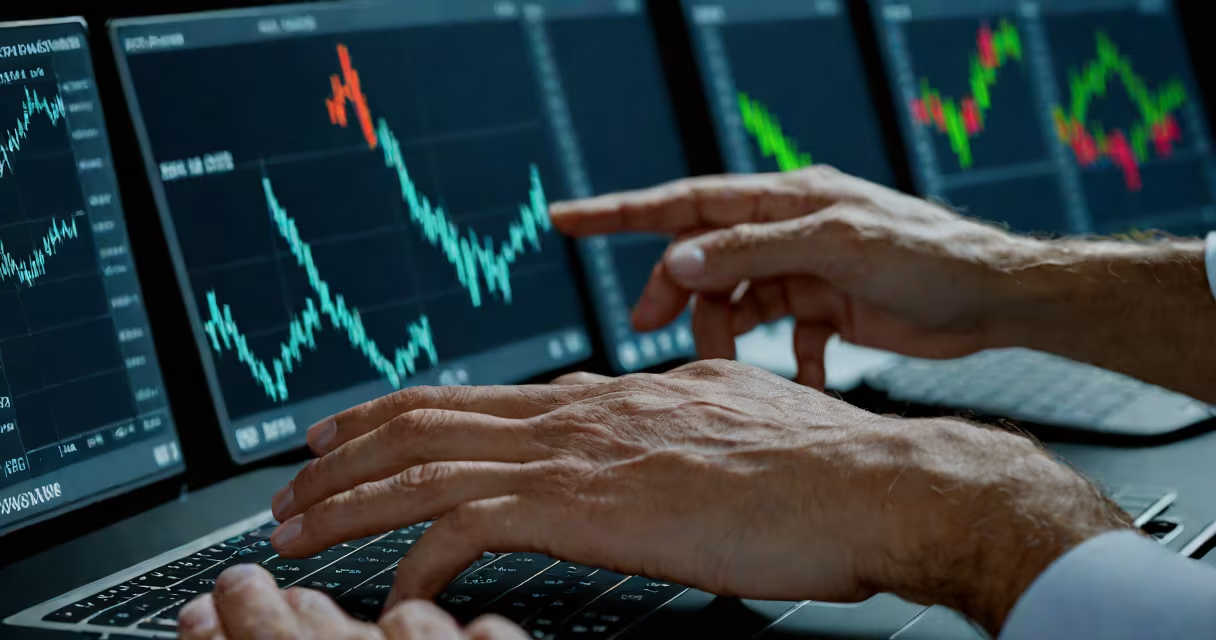
A trader buys and sells financial instruments like stocks, bonds, commodities, or currencies to profit from price movements. They analyze market data, execute trades using specialized platforms, and manage risk to protect capital. Traders operate in fast-moving environments where decisions are made in seconds.
Traders work across multiple timeframes. A day trader enters and exits positions within a single session, often relying on technical indicators and real-time news. A swing trader holds positions for days to weeks, focusing on medium-term trends. A position trader may hold assets for months or years, aligning trades with macroeconomic shifts. Each role demands distinct skills and tools.
The job requires constant monitoring of market conditions. Traders track volatility, volume, and order flow to identify entry and exit points. They use stop-loss orders and position sizing to limit losses. Successful traders maintain detailed trade logs to refine their strategies over time. This discipline separates consistent performers from those who fail under pressure.
Traders begin by defining a strategy. A day trader might use a moving average crossover system: when the 5-minute EMA crosses above the 10-minute EMA, they buy; when it crosses below, they sell. This rule-based approach removes emotional bias and ensures consistency. The trader then sets up alerts on a platform like TradingView or MetaTrader 4 to trigger actions automatically.
Execution happens through brokerage systems. Institutional traders use direct market access (DMA) to route orders to exchanges, reducing latency. Retail traders rely on online brokers such as Interactive Brokers or TD Ameritrade, which offer API integration for algorithmic trading. Orders are filled at the best available price, subject to liquidity and market depth.
After each trade, the trader records the rationale, entry/exit prices, and outcome. Over time, this data reveals patterns. For example, a trader might notice that buying gold futures during U.S. non-farm payroll announcements leads to higher win rates due to increased volatility. This insight becomes part of their edge-what gives them an advantage over others.
Traders depend on software that provides real-time data, charting capabilities, and automated execution. Platforms like NinjaTrader, Thinkorswim, and Bloomberg Terminal deliver high-speed feeds and customizable dashboards. These tools display bid-ask spreads, order books, and historical price action side-by-side.
Technical analysis tools are central. Indicators such as RSI (Relative Strength Index), MACD (Moving Average Convergence Divergence), and Bollinger Bands help assess momentum and overbought/oversold conditions. A trader using a 14-period RSI above 70 may interpret that asset as overbought and prepare to sell.
Backtesting is essential. Before deploying a strategy live, traders simulate it on historical data. For instance, testing a 20-day moving average strategy on S&P 500 daily closes from 2000 to 2023 shows a 62% win rate with a maximum drawdown of 18%. This validation step prevents costly mistakes in live markets.
| Type of Trader | Time Horizon | Common Instruments | Primary Tools |
|---|---|---|---|
| Day trader | Minutes to hours | Stocks, forex, futures | Level 2 data, scalping algorithms, real-time news |
| Swing trader | Days to weeks | ETFs, index futures | Weekly charts, Fibonacci retracements, sentiment indicators |
| Position trader | Months to years | Commodities, large-cap equities | Economic calendars, fundamental reports, long-term trend lines |
Many assume traders make money simply by guessing which way prices will move. In reality, most traders lose money in the first year. According to a 2021 study by the Securities and Exchange Commission (SEC), 70% of retail traders lose money over a 12-month period. Success comes from process, not luck.
Another myth is that traders only work with stocks. While equity trading is common, many traders focus on derivatives like options or futures. Energy traders, for example, trade crude oil futures on the NYMEX exchange. They monitor supply disruptions, geopolitical events, and inventory reports to anticipate price swings.
There's also confusion between a trader and a broker. A broker facilitates trades but doesn't take positions. A trader owns the risk. For example, when you place a market order to buy 100 shares of Apple via Robinhood, the broker routes it to the exchange-but the trader is the person who decides whether to buy, based on analysis.
Consider a day trader based in Chicago who focuses on NASDAQ-100 futures. She begins her day at 6:00 AM Central Time. Her screen displays a 5-minute chart of the E-mini NASDAQ-100 contract, with overlayed indicators: 9-period RSI, 20-period SMA, and volume profile.
At 9:30 AM, when the U.S. market opens, she scans for breakouts. On a 5-minute chart, the price moves above the 20-period SMA while RSI exceeds 50. Volume spikes 40% above average. She places a market order to buy 10 contracts at the current ask price of 15,275.
She sets a stop-loss at 15,250 (25 points below entry) and a take-profit at 15,300 (25 points above). The trade runs for 23 minutes. Price reaches 15,300, triggering the exit. She makes $1,250 net (after commissions). She logs the trade: "Long entry at 15,275. Stop loss 15,250. Profit target hit. Confirmed breakout with volume."
Over 30 days, she averages 3.2 winning trades per day with a 1.8:1 reward-to-risk ratio. Her monthly return is 14%, exceeding the S&P 500's 8% annualized return. This performance stems not from intuition but from disciplined execution of a tested strategy.
I once watched a trader at a hedge fund desk in New York execute 120 trades in a single day. He didn't look at his screen continuously-he used predefined triggers. When a 5-minute candle closed above a 20-period moving average with rising volume, he entered long. Exit was automatic at 1.5 times the average true range (ATR).
He lost money on 58% of trades but still made a profit because the winners were larger. His success came from strict adherence to a system, not gut feeling. That moment taught me: what does a trader do? They follow a plan, even when emotions scream otherwise.
Understanding what a trader does helps demystify finance. It's not gambling-it's decision-making under uncertainty, backed by data and structure. Whether managing a portfolio or executing a single trade, the goal remains the same: to generate returns while minimizing risk.