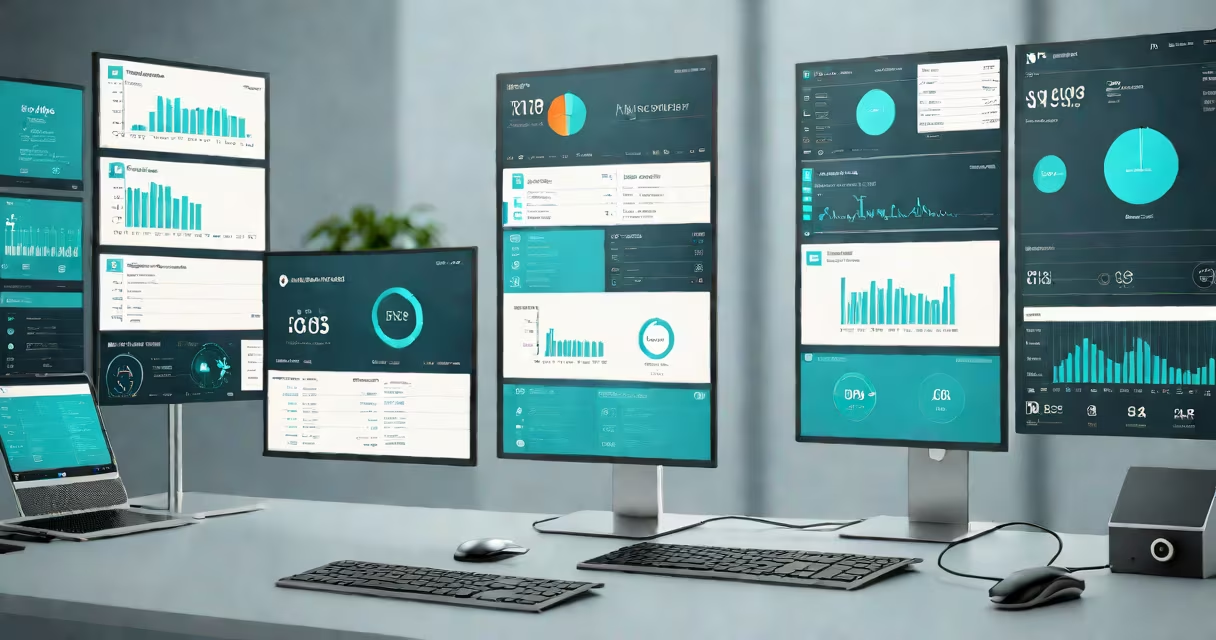
It solutions for healthcare are integrated technology systems designed to manage clinical workflows, store electronic health records, enable remote consultations, and ensure data security across medical facilities. These tools simplify operations, reduce errors, and support better decision-making in patient care.
Healthcare organizations deploy it solutions for healthcare to digitize processes that were once paper-based or siloed. Examples include electronic medical record (EMR) systems, practice management software, telehealth platforms, and secure messaging apps. These systems connect providers, patients, and administrators in real time while complying with regulations like HIPAA and HITECH.
The core function of it solutions for healthcare is to centralize and automate tasks such as appointment scheduling, billing, prescription management, and diagnostic reporting. When implemented correctly, they reduce redundant work, cut down on missed appointments, and minimize medication errors. A hospital using a unified system can track a patient's entire process-from admission to discharge-with minimal manual input.
These systems operate through cloud-based or on-premise servers that host databases, applications, and user interfaces. They communicate via standardized protocols like HL7 and FHIR, which allow different software platforms to exchange patient data safely and consistently.
For example, when a doctor enters a diagnosis into an EMR, the system automatically updates the patient's profile, triggers alerts for follow-up tests, and shares relevant data with specialists involved in the case. This happens in seconds, reducing delays that could affect treatment timing.
Security is built into every layer. Data encryption, multi-factor authentication, audit trails, and role-based access controls prevent unauthorized access. According to the U.S. Department of Health and Human Services, 60% of healthcare data breaches in 2022 stemmed from weak authentication practices-underscoring why it solutions for healthcare must enforce strict identity verification.
Not all it solutions for healthcare serve the same purpose. They fall into functional categories based on their role in the care delivery chain.
| Type | Purpose | Example System | Key Benefit |
|---|---|---|---|
| Electronic Health Records (EHR) | Store and share patient medical history across providers | Cerner Millennium | Reduces duplicate testing; improves care coordination |
| Telehealth Platforms | Enable video visits and remote monitoring | Doxy.me | Expands access for rural patients; cuts travel costs |
| Practice Management Software | Handle billing, scheduling, and insurance claims | AdvancedMD | Automates revenue cycle; reduces claim denials |
| Medical Imaging Systems | Manage and analyze radiology scans and pathology images | Siemens Healthineers Syngo.via | Supports AI-assisted tumor detection; speeds up diagnosis |
Some systems combine multiple functions. Epic Systems, used by over 80% of U.S. academic medical centers, integrates EHR, billing, and population health analytics into a single interface. Its adoption correlates with a 15% reduction in avoidable readmissions, according to a 2023 study published in *JAMA Network Open*.
Hospitals, private clinics, long-term care facilities, and public health agencies rely on it solutions for healthcare to meet operational demands and regulatory standards. The Centers for Medicare & Medicaid Services (CMS) requires certified EHR technology for providers receiving incentive payments under the Merit-Based Incentive Payment System (MIPS).
A community health center in rural Montana deployed a cloud-based EHR and telehealth platform to serve patients across 120 miles of mountainous terrain. Before implementation, 40% of follow-up visits were missed due to transportation barriers. After rollout, patient retention improved by 37%, and chronic disease management metrics showed a 22% increase in timely interventions.
Another common use case is interoperability between systems. A patient transferred from a regional hospital to a specialized cancer center may have their imaging results and treatment history automatically imported into the new facility's EHR-without requiring staff to re-enter data. This prevents delays and avoids miscommunication during critical transitions.
Many assume it solutions for healthcare are interchangeable. That's false. A system optimized for outpatient clinics may lack features needed in emergency departments. For example, a telehealth app designed for routine check-ups may not support real-time important sign integration required during ICU transfers.
Another misconception is that all it solutions for healthcare are expensive. While enterprise-grade platforms like Epic cost $1 million or more to implement, open-source alternatives exist. OpenMRS, used in over 50 countries, supports basic EHR functions at near-zero licensing cost. It's maintained by a global nonprofit and adapted for low-resource settings.
There's also confusion between "digital health" and "it solutions for healthcare." Digital health includes consumer-facing apps like fitness trackers and mental wellness tools. It solutions for healthcare refer specifically to systems used by clinicians and administrators within regulated healthcare environments. A wearable that tracks heart rate isn't an it solution unless it feeds data into a provider's EHR system.
In 2022, a primary care clinic in Austin, Texas, serving 1,200 patients, faced rising administrative workload. Staff spent 18 hours weekly managing paper forms, rescheduling missed appointments, and chasing insurance approvals.
The clinic adopted a bundled it solutions for healthcare package: a cloud-based EHR (NextGen), automated appointment reminders via SMS, and a claims processing module linked to payer portals. Integration took 11 weeks, including staff training and data migration.
Results after six months:
"The biggest change wasn't the software," said Dr. Elena Torres, the clinic's lead physician. "It was finally having real-time access to patient histories during visits. We caught a diabetic complication early because the system flagged abnormal lab values."
This case shows that it solutions for healthcare aren't just about efficiency-they directly impact clinical outcomes.
Choosing and deploying it solutions for healthcare requires technical and organizational planning. Misconfigurations can lead to data loss, compliance violations, or workflow disruption. A 2021 report by the Healthcare Information and Management Systems Society (HIMSS) found that 43% of healthcare IT failures stemmed from poor implementation rather than flawed software.
For clinics considering a shift from legacy systems, consulting services can model return on investment. One study estimated that clinics adopting integrated it solutions for healthcare saw a 2.3-year payback period due to reduced staffing needs and higher billing accuracy.
Small practices should consider phased deployment. Start with one module-such as e-prescribing-then expand to scheduling and billing. This minimizes risk and allows teams to adapt gradually.
As healthcare evolves, it solutions for healthcare remain essential-not as optional upgrades, but as foundational infrastructure. Their success depends not on flashy features, but on smooth integration, consistent data quality, and alignment with real-world clinical needs.
Organizations exploring digital transformation should begin with a clear understanding of current workflows and pain points. From there, select tools that solve specific problems, not just those marketed as "all-in-one."